• Home
  • About Us
  • Blog

Category Archives: Spring

Bird Walk at Ford House April 24, 2021

Posted on April 25, 2021 by Rosann Kovalcik

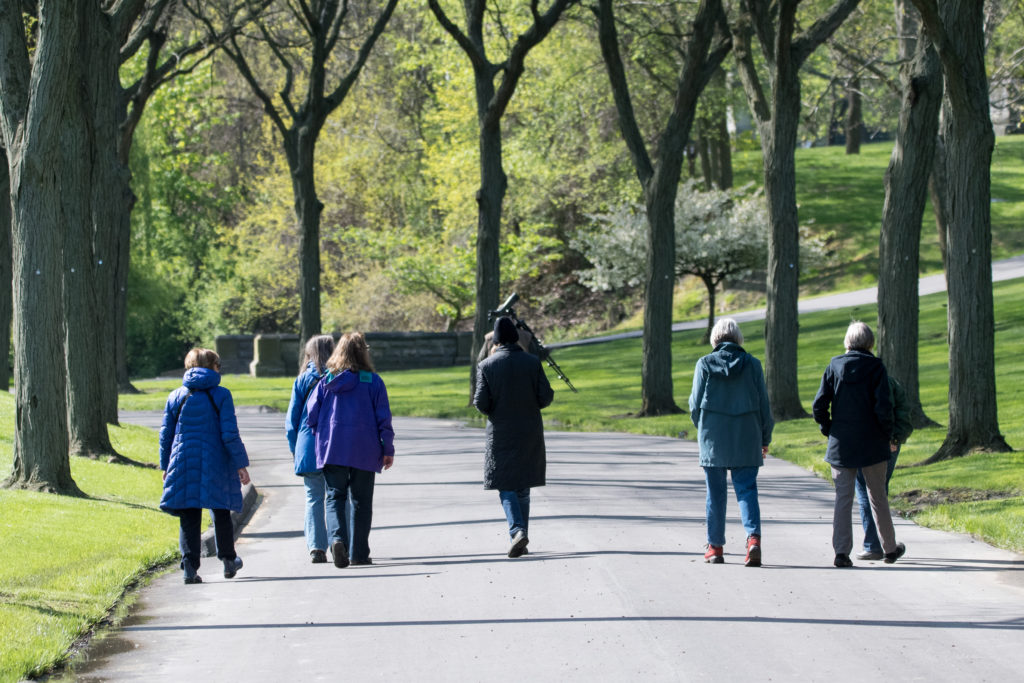
Our group this morning at the Ford House consisted of many first-time birders.  It was as delightful to see their reactions to the birds they could see as much as it was a delight to see the returning migrants ourselves.  The group was led by me, Bill Rapai (President, G. P. Aududon) and Jim Szelc, who used to carry the telescope for the crowd.  In this covid cautious Bird Walk era, we rely upon him for dispensing great information and encouragement as well as his knowledgeable commentary.
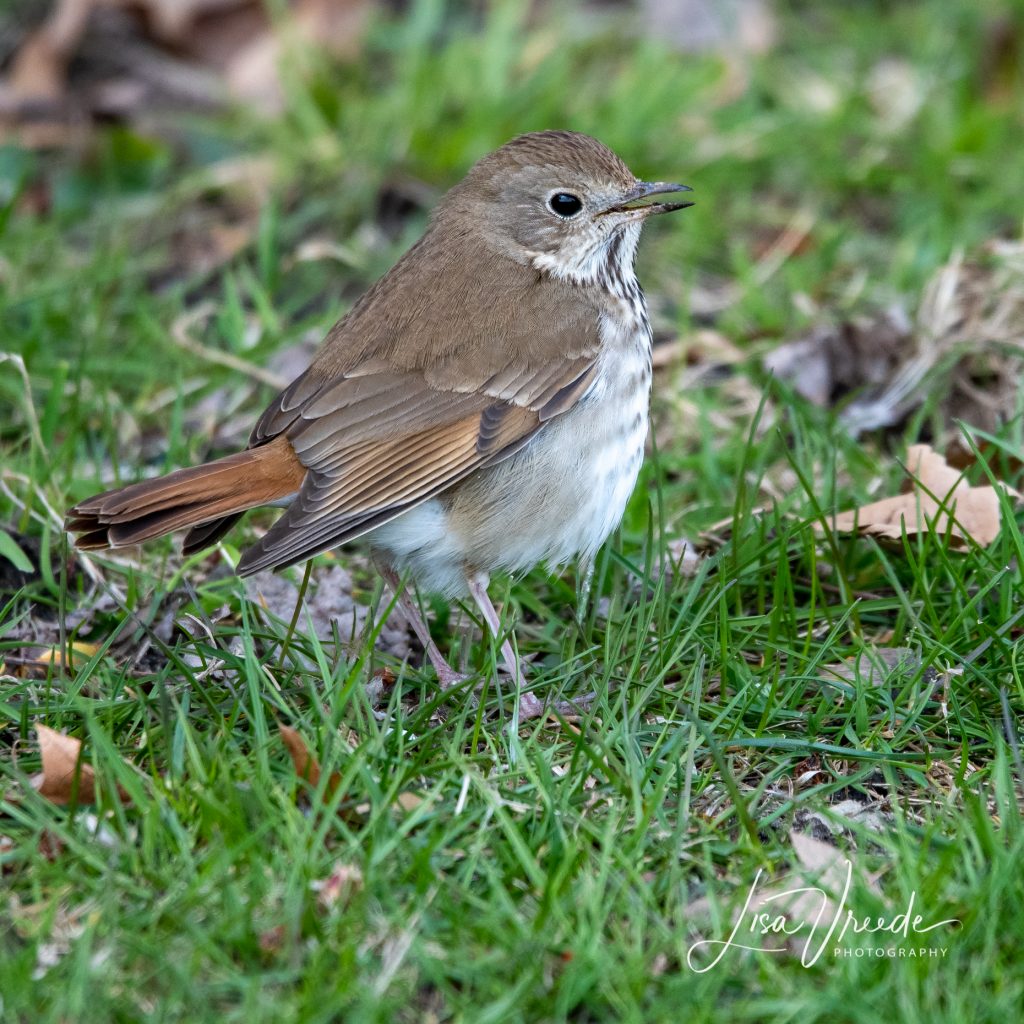
Tree Swallows had returned and were very vocal over the middle section of Bird Island, landing on the bare branches of the central tree and then taking off in pursuit of insects.  A solitary Chimney Swift joined them in the sky, and we noted the different wing beat between the two aerialists.  Yellow-rumped Warblers, both species of Kinglets, a single Yellow-bellied Sapsucker and a Hermit Thrush were also located.  Along the edge of the water where it meets the brush, important habitat to preserve, we spotted two stunning Swamp Sparrows and a Winter Wren.

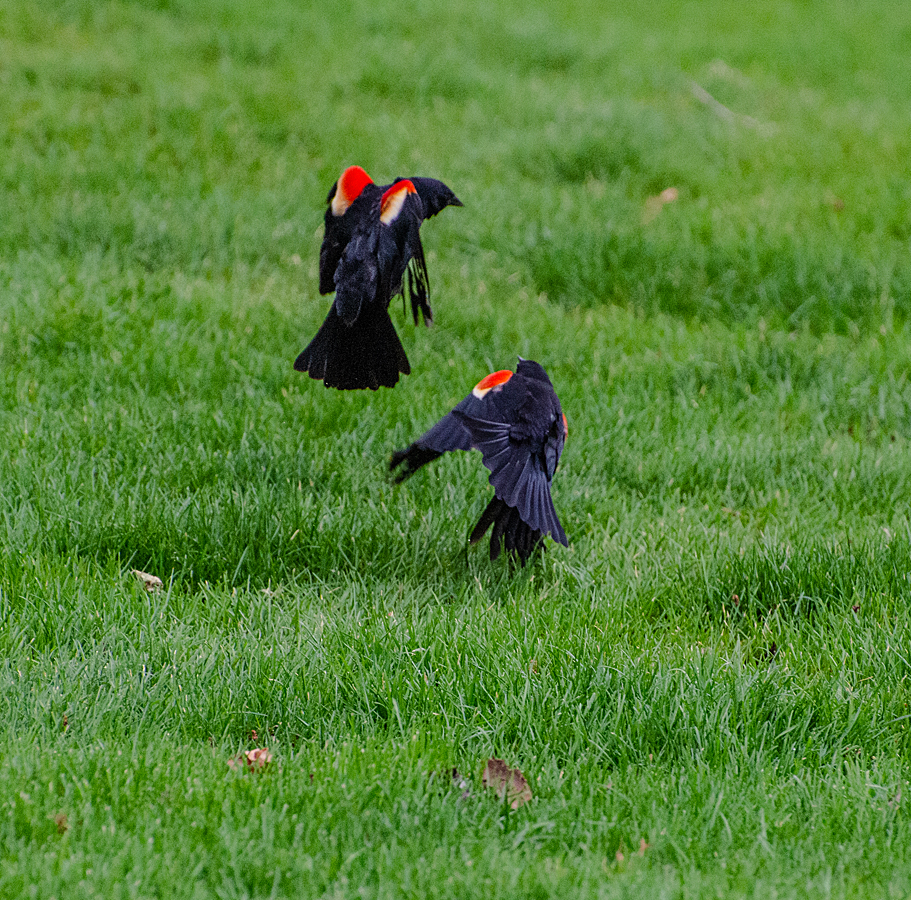
Of course, Red-winged Blackbird males were all over, engaged in territorial skirmishes.
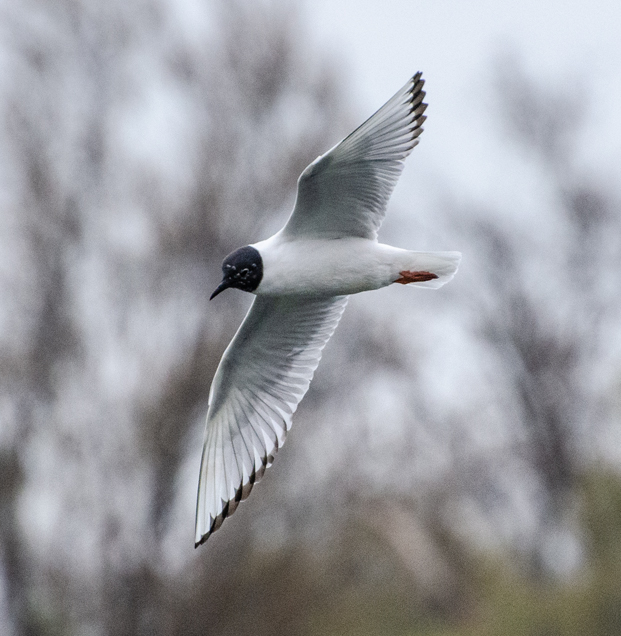
The water brought us other beautiful species including Wood Duck and Bufflehead.  Forster’s Terns were gracefully flying along the water near the G. P. Woods Park and moments later we were able to make comparisons to a Bonaparte’s Gull who put on quite the show as it circled around the cove in search of fish near the surface.
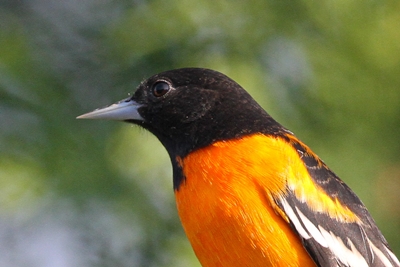
Killdeer and Robins were already on nests. We had a great look at a Baltimore Oriole Nest left hanging from last year, an educational piece as a few in our group had not realized that they stayed and nested. There were lots of vocalizations by the Red-bellied Woodpeckers which led to a discussion about the sad fact that European Starlings will sometimes usurp the resident Woodpeckers to claim the nesting cavity that they just finished for themselves.

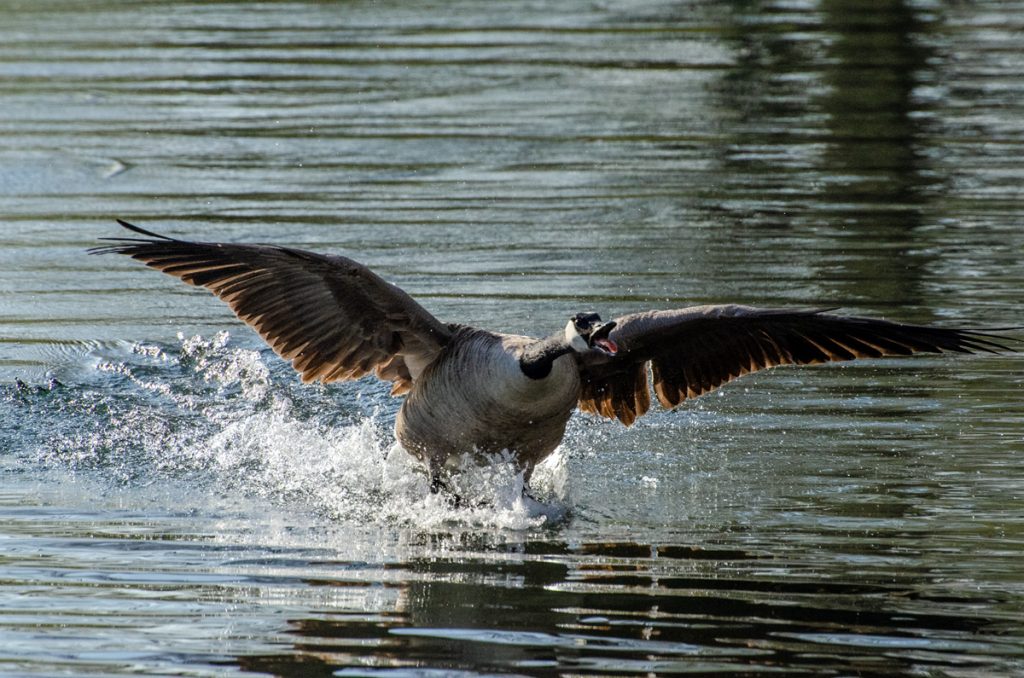
One of the Canada Goose pair already had young ones that they were vigorously defending against anyone that got too close.
 

Lots of bird species were on the move and gave us opportunities to compare wing beat style and speed.  Great-Blue Heron and Double-crested Cormorants flew high overhead while the female Belted Kingfisher paraded back and forth in the cove.

The Red-tailed Hawk was very obvious when we first arrived.  We were unable to locate a nest as in years’ past.

All in all, a wonderful two hour relaxing stroll, with the good fortune of fine looks and observations of 41 species of birds.

Many thanks to Bill Rapai for his photos of Red-winged Blackbirds, Canada Goose and Bonaparte’s Gull and to Lisa Vreede for her photo of the Hermit Thrush.

Rosann Kovalcik, Co-Leader


Birds seen on April 24, 2021 at Ford House


Canada Goose 

Mute Swan 

Wood Duck 

Mallard 

Bufflehead 

Pied-billed Grebe 

Killdeer 

Bonaparte’s Gull 

Ring-billed Gull 

Forster’s Tern 

Double-crested Cormorant 

Great Blue Heron 

Red-tailed Hawk 

Yellow-bellied Sapsucker 

Red-bellied Woodpecker 

Downy Woodpecker 

Northern Flicker 

Blue Jay 

American Crow 

Black-capped Chickadee 

Tufted Titmouse 

Tree Swallow 

Golden-crowned Kinglet 

Ruby-crowned Kinglet 

White-breasted Nuthatch 

Brown Creeper 

Winter Wren 

European Starling 

Hermit Thrush 

American Robin 

House Sparrow 

Chipping Sparrow 

Dark-eyed Junco 

White-throated Sparrow 

Song Sparrow 

Swamp Sparrow 

Brown-headed Cowbird 

Common Grackle 

Yellow-rumped Warbler 

Northern Cardinal 
 

Posted in Spring | Leave a comment |

Attracting Orioles to Your Yard

Posted on April 12, 2021 by Rosann Kovalcik

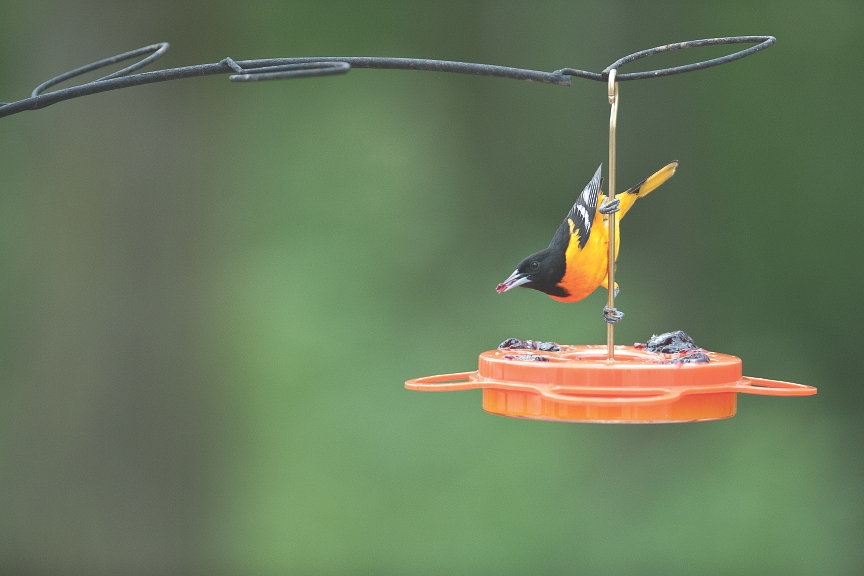
Graffius Oriole 3 small


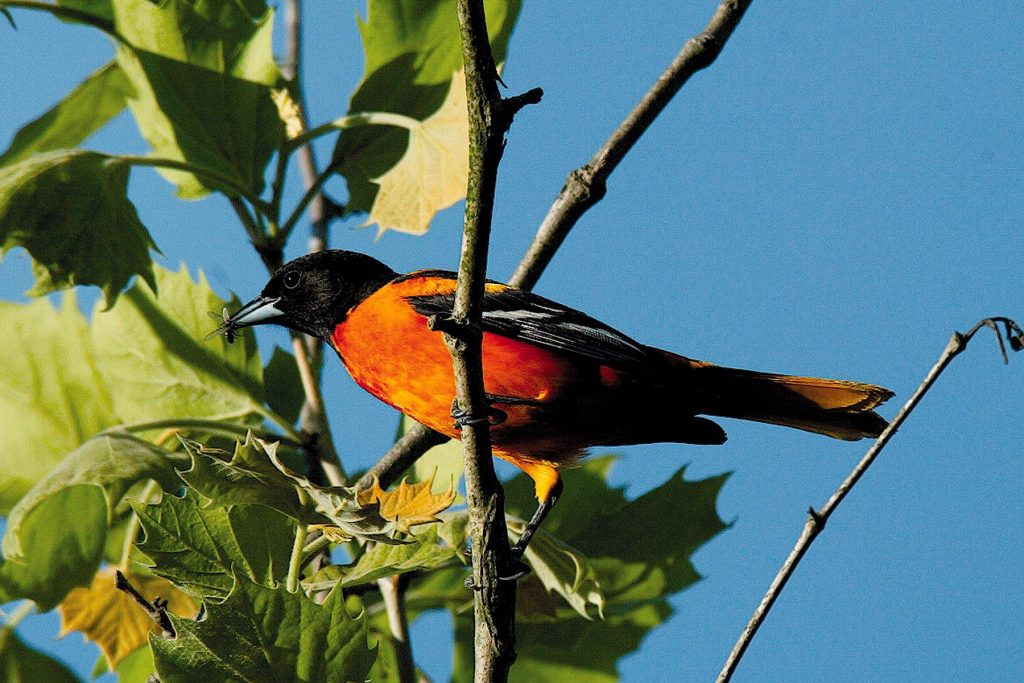
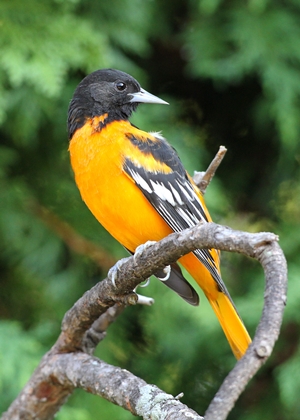
In search of an adequate food supply to raise a family, thousands of Baltimore Orioles migrate from Central America to Michigan during springtime. What does it take to attract these vibrantly plumaged orange and black birds to our yard?
When the male arrives, he is in search of a territory that will provide the basics – food, water, shelter and places to raise young – those elements allow him to carry on his genetics, the sole purpose of migration.


Undoubtedly, you will hear Orioles before you see them. The male Baltimore Oriole’s song consists of a short series of paired notes, repeated 2–7 times, lasting 1–2 seconds. The pure, liquid, flute-like sounds have a full, rich tone. Once you accustom yourself to its song, you will be able to search for them visually.

Orioles can be found in open woodlands, woodland edges, and riparian woodlands and in our shade trees in suburban neighborhoods. They do not prefer deep forests.

Because of Orioles’ habit of feeding at treetop level, consummate birder Pete Dunne nicknamed them The Eastern Arboreal Oriole. So why the nickname? This is a bird that is wedded to dense leaf canopy. Males sing from exposed perches to warn other males of proclaimed territory. Both the male and female land on the tallest point of a tree before slipping into the dense canopy to begin foraging for insects. These include caterpillars that emerge to eat unfurling new growth on trees.

Oak trees in particular offer more diversity of caterpillars than any other tree in Southeast Michigan. While an oak may not mature to full size during your lifetime, planting it for its food value to birds is an investment in the future of birds. Orioles eat many pest species, including tent caterpillars, gypsy moth caterpillars, fall webworms, spiny elm caterpillars, and the larvae within plant galls. Larger caterpillars are a challenge for some birds, but the Oriole has many strategies for eating them. The birds’ beak is quite pointed and is used to slice through the exterior of a caterpillar, allowing it to eat the nutritional insides. Orioles often have a feeding limb, a favored place to feed, as can be attested to by dried caterpillar skins accumulated on the branch. Orioles eat other insects as well including beetles, crickets, grasshoppers, moths, and flies and non-insects including spiders, snails, and other small invertebrates.

Baltimore Orioles sometimes use their slender beaks to feed in an unusual way, called “gaping”: they stab the closed bill into soft fruits, and then open their mouths to cut a juicy swath from which they drink with their brushy-tipped tongues. Fruits that are especially attractive to Orioles are those that are dark in color. A variety of these plants can offer the high lipid fat that the birds need for fall migration – dogwoods, chokeberry, elderberry, and viburnums. Native plants grow native caterpillars in abundance and therefore, are the perfect choice when planning your bird-friendly yard.

Orioles also have an early spring feeding strategy– they drink from the wells of Yellow-bellied Sapsuckers. These woodpeckers create purposeful holes to encourage sap to run, which in turn attracts insects, an additional food source for the birds.


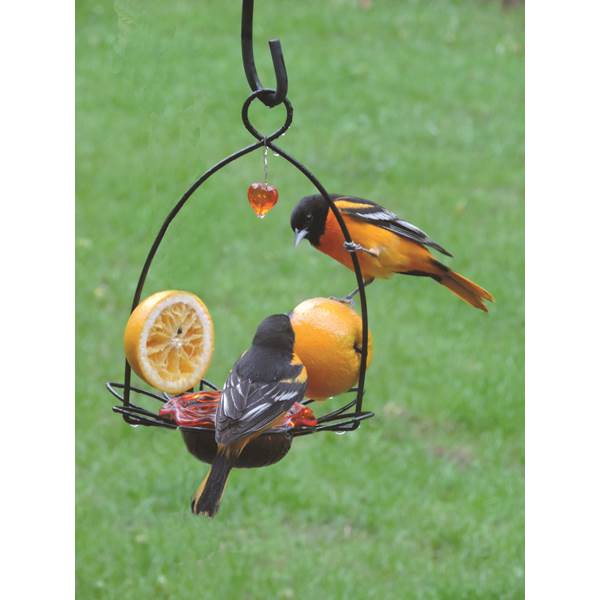
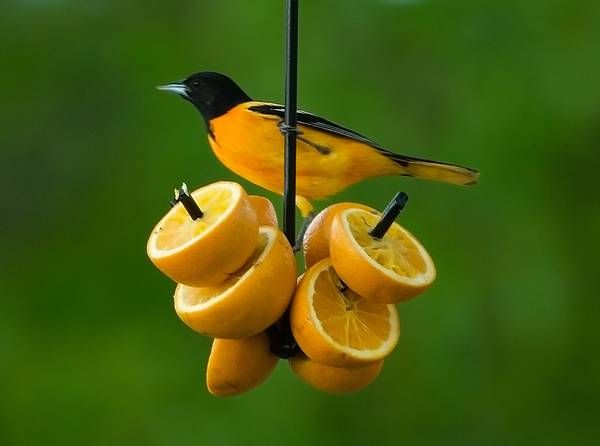
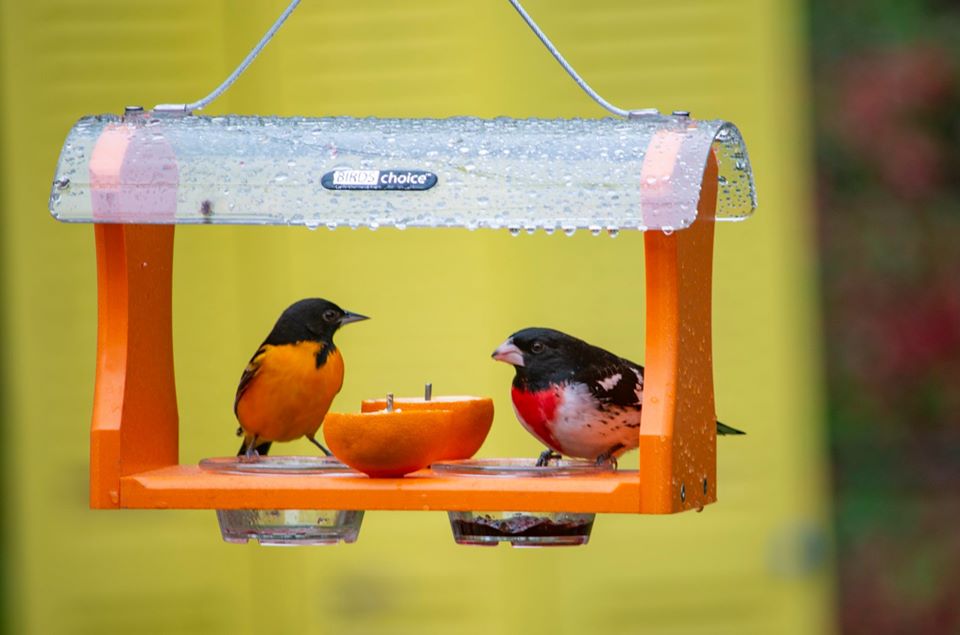
For a closer look at Orioles, you can place feeders in your yard that offer the same types of foods they find in the wild. Dark grape jelly can be offered in plastic and glass dishes, oranges can be placed on pronged feeders, and nectar feeders will round out the offerings.

Mealworms are another great food source to offer – the birds will take the worms back to their young as well as bring the young to the feeders once they are fledged. Your feeding station will be most successful if it is some distance away from other feeding stations. Your feeding station should be set up before the first week of May to attract the abundance of Orioles that migrate at that time. Once migration is over and the local birds have established their territory, you may find that the mated pair (or two if you are lucky) near your home can be very skittish at feeders. As a bonus, other birds will enjoy these offerings including House Finches, Cardinals and Rose-breasted Grosbeaks.

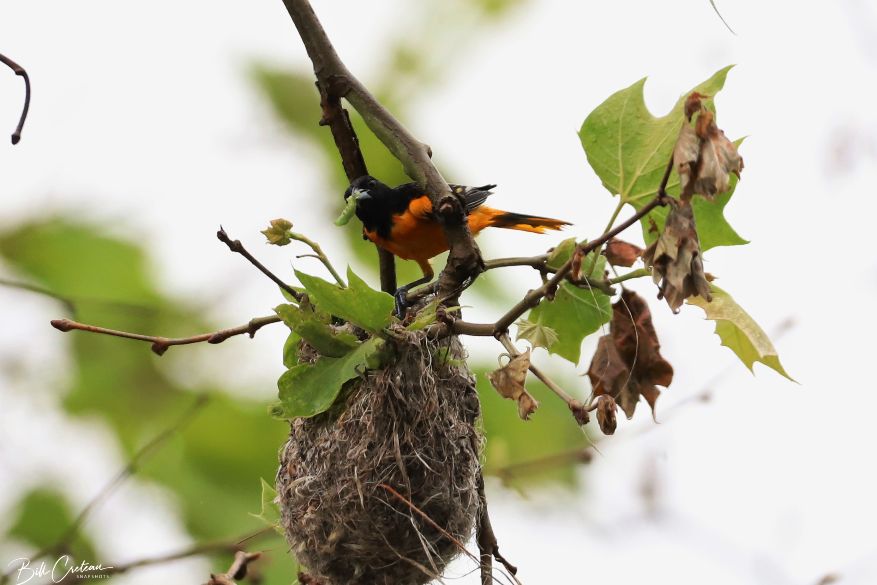
Female Orioles are responsible for the building of the nest that will hold their eggs and resultant young, usually four in number. Long strips of plant material are the backbone of their nest. Most frequently they use milkweed and dogbane, clipping the plant at the base just above where they are holding it firmly in their feet. Pulling up, they create strips that are then flown to the nest site and tied in place. Leave last years’ milkweed and dogbane standing into the spring so that these birds can utilize them, or clip it and add it to your nesting material basket. Elms were the favorite trees of Orioles for nest building before Dutch elm disease took its toll on them. Now, they favor maples, willows, poplars and oaks. Placed at the tip of branches, the sock-like structure has the advantage of being difficult for predators to reach.


The nest is a work of art, a suspended pouch woven as two separate walls. The female uses a shuttling motion to create the walls and then stitches the two halves together. The inside plant material can consist of dandelion fluff, the downy material from willows and poplars and short strips of grape bark. Natural materials can be placed in a suet basket and placed where you can enjoy these beauties helping themselves. Short strips of natural fibers (avoid polyester), hair, and string may be used by Orioles in nest construction. Fishing line and dryer lint are two materials not to be used. The fishing line is too thin and can easily entangle the bird. Dryer lint has materials that will hold moisture and would cool eggs and babies instead of keeping them warm as natural materials would. The female builds the nest over a period of about eight days. Nests are not reused, although some of the nesting material might be used in the new structure.

Graffius Oriole 2 small

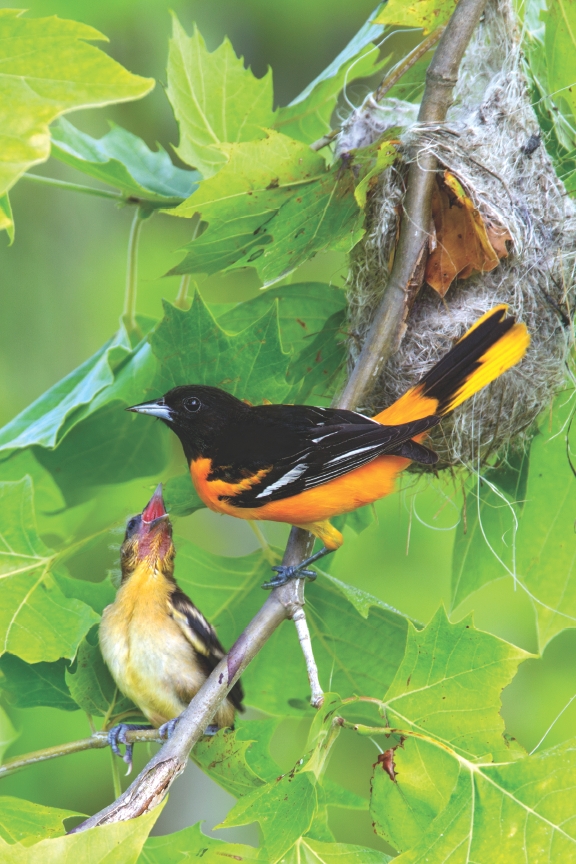
Males keep a watchful eye on the female as she works, mating with her when she allows. Incubation is done by the female entirely, lasting a period of 12 to 14 days. Both parents feed the young for the next two weeks, during which time the naked hatchlings develop into fully feathered adult sized birds.

Now it is the male’s turn to take over as the young follow him for lessons on where to look for food. The female spends her time eating to regain the weight she lost and preparing herself for fall migration.

Orioles leave early back to their southerly home, our yards quieter without their songs as early as the end of August.

Oriole Father feeding baby

Well worth the effort to attract, Orioles make our time in the yard a special time indeed!

Thanks to Bill Creteau, John Graffius, Wayne Hoch and Randy Repicky for  sharing their photos

Have you joined our email list? Click here to sign up, it’s free and gives you access to sales, coupons, nature news, events, and more!

Posted in Bird Feeding Solutions, Spring, Summer, Wild Bird Facts | Tags: baltimore oriole, Bird Feeding, birds, fun facts, orange, orioles, Spring, summer, wild birds unlimited | Leave a comment |

Mother Birds

Posted on May 10, 2020 by Rosann Kovalcik

Mother Birds

Happy Mother’s Day to all of the Moms out there.  Let’s take a moment to celebrate some of our local Mother birds.

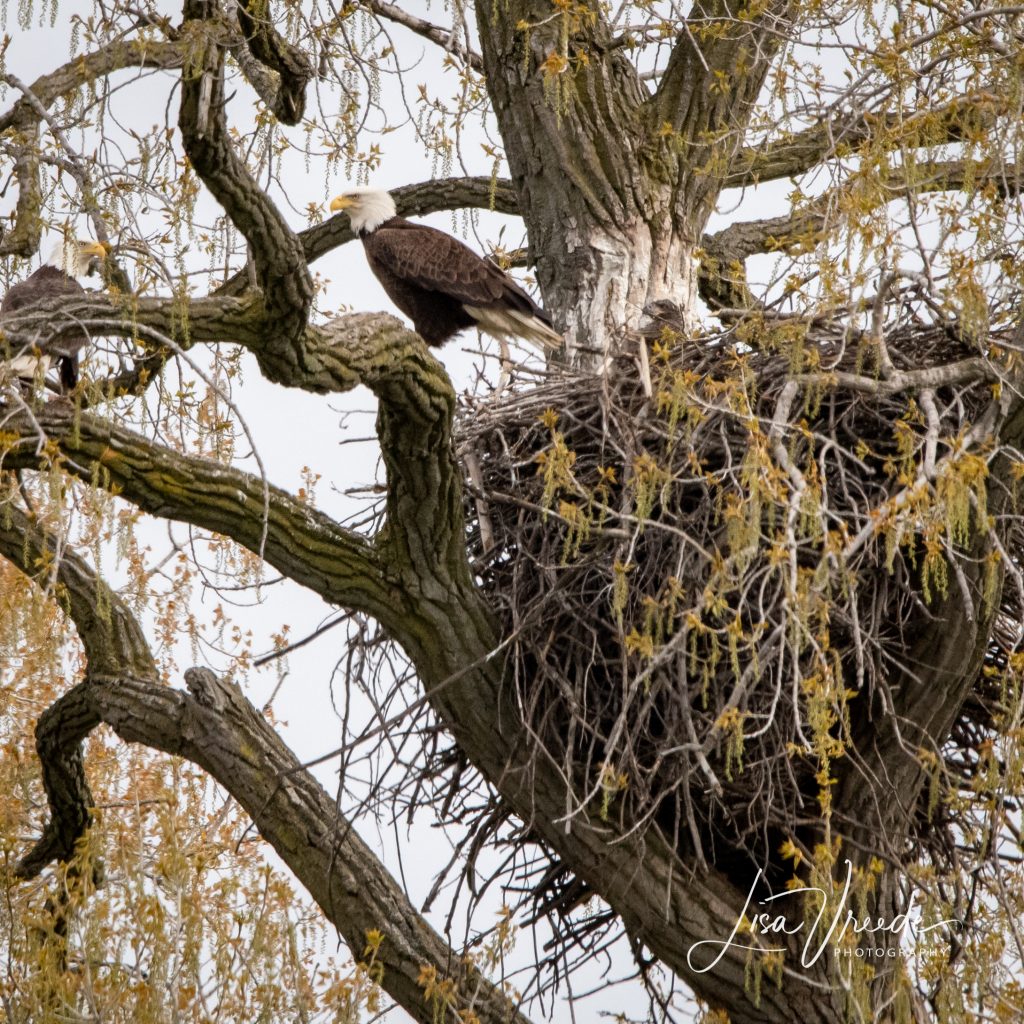
Sitting on eggs for over a month of incubation, the Bald Eagle shows what parental dedication is all about.  Our local pair at the Country Club of Detroit fly to the Lake to catch fish for the youngsters, and have been witnessed bringing their catches back to the nest to feed the fledglings.  This large raptor attends to her young for the entire summer as it will take this long for the young ones to learn to fly and develop hunting skills.  I was privileged to listen to the details of the nest building from a customer whose house faces the Country Club.  In a lot next to hers, the Bald Eagle would come down and take large branches off the ground to use as the base for this massive nest.  The inside is lined with smaller twigs, grasses and moss.

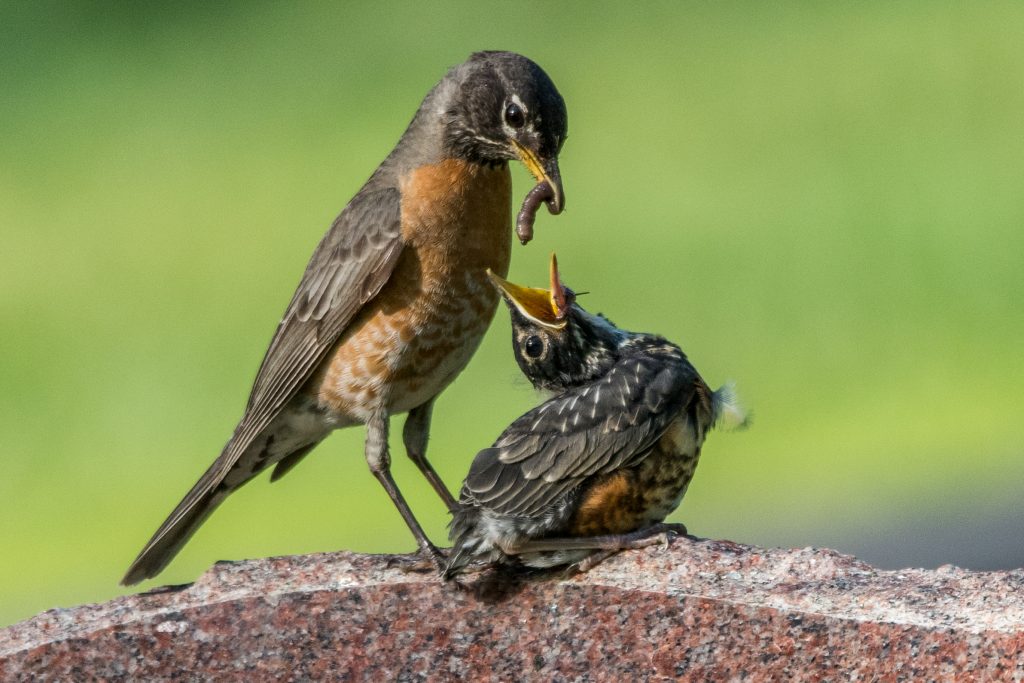
Many other Mother Birds, such as the familiar American Robin, sit on eggs for only two weeks, and it is the female alone who does the incubating. The young leave the nest after another two weeks, during which time the male helps with feeding.  However, Robins start breeding very early as many of you are already witnessing.  They may have two or three broods of young within the season, making for a summer full of parenting.

Oriole mothers create a master of a nest, a woven pendulous hanging “sock-like” nest.  The nest may take ten to fourteen days to create, placed close to the ends of branches so that it is unlikely that a predator is able to take the eggs or young.  Think about the fact that the first-year females have no blueprint to follow when weaving this nest.  As she builds, she tangles the nesting material with her beak and pushes it into shape much like felted wool. I once watched an oriole come to my yard and land on the ground at the base of the coneflowers that I had left standing all winter.  She clipped at the bottom of the plant and then pulled backward, creating a long strand of material with which to work into her nest.  That one moment changed the way I felt about “cleaning up” my yard in the fall.  Although I haven’t witnessed a similar moment again, I imagine that it is happening when I am not watching.

Hummingbird moms are solely responsible for creating their nest, incubating and feeding their young.  Many times, they will start creating a second nest while the first brood are still being fed.  That’s a lot of work, especially considering that they need to find spider webs to hold their woven nest together and onto the branch.  The web allows the nest to stretch as the young get older.  The spider webs are also used as the sticky substance that holds the moss and lichens into place on the outside of the nest, acting as camouflage.  Do you have all of these nesting materials in your yard for the hummingbirds to use?  Leave the webs and don’t spray for spiders or other insects.  In fact, insects comprise half of a hummingbirds’ diet and she feeds her young this half nectar/half insect diet.  If you don’t have mosses in your yard naturally, consider a small container of them to provide the nesting material so many birds can use.

Enjoy watching the hard working Mother Birds in your yard.

Posted in Nesting, Spring | Leave a comment |

Decluttering Your Bird Feeders… Or Not

Posted on March 25, 2019 by Rosann Kovalcik

Much has been written about decluttering lately. And so, of course, my thoughts turn to bird feeders.

A common bit of wisdom regarding decluttering is to ask yourself if an item brings you Joy.

Cylinder Feeders

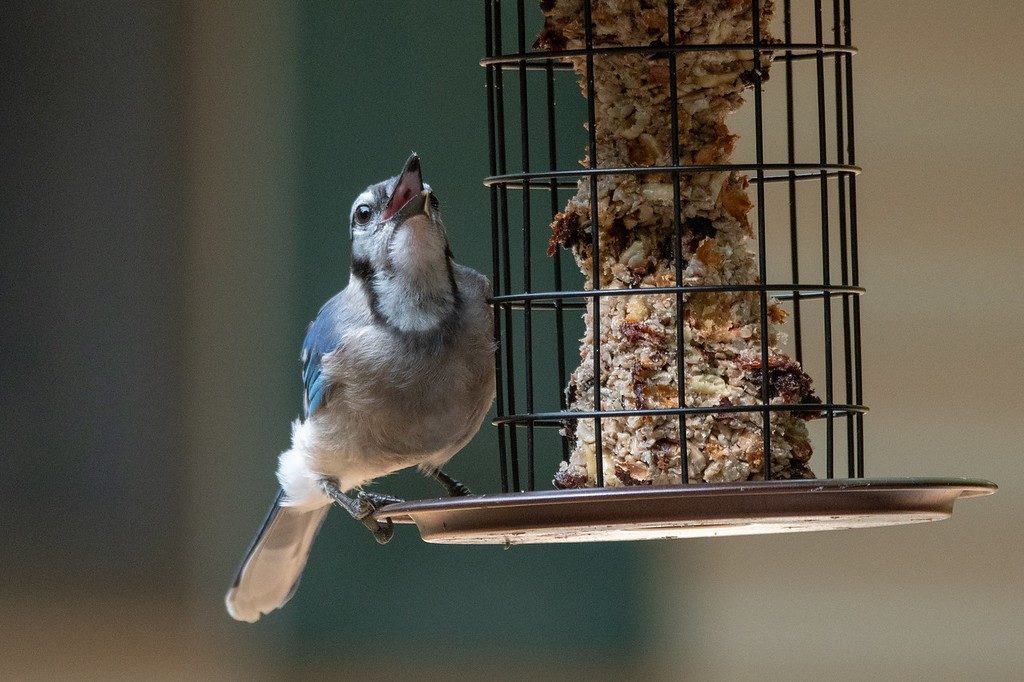
Blue Jay on Cylinder Feeder (Photo by Lisa Vreede)

When I fill my cylinder feeder with a new No-Mess seed cylinder, I notice Blue Jays coming in groups. Perhaps the first jay to discover the gleaming peanuts will stand atop the pole and give a little bounce up and down as he calls to the others in his tribe. Then the hammering begins; the birds’ feet holding on tightly, their heads moving back and forth, excavating each peanut with precision. Then off the Jay flies to a branch to eat its prize. Or maybe it plans to stash the peanuts. The flurry of blue from feeder to tree branches is so beautiful to watch.

Okay – Joy with the cylinder feeder… keep it!

Suet Feeders

Pileated Woodpecker on Double Tail Prop Feeder

Then I consider my suet feeders. I have a lot of those. Tail prop feeders – I have two of the extra-large version. Last time I filled them with Nuts and Berries Suet I was in Boyne City, and when I was done, I called out to the woods ,“Hey Buddy (my male Pileated Woodpecker’s  given name), I just filled the feeders for you!” And I kid you not; within two minutes, he flew into the woods along the road and hammered away at one of his favorite trees, doing some serious excavation. Then, as I backed away from the feeders, he came in on his landing tree. By the time I was in the house, I had the Pileated Woodpecker on one of the double tail-prop suet feeders, and a Hairy Woodpecker on the other one.

Okay –  true Joy with the double tail-prop suet feeders – keep them. All of them.

Finch Feeders

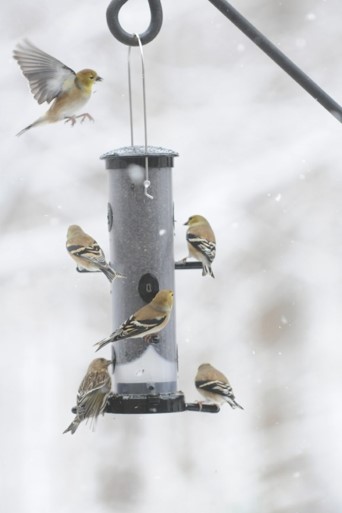
American Goldfinches

Next I reflect on my finch feeders. Yes, that’s plural as well. This past winter, it was so exciting to watch for finches of all varieties. The Winter Finch Forecast predicted we would have many irruptions into our area. This happens when seed crops are not optimal in Ontario, so irregularly occurring species move south in search of plentiful food sources. Pine Siskins can be identified at a distance by their very pointy beaks, looking like just-sharpened pencils. Careful observations need to be made to notice the potential Common Redpoll – such a dainty bird with the sweetest red cap. Of course, these winter visitors mix in well with American Goldfinches who visit the feeders all year long. As we move into spring, I watch my goldfinches carefully with binoculars to note when I see the first hint of yellow feathers as they molt into spring plumage.

Joy with the finch feeders – keep those too!

Hopper Feeders

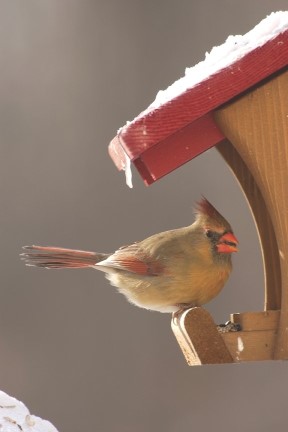
Female Northern Cardinal at Hopper Feeder

Time to evaluate the large hopper feeder, which holds an abundance of seed. I am relieved when the birds visit first thing in the morning, proof they made it through another challenging night. I feel so fortunate to be able to provide them with readily available food that has no shells, allowing for quick energy. If it’s cold enough, birds can go through all of their fat reserves in one night just to keep alive.

More Joy with the foundational hopper feeder – keep it.

Specialty Feeders

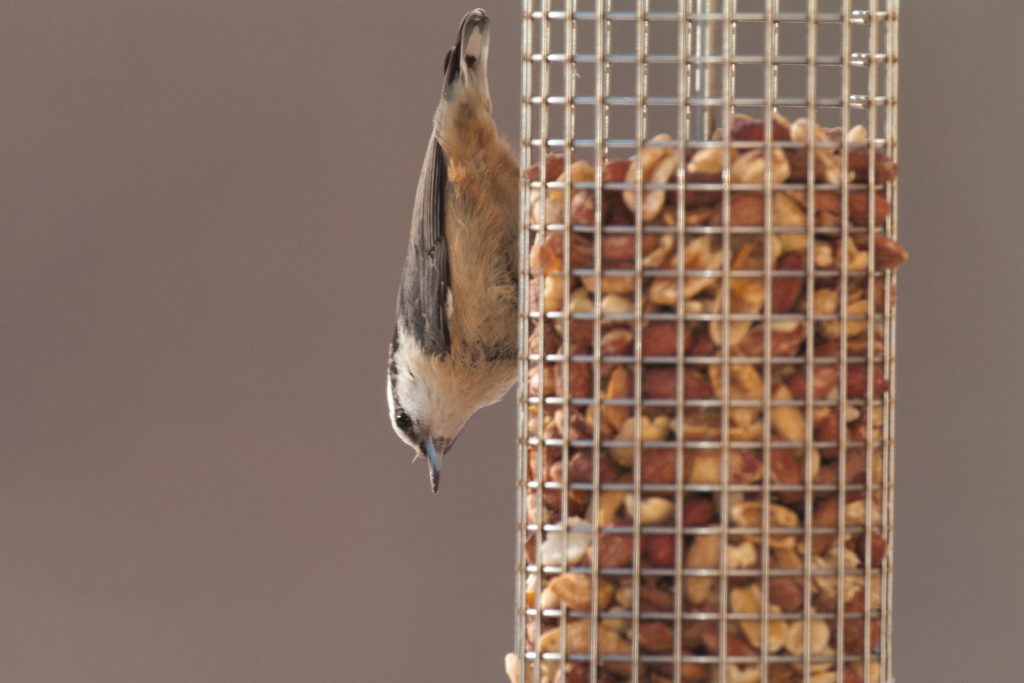
Red-breasted Nuthatch (Photo by Bill Rapai)

Then there is the peanut feeder, a draw for specific birds. It is certainly a favorite of Red-breasted Nuthatches that cling on upside-down.  I love to watch their bodies teeter back and forth like little sledge hammers as they pound away to extract a peanut. They make the dearest sounds, similar to small squeak toys. It has been an irruptive season for Red-breasted Nuthatches and I wouldn’t want to miss a moment of them.

Joy with my peanut feeder – keep it!

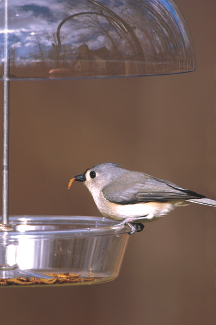
Tufted Titmouse on Dinner Bell Feeder

Finally, my thoughts turn to the variety of foods I offer the birds when I’m in a time crunch. For example, I can simply open a bag of Bark Butter Bits and pour them into my Dinner Bell feeder. This feeder is the most versatile and I dare say one of my absolute favorites. I can lower the weather dome so just the smaller birds fit between the tray and the dome, even excluding House Sparrows if low enough. It gives the Black-capped Chickadees a place they can dart to, picking up the beak-sized Bark Butter Bit and flying off to a branch. It is so fun to watch as they hold it in their feet and eat it with dainty bites. The Dinner Bell is also great for mealworm feeding. Mealworms give birds the protein they need for feather production when molting and for calcium when they are ready for egg-laying season.

Okay – Joy with my Dinner Bell Feeder – keep them.  Both of them.

So much for ridding myself of the “clutter” of bird feeders. Anything that bring me this much Joy is a keeper!

Posted in Bird Feeding Solutions, Spring, Wild Bird Facts | Tags: bird feeder, birds, blue jay, chickadee, declutter, finch, Spring, tidy, wild birds, wild birds unlimited, Winter, woodpecker | Leave a comment |

Bird Spotlight: Green Heron

Posted on May 28, 2018 by Rosann Kovalcik

Photo Courtesy: Valerie Gebert

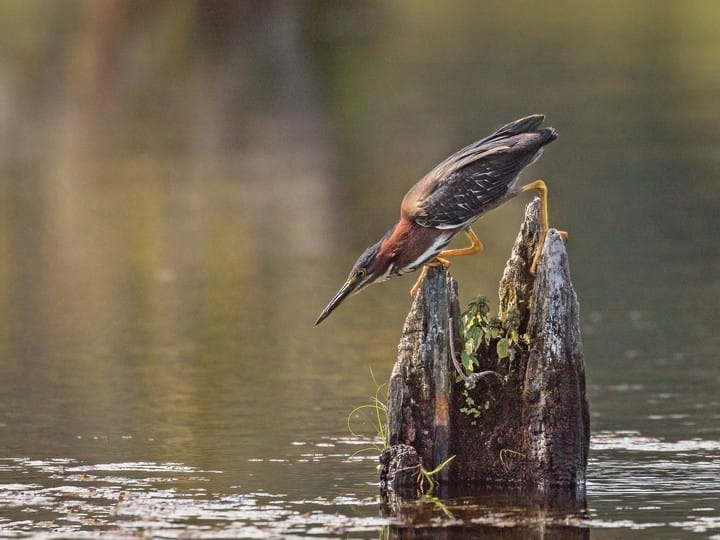
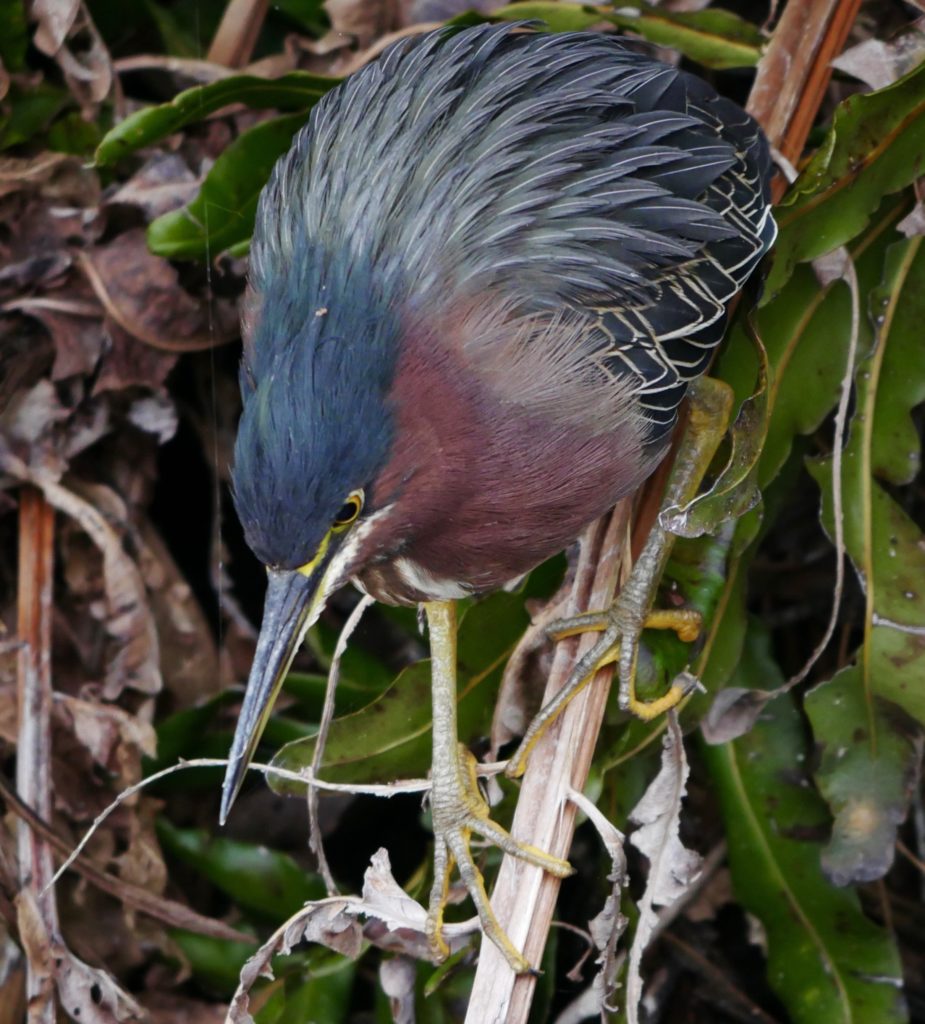
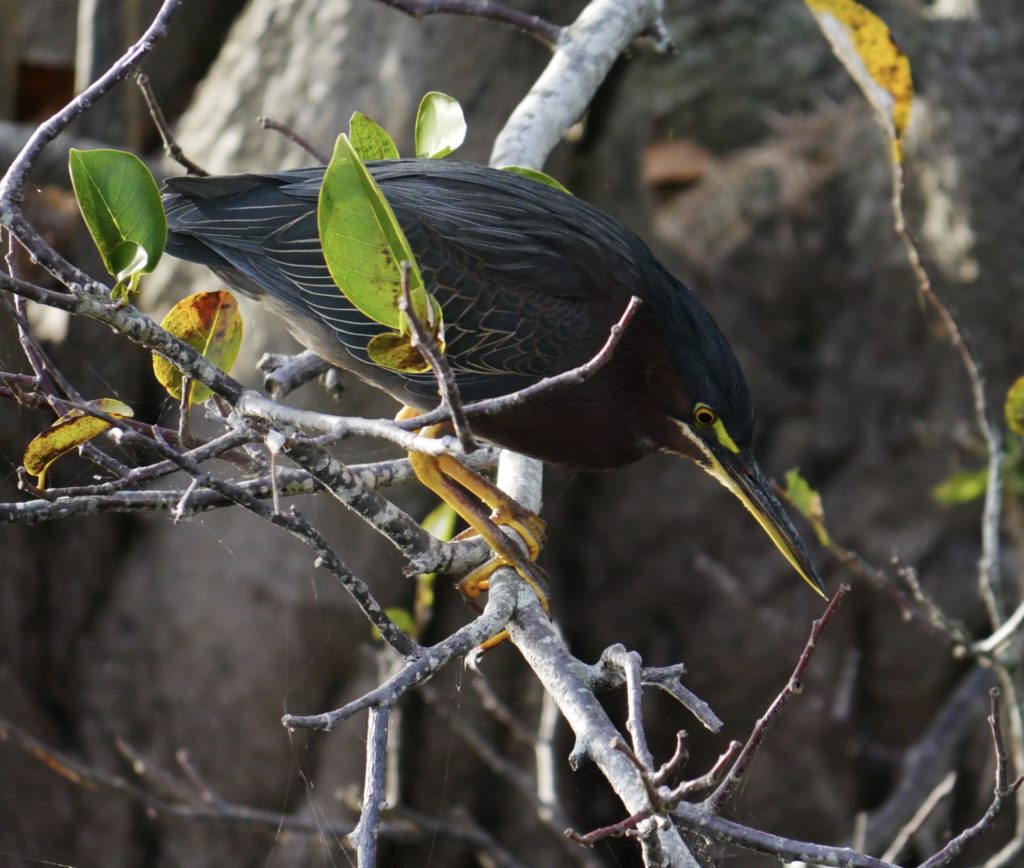
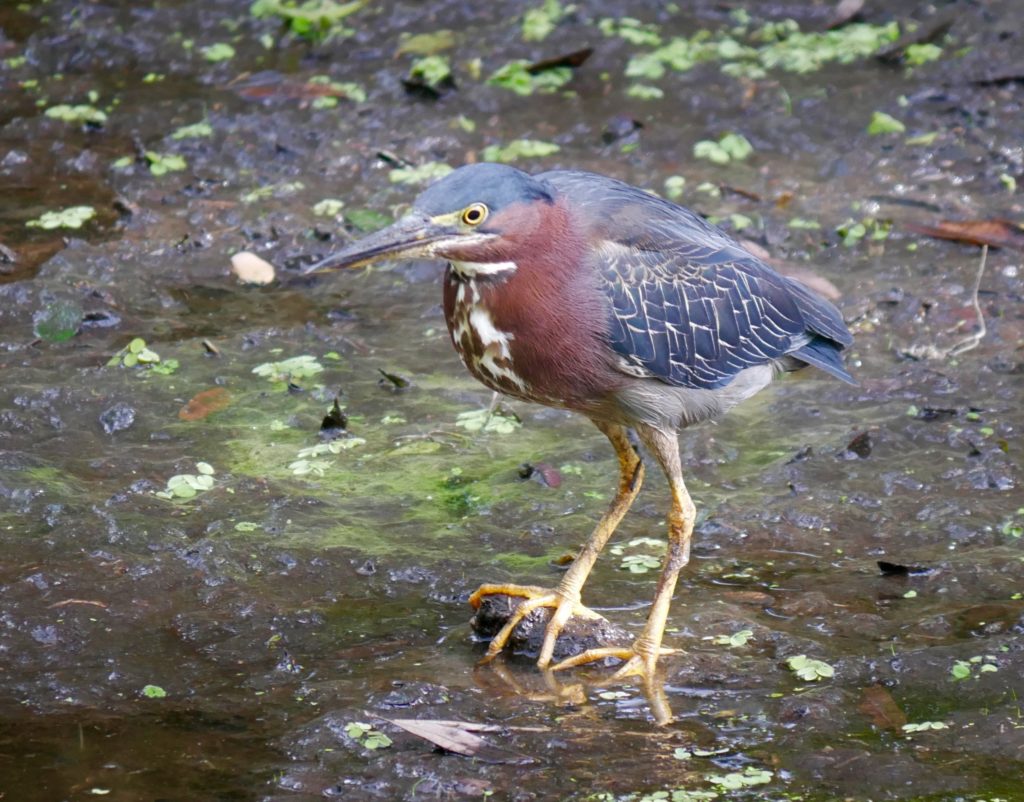
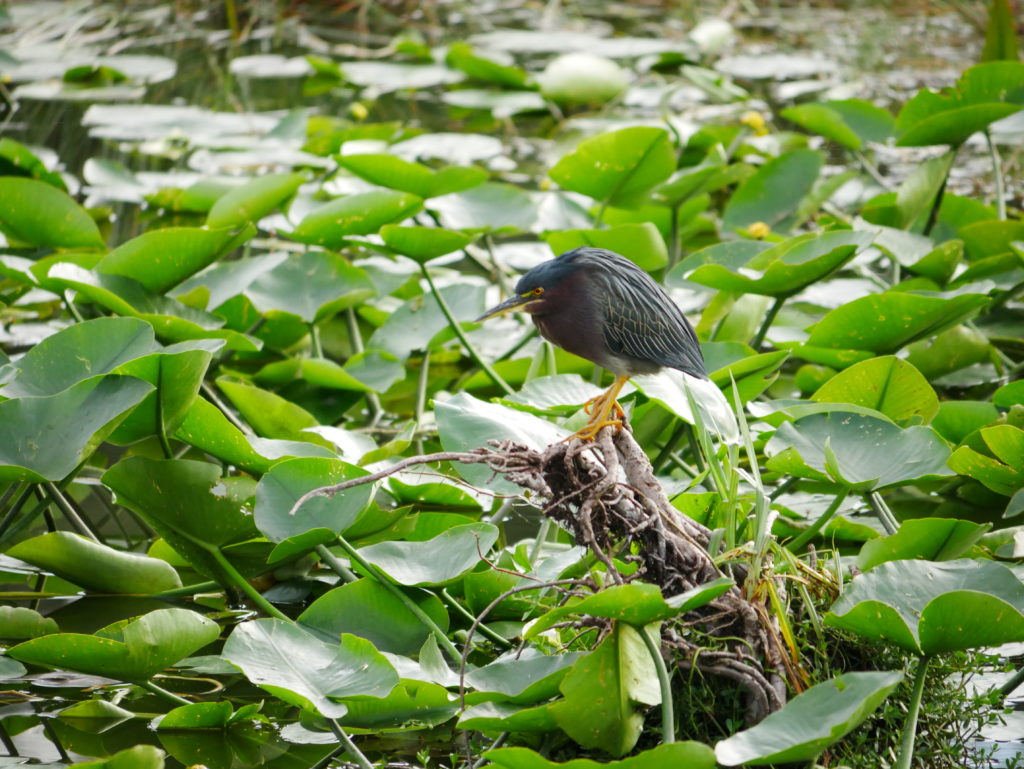
“They look like a kindergartner that dressed for school, choosing bright pants that didn’t match the multiple colors they put on,” said my niece after observing a Green Heron at the shoreline of an inland lake. Technically, they aren’t truly green; they have more of a greenish-blue cast to their backs like velvet draperies in an English Manor; a deep chestnut body, a darker, capped head and bright yellow legs. They also have white underneath the tail, most evident when the tail is flicked in agitation.

Diet & Feeding Behavior

Green Herons wait patiently for prey to cross their paths as they sit perched in every imaginable yoga pose along the water’s edge. Small fish, crustaceans, frogs – all are on the menu. Watching these birds hunt is a lesson in patience and perseverance. They stand for many minutes with necks retracted, their stares fixated at the water in front of them. When prey comes within striking distance, they strike quickly, extending their necks to almost the full length of their bodies. Whatever the catch, the heron flips it down into the back of the beak, then down the hatch in one gulp!

Photo Courtesy: Beth Miller, as seen on Cornell Lab of Ornithology’s “All About Birds” site

If you are lucky enough to come across them in your outdoor adventures, sit and watch; you may see another behavior that is sure to blow your mind – a Green Heron using a tool to fish. Yes, Green Herons uses tools to lure fish, dropping insects, twigs and feathers onto the water’s surface. This is an amazing sight to see, and one that I have been fortunate enough to witness from the quiet of a kayak.

Photo Courtesy: Valerie Gebert

Habitat

Where can you find Green Herons? They prefer bodies of water with vegetation near the shoreline. Think of our inland lakes and all of the exploring you can do in early morning. Our Huron-Clinton Metroparks are great places for this type of birding. The Edsel & Eleanor Ford House is another likely spot. Use your binoculars to scan the water’s edges, as well as checking lily pads. Listen carefully for a loud “SKEOW!” – a likely sign of a Green Heron relocating. I have noticed they often verbalize while flying from one space to the next.

Photo Courtesy: Valerie Gebert

Nesting

Green Herons make nests from twigs which they situate in trees. Both parents tend to the young. To start, the female lays between 3-5 eggs, and both she and her mate incubate them for 19-21 days. The youngsters are then fed by both parents, who regurgitate food into their mouths. In another 21-23 days, they’re ready to fly. Finally, the young fledge at about 30-35 days of age, meaning they are no longer dependent upon their parents. Green Herons mate monogamously each breeding season, often changing mates from one season to the next.

Wintering & Other Fun Facts

After breeding in Michigan (as well as in other states), Green Herons spend their winters in Mexico and Central America. However, during the post-breeding season, they have been known to show up as far as England and France, which is as exciting for the people there as it is for us when we see a Snowy Owl – what a special treat!

Photo Courtesy: Valerie Gebert

The oldest Green Heron on record was 7 years and 11 months old. It was found in Mexico in 1979 and first banded in Oklahoma in 1971.

Did you know – a group of herons can be called a rookery, a battery, a pose, a scattering or a hedge?

Whatever you call them, I hope you see many Green Herons in your forays into the field this year!


Enjoy your birds,

-Rosann Kovalcik

Owner, Wild Birds Unlimited, Grosse Pointe Woods

Have you joined our email list? Click here to sign up, it’s free and gives you access to sales, coupons, nature news, events, and more!

References

Cornell Lab of Ornithology. (2017). Green Heron Overview.

Retrieved from https://www.allaboutbirds.org/

guideGreen_Heron/overview

Posted in Spring, Summer, Wild Bird Facts | Tags: birds, green heron, heron, marsh birds, Spring, summer | Leave a comment |

Virginia Rail – A Successful Rescue!

Posted on April 18, 2018 by Rosann Kovalcik

Last weekend’s Bird Walk at the Edsel & Eleanor Ford House was rescheduled due to rain, but a few people showed up anyway, so we decided to slog around for a while to check for birds. During that short time, we saw Cormorants, Scaup and Horned Grebes in the lagoon. Soon, the winds and rain picked up to the point where we had to call it a day and head indoors.

An Urgent Call for Help

No sooner had my wet clothes been shed and breakfast finished, did the phone ring. On the other line, the person said, “We received a call from the Grosse Pointe Dog Wash. They have a bird with blue and red plumage and a long beak in front of their store. It’s just sitting and they wondered if we could help?”

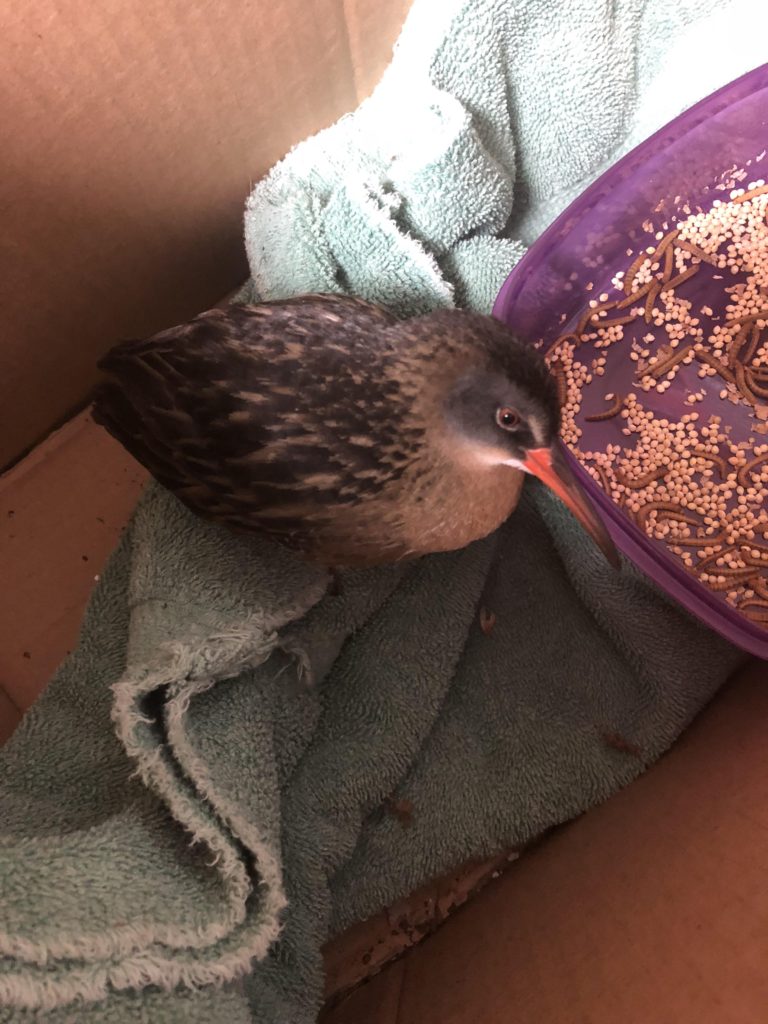
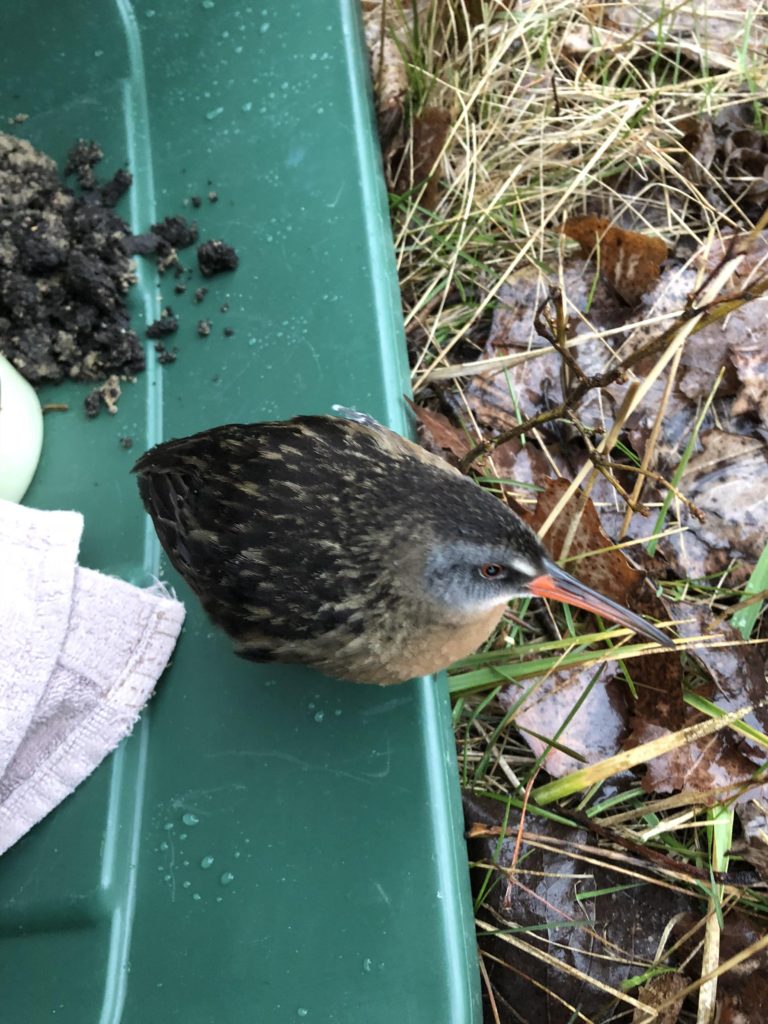
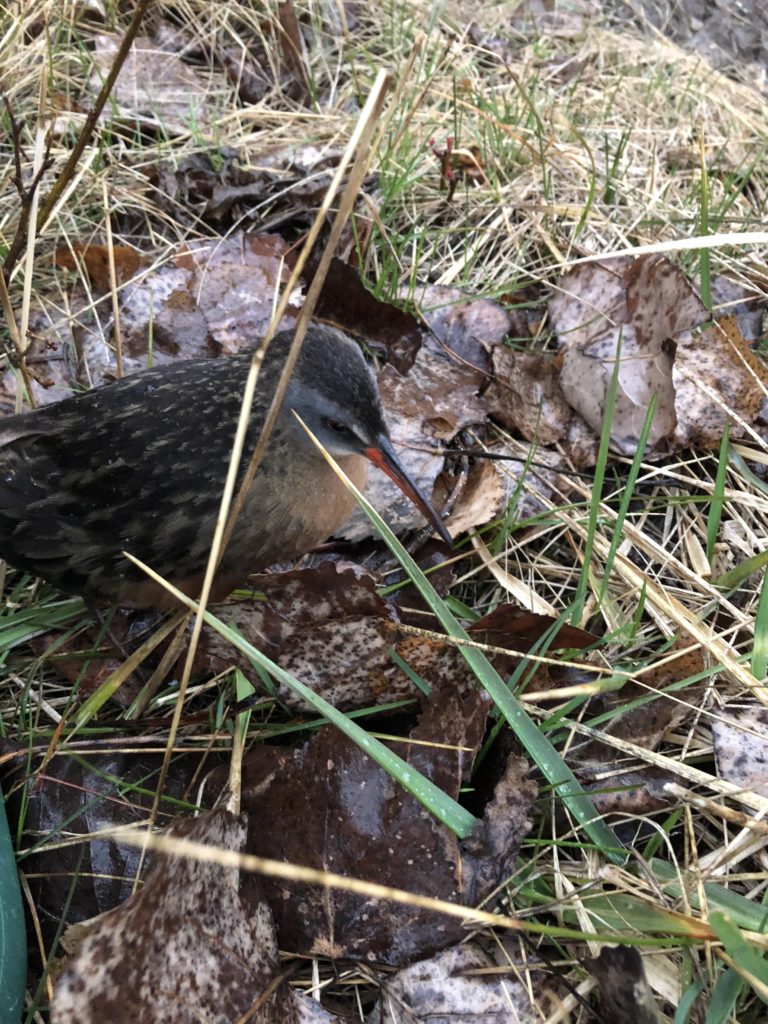
So of course I said, “Sure, I’ll go check it out!” And I am so glad I did! There, huddled in the towel that had been placed around it, sat a Virginia Rail, a secretive, marshland bird who must have recently migrated.

Virginia Rail

Looking Back…

My first experience with a Virginia Rail was at Point Pelee, a place where I went birding often, beginning in my teen years. The East Beach Marsh was where I first saw this bird. There were other sightings throughout the years, including a notable one in my own yard in Grosse Pointe Woods. A Virginia Rail once spent the day in the yard, tucked next to the house, before it left that night. Sadly, the marshes where these birds stop and rejuvenate with food are now few and far between, especially for a travel-weary bird.

Back to Present-Day…

I gently scooped it up the bird and placed it into a box. My next move was to message Andrea Aiuto, Director of the Bird Center of Washtenaw County. Although I knew the center was not open to accepting birds at this time, Andrea was a very reliable source for me to help determine what to do with the grounded bird. There did not appear to be any obvious signs of damage to the bird (such as a drooping wing). We assumed the storm may have grounded the bird in a place that provided no suitable habitat. After all, a sidewalk in Grosse Pointe is the least likely place for this bird to be!

Andrea recommended feeding mealworms and millet in a shallow dish. Lucky for me, I knew we had both at Wild Birds Unlimited, so a quick stop to my store was in order! As instructed, I kept the bird in a quiet, dark place to minimize agitation. Each time I took a peek, its head was under its wing.  I felt good that it was safe from the pelting, cold rains.

At some point, the Virginia Rail began to strike against the tote. I knew the bird of course wanted to be released, and while I felt relief that the bird was active, the weather was not ideal. With assurances from Andrea that the bird would settle down, I tried to ignore the movement and the noise, which eventually abated. I resolved to get the bird to the Howell Nature Center (HNC) for professional care the next day.

Time to Eat!

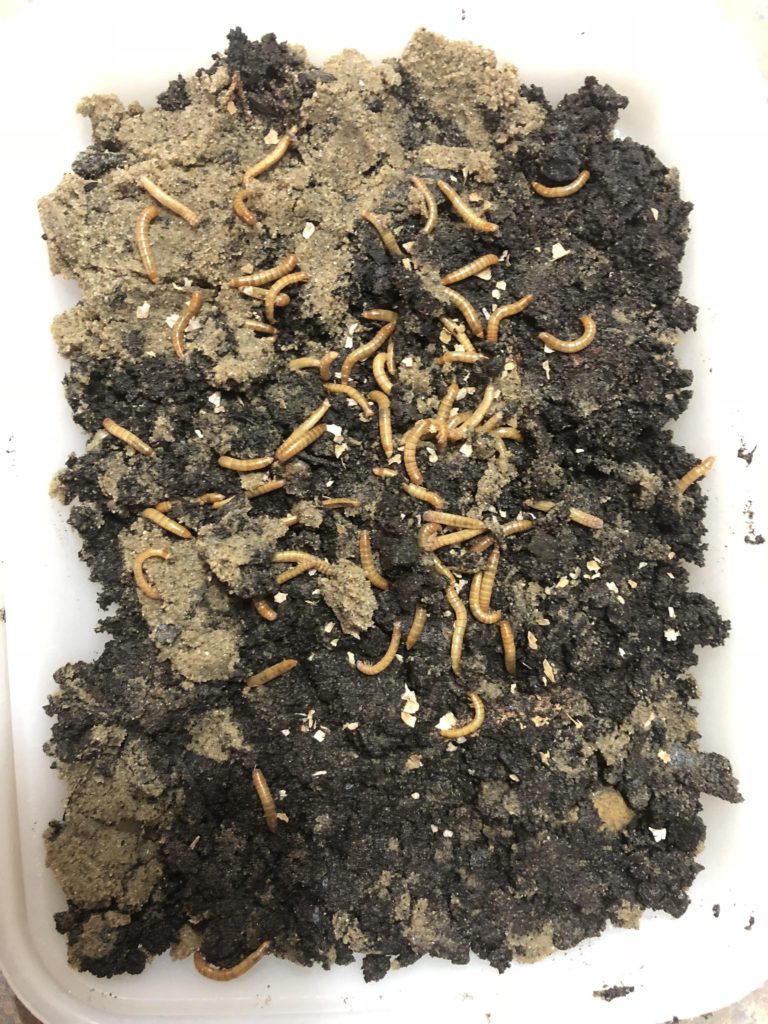
The next morning we were greeted by a covering of ice everywhere. Driving was not going to be a safe option. I called HNC to find out what else I could do for the Virginia Rail as it appeared not to be eating the live mealworms. The advice I was given made sense – this bird has a beak meant to probe the marsh for invertebrates. Get a shallow pan and fill it with dirt, mixing the mealworms in the dirt and placing some on top. The other bit of advice that I received was not to release the bird in the rain. Given the forecast, we were bound to be buddies for at least another 24 hours.

A custom-made food blend

The good news is that I could see the bird was eating. There were many mealworms gone and droppings on the towel. I eagerly supplied more of the wriggling morsels. The bad news was late in the afternoon, the Rail began to fling itself against the tote again. I begged it to calm down because of the rain. Unfortunately, there is no good way to explain this to a bird. That’s when the bird got the better of me – against advice I headed out to Lake St. Clair Metropark to release it. I felt that if it was strong enough to exert the energy needed to try to migrate, it was ready to get on its way. I also didn’t want it to injure itself in its attempts at freedom.

Release – Attempt One

When I got to the metropark, I found a spot very close to the marsh edge and carefully tipped the bird out of the tote. To my surprise, it just sat there.  For fifteen minutes – fifteen long minutes while I waited in the cold rain and tried to talk some sense into the Rail.

Feeling indecisive

“Why aren’t you looking for food?  Why aren’t you seeking shelter?”

The birds’ response was to sit tight.

“Okay… I am going to drive away and be back in fifteen minutes. If I come back and you are still here, it’s a sign that you want to come back and be warm.”

Of course, I remembered I was not supposed to release the bird while it was raining. What was I thinking? The bird continued to cajole me by thumping against its plastic prison.

Fifteen minutes later, the bird was in my gloved hands and taking a warm ride back to Grosse Pointe. When I arrived home, I provided more of the wriggling morsels and actually witnessed the Rail eating them. It looked healthy and active, with some flicks of the tail revealing the white undertail coverts, an action I had seen in the field. And so it was, back to that quiet and dark place as Andrea instructed.

Take Two – A Happy Ending

At 11:00 p.m. my bedtime reading of Audubon magazine was interrupted by the Rail again being insistent on escaping the plastic confines. I went to the back door. No rain. Grabbing the tote, I took it outside and took the top off. Ironically, this was very near the spot that the grounded rail spent in my yard. Alert, the rail began to look about with its neck outstretched. Then, in an instant, it flew straight up and then turned down the driveway, between the houses and out of sight – a strong and steady flight.

A successful release!

I breathed an audible sigh of relief. It’s amazing how much of your heart and soul goes into saving a bird! I have a renewed respect for bird rehabilitators, and I was so grateful for the advice from Andrea of Washtenaw Bird Center as well as the staff from the Howell Nature Center.

And I was really grateful that the Virginia Rail has a chance to make it to breeding territory and carry on the genes of such a determined little three ounce sprite.

Enjoy your birds!

-Rosann Kovalcik

Owner, Wild Birds Unlimited, Grosse Pointe Woods

Have you joined our email list? Click here to sign up, it’s free and gives you access to sales, coupons, nature news, events, and more!

Posted in Spring, Wild Bird Facts | Tags: bird, bird rescue, birds, grosse pointe, marsh, virginia rail | Leave a comment |

Northern Cardinal – A Crimson Jewel in the Garden

Posted on March 5, 2018 by Rosann Kovalcik

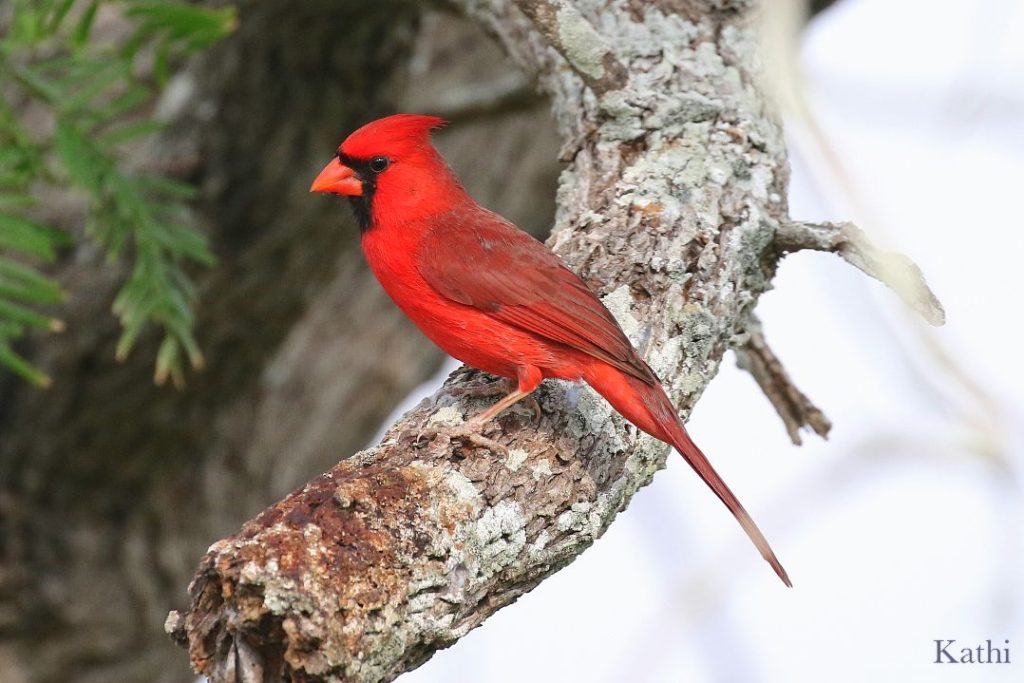
male Northern Cardinal by Kathi Hince

One of the moments I like most about late winter is hearing the Northern Cardinal beginning to sing. Prompted by the length of day, the Northern Cardinal sings to mark its territory.

If we’re lucky, we can hear two male Cardinals calling in tandem in a hormonal duel. Unlike many other songbirds, the females also sing. Often in response to the song the male initiates, the female will sing from the nest. Many times, her song is longer and more complex than the male’s! During nesting season, this is her way of asking her mate for food, as she is the sole incubator and does not leave the nest. Cardinals have an amazing physiology within their syrinx which allows for their complex song. Click here for a link to recordings and explanations.

Northern Cardinals appeared in Michigan in the late 1800’s, expanding their range due to deforestation. Cardinals prefer the opening of forest edges as well as low shrubs, so our yards make great habitat for these birds!

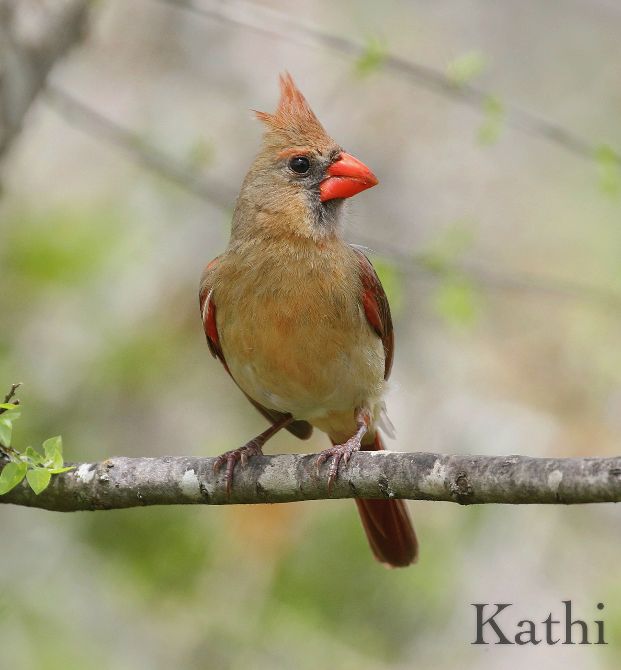
female Northern Cardinal by Kathi Hince

Nesting

The female Cardinal is responsible for nest building. She bends twigs around her body and uses her feet to push them into a cup shape. There are four layers to the nest including: coarse twigs, a mat of leaves, thin bark, and a soft top layer of grasses, rootlets and pine needles.

In Michigan, Northern Cardinals start to nest in mid-April, laying 2 to 4 eggs. Incubation takes up to two weeks. After hatching, the young stay in the nest another few weeks fledging. The young are fed protein in the form of caterpillars and other soft-bodied insects. Adults are omnivorous, adding seeds and fruits to their diet of insects.

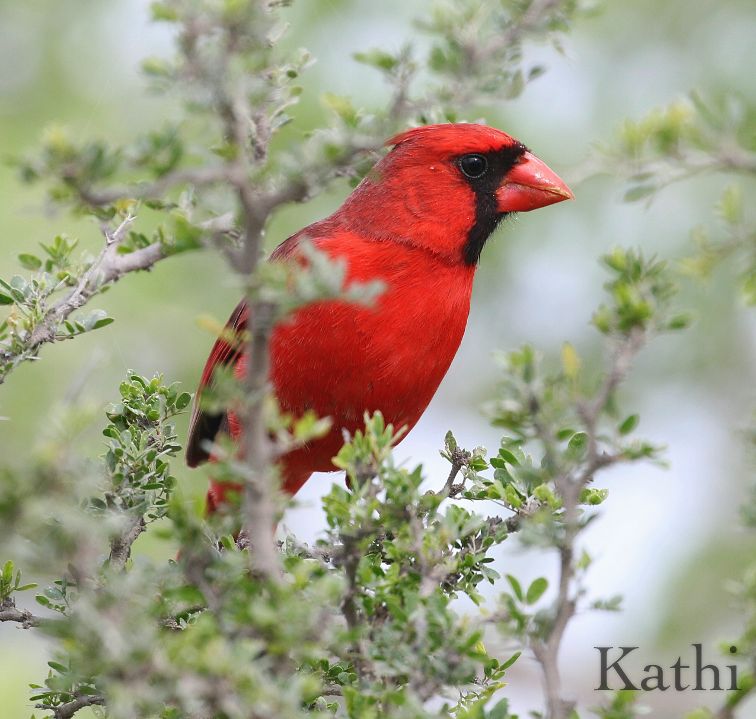
male Northern Cardinal by Kathi Hince

More Fun Facts

These birds are named for their bright red plumage thought to be reminiscent of the cleric by that name. The have the distinctive honor of being the State Bird of no fewer than seven states, which is more than any other bird.

Another endearing aspect of Cardinals is how the male feeds the female as part of courtship display. This is a change from their behavior in the winter, when it is every bird for itself.

Juvenile Cardinals look like the females, a warm brown with golden overtones, and a lighter belly color, sporting red in their tail feathers,  wings and crest. The difference between female Cardinals and the young is the females have a bright red beak, whereas young birds have a gray/black beak.

The males have a prominent black facial mask larger and more striking than the females’. The beak is a distinctive characteristic in Northern Cardinals. It is very short and robust – a true seed cracking tool. The cardinal holds a seed in the beak, with a crunch down to crack the shell, then a roll of the tongue to rotate the seed until the shell falls away. This leaves the nut “meat” for the bird to consume. This method of eating allows the Cardinals to stay at feeders and eat. Other birds like Chickadees must instead fly off to a perch where they can hold the seed in their feet in order to extricate the edible portion of the seed.

Window Strikes

Northern Cardinals are one of the species of birds that are known to attack their reflection in a window or car mirror, repeatedly striking the surface, much to our frustration and dismay. This behavior takes place because the bird believes it is attacking another bird, an intruder in the nesting territory. In order to stop this behavior, block the birds’ reflection on the outside of the window. A product aptly named Stop Bird Attack is sprayed on the outside of the window, easily removed when no longer needed (this product sold at Wild Birds Unlimited in Grosse Pointe Woods).

male Northern Cardinal by Kathi Hince

Attracting Northern Cardinals

To attract Northern Cardinals, offer black oil sunflower either in or out of the shell, safflower and shelled peanuts. All of these seeds can be place in a hopper feeder with a larger ledge or a tube feeder with an added tray, essential for their body size if they are to reach the feeding ports.

Take a listen for this beautiful songster, filling the days with sound that will lift your spirit.

Enjoy your birds!

-Rosann Kovalcik

Owner, Wild Birds Unlimited, Grosse Pointe Woods

Have you joined our email list? Click here to sign up, it’s free and gives you access to sales, coupons, nature news, events, and more!

Posted in Spring, Wild Bird Facts, Winter | Tags: Backyard birds, Bird Feeding, birds, Cardinal, Northern Cardinal, Spring, Winter | Leave a comment |

Cliff Swallows

Posted on July 11, 2017 by Rosann Kovalcik

It was a happy day when David Oliver stopped in at Wild Birds Unlimited in Grosse Pointe Woods to show me the photos he had taken of the Cliff Swallows at local Parcells Middle School.

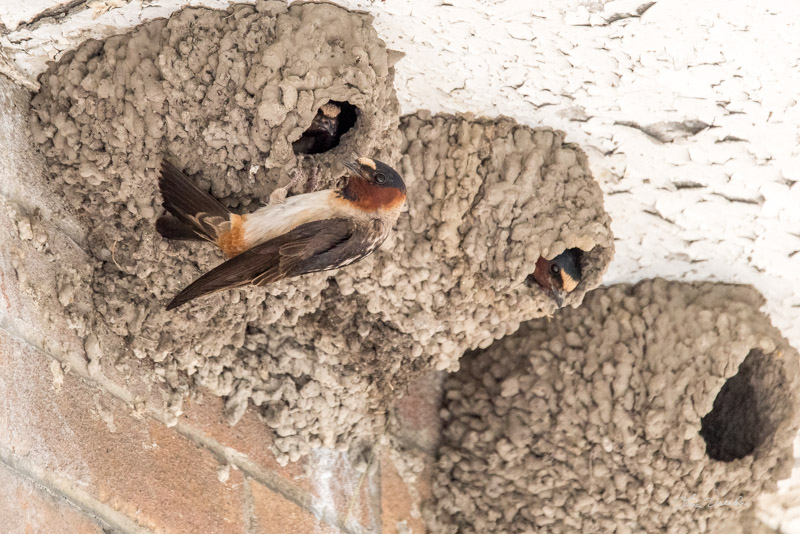
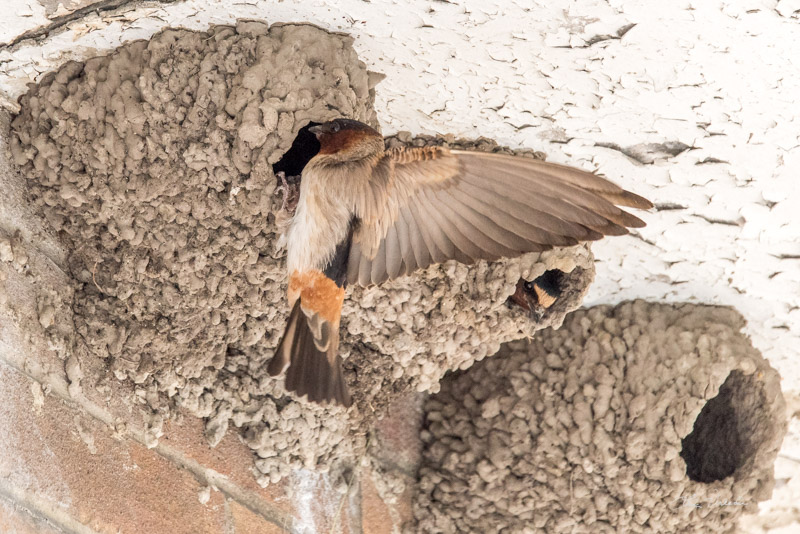
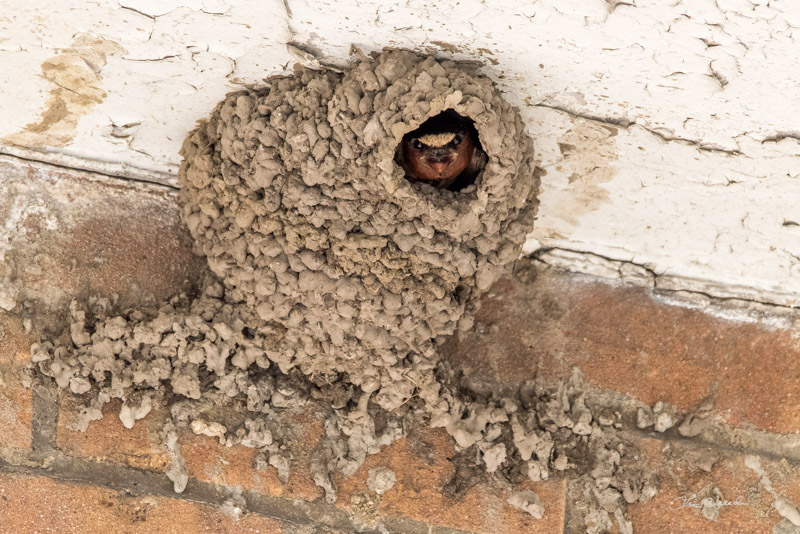
I hadn’t heard about these birds so I stopped at the school on my way home to see them for myself. What little beauties, flying about together for insects, their young waiting in the colonial nests these birds build.

Photo by Lisa Vreede

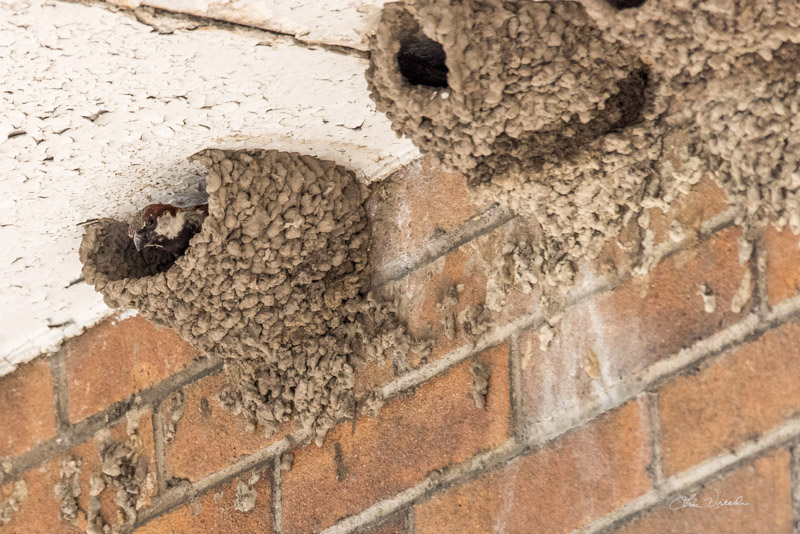
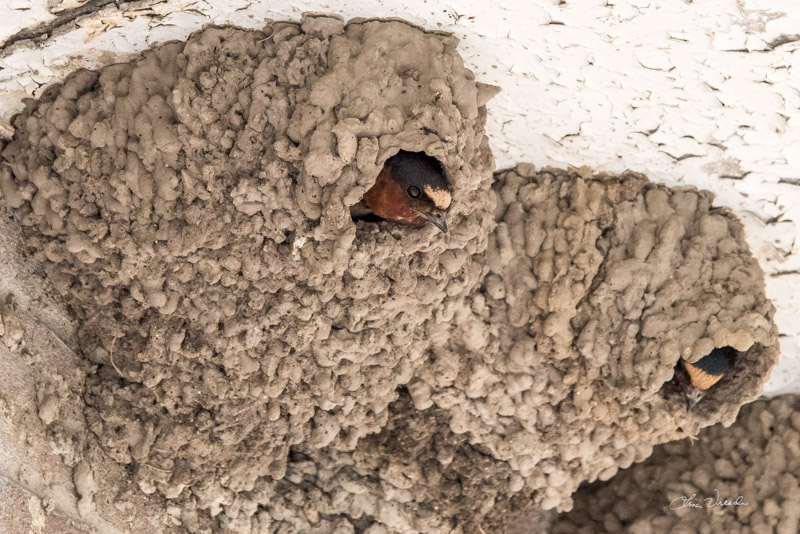
Cliff Swallows are one of the birds that have adapted to changes humans have made by building their mud nests on bridges, overpasses and many other brick surfaces. Cliff Swallows use their beaks to gather mud, using about 1,000 blobs to complete their nest. The reasons for nesting in colonies including more birds alert to potential dangers that can alert the group, and more scouts for food supplies. One such danger includes House Sparrows invading and taking over Cliff Swallow nests.

House Sparrow inspecting a Cliff Swallow nest, by Lisa Vreede

Colony members, by Lisa Vreede

Swallows always catch their insect prey while flying, which can be referred to as hunting “on the wing”. Cliff Swallows eat flying insects all year round, foraging above grassy pastures, plowed fields, and other open areas, but also over floodplain forests, canyons, and towns—often taking advantage of thermal air currents that bring together dense swarms of insects. I imagine the fields at Parcells and the Lochmoor Club offer a good habitat for the insects they seek including flies, bees, wasp, ants, beetles, lacewings, mayflies, butterflies, moths, grasshoppers, crickets, dragonflies, and damselflies. Cliff Swallows tend to forage higher in the air than Barn Swallows, which can be seen skimming just above the ground, especially behind the lawn equipment which causes insects to flush.

Photo by Lisa Vreede

Cliff Swallows preen their plumage, feed, drink, and bathe in groups, and they continue sticking together in large flocks during migration and on their wintering grounds. These beautiful swallows will be here only for the summer as they will migrate back to a place where they can find insects the rest of the year, in southern South America. Cliff Swallows migrate during the day at a low altitude and feed during migration.

Photo by Lisa Vreede

Click the link below to check out an AMAZING video by Cornell Lab of Ornithology, featuring Cliff Swallows building their mud nests… how cool is that!

Cliff Swallows Build Nests From Mud

Posted in Spring, Summer, Wild Bird Facts | Leave a comment |

Grosse Pointe Birding Challenge 2017

Posted on May 31, 2017 by Rosann Kovalcik

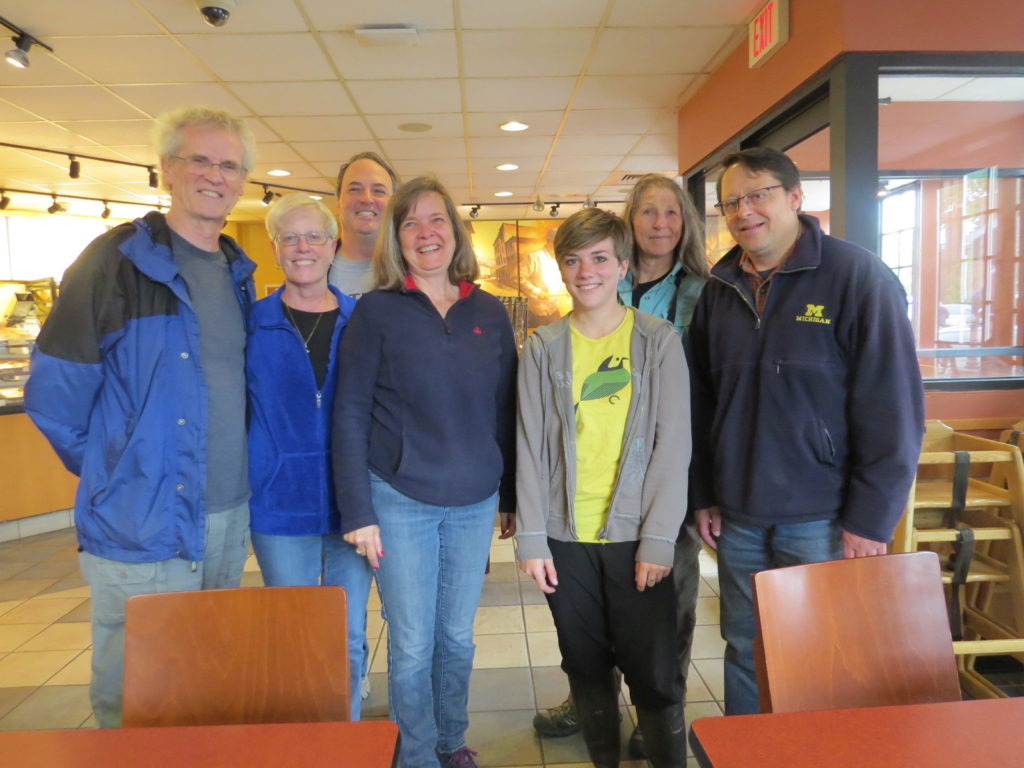
The following includes a recap of this year’s Grosse Pointe Birding Challenge, a yearly tradition which was started back in 2005. During each challenge, individuals or small teams pair up to count birds within their assigned Grosse Pointe territories. This year’s competition included Bill Rapai in Grosse Pointe City, Mike Florian, Judy Florian and Tina Bresser in GP Park, Mark O’Keefe in the Farms, and Andrea Rose (first timer!) and myself in GP Woods.

Left to Right: Mike, Judy, Mark, Tina, Andrea, Rosann, Bill

This year’s event was held later in the month than usual, which accounted for a markedly lower total species count than in years past. However, with a total of 66 bird species seen by all of the teams, and perfect weather throughout, it was still a great day for some friendly competition and bird watching.

The Challenge started the same as all others – listening in my yard as the birds make themselves heard. First is always the Common Nighthawk, who begins to be heard at 5:15, such a welcome song returning to the neighborhood. I assume they nest on the elementary school rooftop as I often see them in display flight just above the school.

Then came the ubiquitous American Robins, singing from every area of the neighborhood. I am very fortunate to have nesting Northern Cardinal as a constant, such a beautiful song! The volume of the Tufted Titmouse seems abnormal for a small bird. It can be heard above all other bird songs. An American Goldfinch is  singing from its usual place in the neighbors birch while the Red-bellied Woodpecker called from my oak tree.

I observed a Black-capped Chickadee picking midges out of the air and landing back on the wire while a Blue Jay zipped through the yard. The House Wren had started what would eventually be a long day of perpetual singing. With the last bird sighted, a Common Grackle, I was off to the lakefront park. Not a bad start with ten species while I loaded the car.

The park delivered the usual species including Canada Goose, Barn Swallow and Eastern Kingbird as well as the Purple Martins nesting in the provided housing. Unfortunately, House Sparrows and European Starlings are also using some of the housing instead of the occupancy including only the intended birds.

The waterfront turned up Mute Swan, Tree Swallow, Mallard and Ring-billed Gull. It was notable that a Double-crested Cormorant was not seen.  Also absent were Chipping Sparrows, who usually nest in the spruce trees near the activity center.  Rough-winged Swallows entered the crevices between large sandstone rocks on a homeowner’s lakefront.

Along the fence line near the Ford House, Orioles were in abundance.  I had a quick glimpse of a small bird, so fast I could not get my binoculars up for a better look. I decided to pish, which consists of making a sound that tends to prompt investigation by nearby birds, ideally leading to an accurate ID. This time it worked! A Northern Waterthrush appeared, giving me great looks as it turned its body side to side rhythmically, like the pendulum of a clock, a tail flourish for emphasis with each turn.

After that magical moment, I was treated to another. There were two large birds on the ground, bouncing in synchronicity on the lawn, moving forward with each bounce. Thankful or my scope, I had great views of these male Northern Flickers. They flew to a nearby tree trunk, landing close to each other and low to the ground. The Flickers moved  sideways along the trunk in short little hops, first one way and then the other, their eyes never leaving each other. They looked stunning against the tree bark which had the greenish cast of some type of moss growth. After five solid minutes of posturing, they flew further up in the tree then away from the area.

The mature trees of the Edsel & Eleanor Ford House usually turn up a number of warblers and did not disappoint this year. I was treated to the song as well as good views of Black-and-white Warbler, Blackburnian Warbler, and Blackpoll Warbler, which turned out to be our most common warbler of the morning.


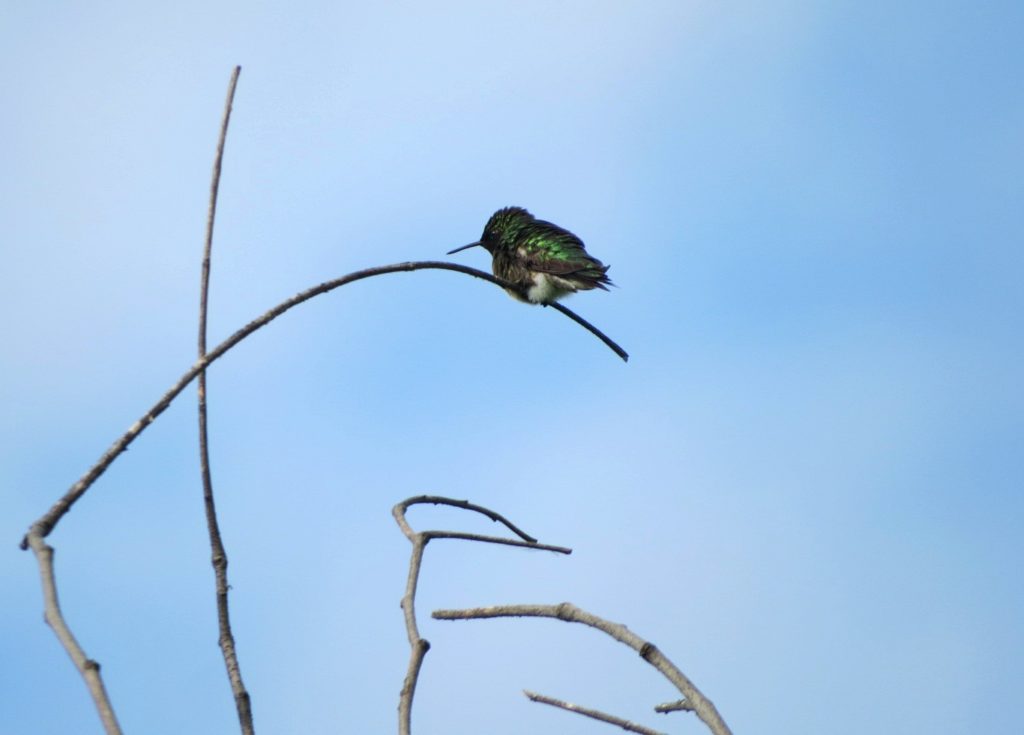
Ruby-throated Hummingbird on a snag, Photo: Andrea Rose

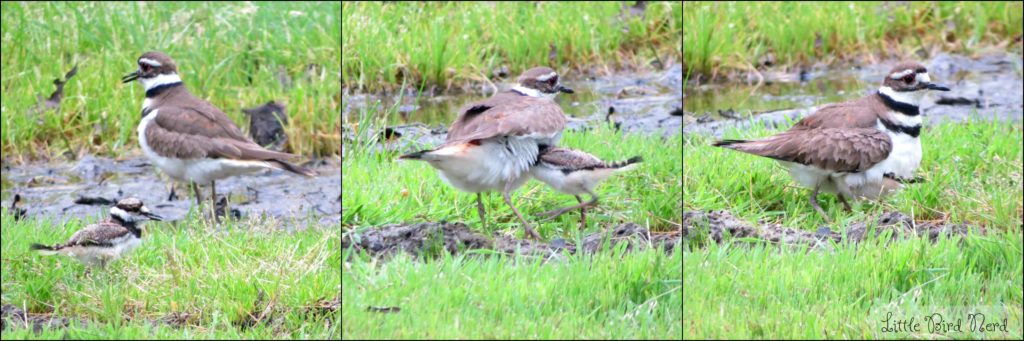
Once I covered the park, it was time to head over to the good habitat that is found at Lochmoor Country Club. I was fortunate to meet up with Andrea Rose Meldrum and we indulged ourself in a birding morning together. Lochmoor has wonderful natural areas and this year there were many areas that were mini-wetlands. This is where we found a Canada Warbler singing from deep within the tangle, had the male Ruby-throated Hummingbird on his customary snag of bare branches, and four young Killdeer following their parent around. Brown Thrashers were in a few places at the edges of the woods, American Redstarts sang from a number of places in the woods, and a peek into a break in the foliage revealed three male Wood Ducks sitting on a fallen log.

Killdeer chick runs for cover, Photo: Andrea Rose

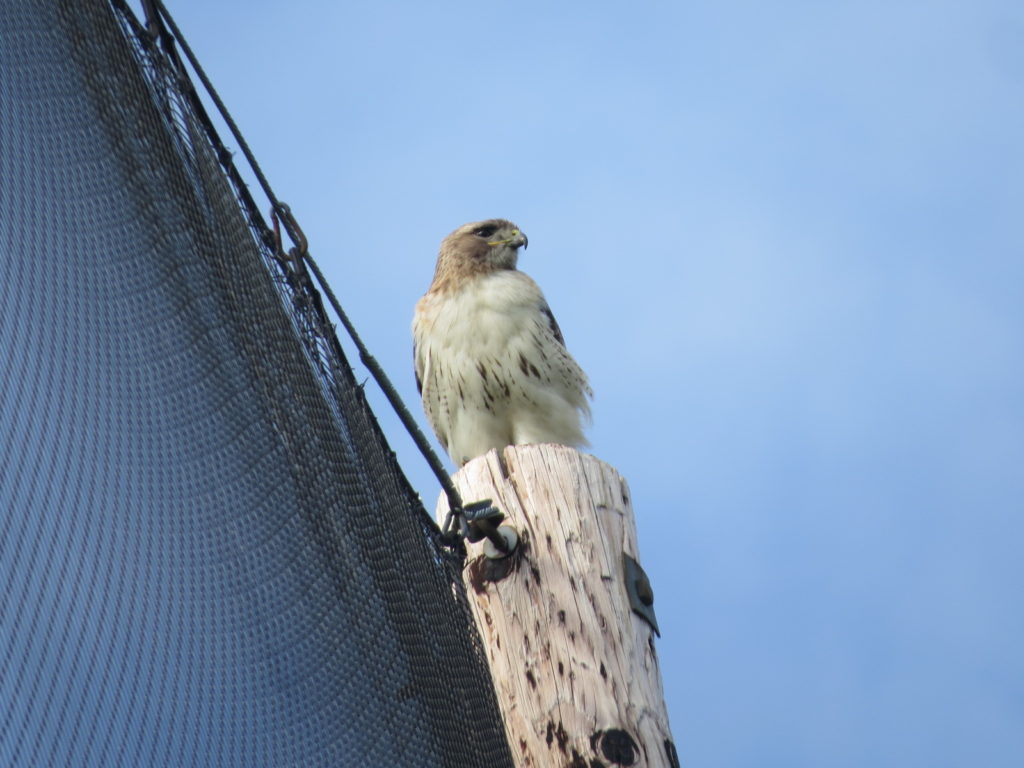
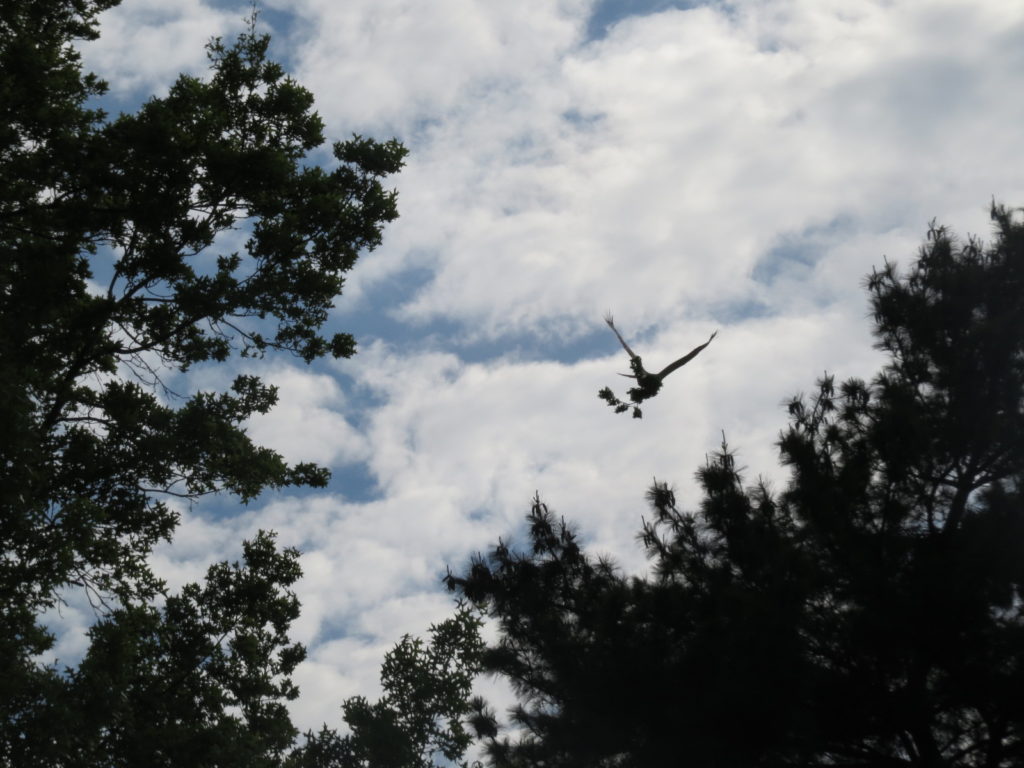
There has been a pair of Red-tailed Hawks nesting at the Club and we found one sitting on the tall pole that holds the netting in the driving range. Another one called and that brought our attention to look for the mate. We witnessed the bird fly over to a maple tree, break off a branch with leaves, and fly with it over to the nest tree. What a sight!

Red-tailed Hawk, Photo: Andrea Rose

…and the mate, nest building! Photo: Andrea Rose

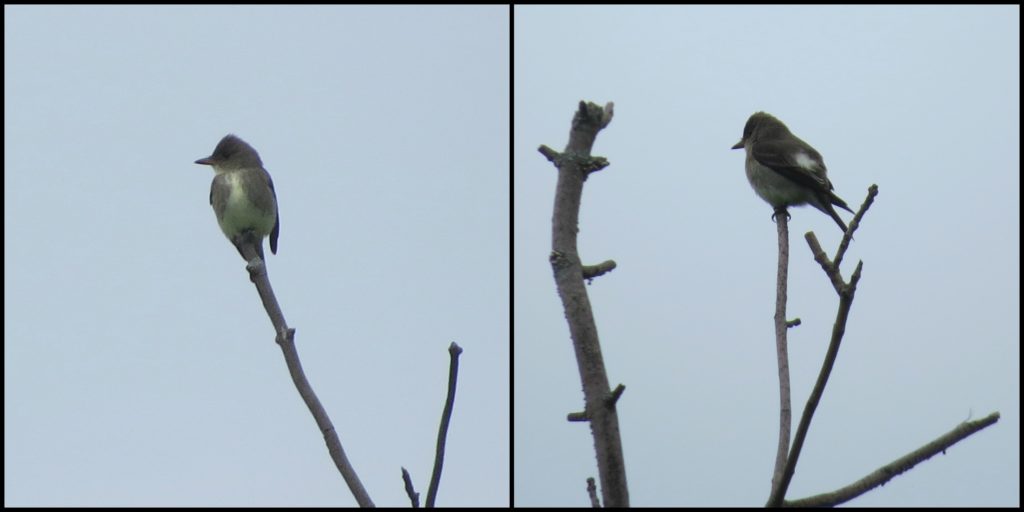
Perhaps our rarest bird of the morning, an Olive-sided Flycatcher, was sitting on the top of a tree, a behavior that is common for them as they survey the sky for flying insects. We had the bird fly several times and we able to relocate it each time to get a little bit of a different view. It was especially gratifying for Andrea to have the back view of the bird, allowing us to see the white tufts on the sides of the rump, a classic field mark. It’s gratifying to be with someone when they see a bird for the first time, a “lifer” and it was obvious that Andrea was enjoying her views of the Flycatcher as well as the photos she was able to take.


Olive-sided Flycatcher, Photo: Andrea Rose

The tree canopy on Heather Lane is another good habitat for warblers and proved that point with a load of Blackpoll Warblers and an additional species – Yellow-rumpled Warbler.

Our next few stops were not as productive as usual, perhaps owing to the later timing of this Challenge. The Hunt Club did not turn up a Chipping Sparrow either, although it was the only place we had House Finch, singing his heart out from atop a weathervane. Ghesquire Park was unusually silent and we found ourselves walking away from a lack of White-breasted Nuthatch and Cooper’s Hawk, much to our disappointment. However, we did run into a Wild Birds Unlimited customer who exchanged memories of living near this park, and who was very helpful in showing us some possible Cooper’s Hawk locations as we scanned the trees above.

Besides, a morning birding is always a joy, and finding suitable bird habitats in our assigned city is continually hopeful. 

At 12pm sharp, we all met at the Panera in the Village, and compared our tallies. For a little more excitement, we added a “bonus bird” to the challenge, meaning anyone who found this bird would be awarded a few extra points. The bird in question was a Scarlet Tanager, and Mark O’Keefe was successful in finding one in the Farms. Mark called this his favorite moment of the challenge, saying, “I heard its up-and-down song that is so similar to a robin’s song. The burry quality made me think it was a tanager. I listened for the distinctive ‘chick-burr’ call notes, but did not hear them. Finally, I was able to locate the bird high in the trees, and got some good looks at this stunning bird.” Bill Rapai, member of the Grosse Pointe City team, was content to sit patiently in his yard, listening for birds. Some of the birds he heard at this location were House Wren, Carolina Wren, and American Goldfinch. Sometimes sitting quietly in one spot is the best way to observe the birds!

In the end, Andrea and I were able to retain the title on behalf of the City of Grosse Pointe Woods, with 56 species. The Farms had 54 (inluding their bonus bird), the Park had 43, and the City had 30. We tallied a cumulative number of species for the morning at 66, accompanied by a lot of smiles at our tally lunch.

Have you joined our email list? Click here to sign up, it’s free and gives you access to sales, coupons, nature news, events, and more!
Posted in Events & Outings, Spring, Wild Bird Facts | Leave a comment |

Elmwood Cemetery – Birding in the D

Posted on May 13, 2017 by Rosann Kovalcik

Elmwood Cemetery Bird Walk – May 12, 2017

Nothing can make time stand still and yet move so quickly as a Bird Walk in May in the peaceful setting of Elmwood Cemetery in the heart of Detroit, Michigan.

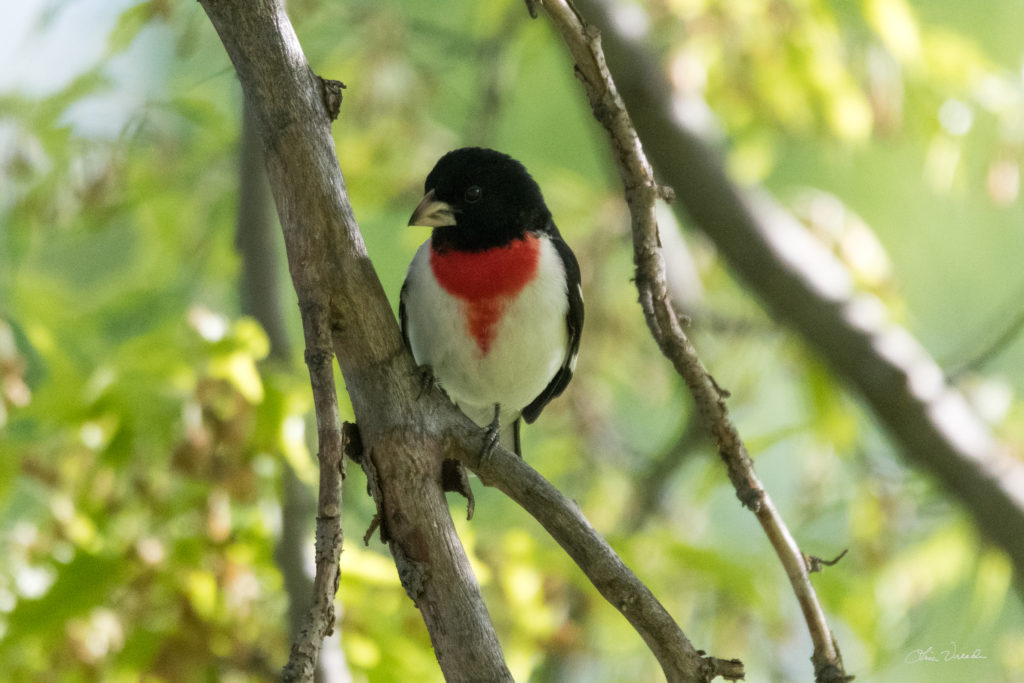
The background traffic noise is negligible and the ability to stand and listen to the bird song around you is a tremendous elixir for the mind, body and soul. Our cozy group of ten added the dimension of sound to our morning as we stood and listened to a Rose-breasted Grosbeak behind us, an American Robin to our right, a Parula Warbler in front of us and a Blue Jay off to the left as well as hearing the mechanical trills of a few Chipping Sparrows further in the distance.

                               Rose-breasted Grosbeak – photo by Lisa Vreede


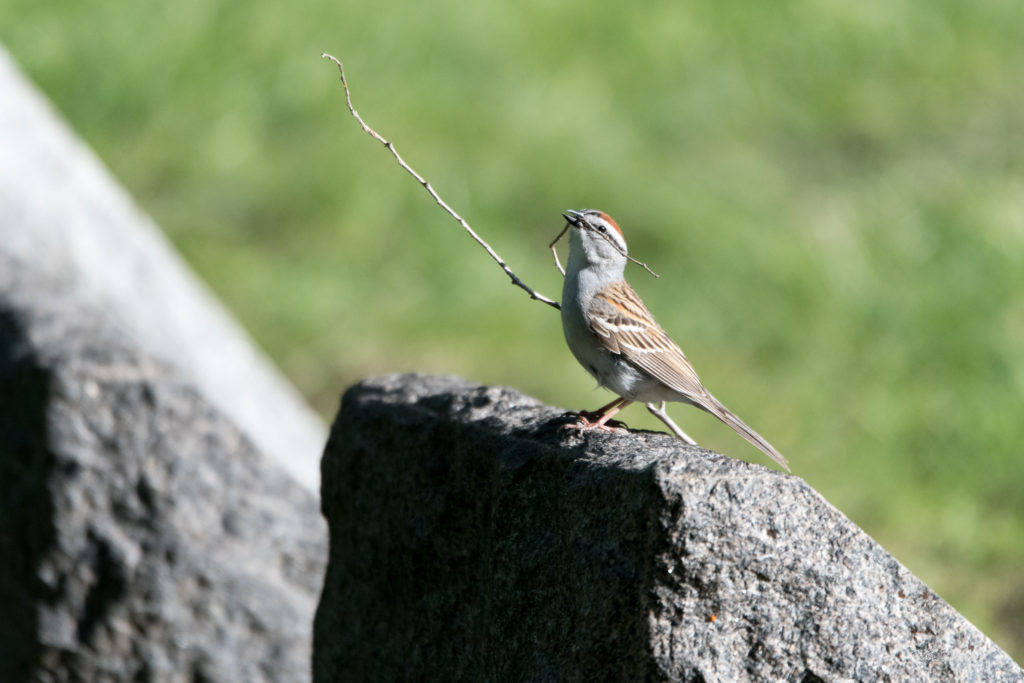
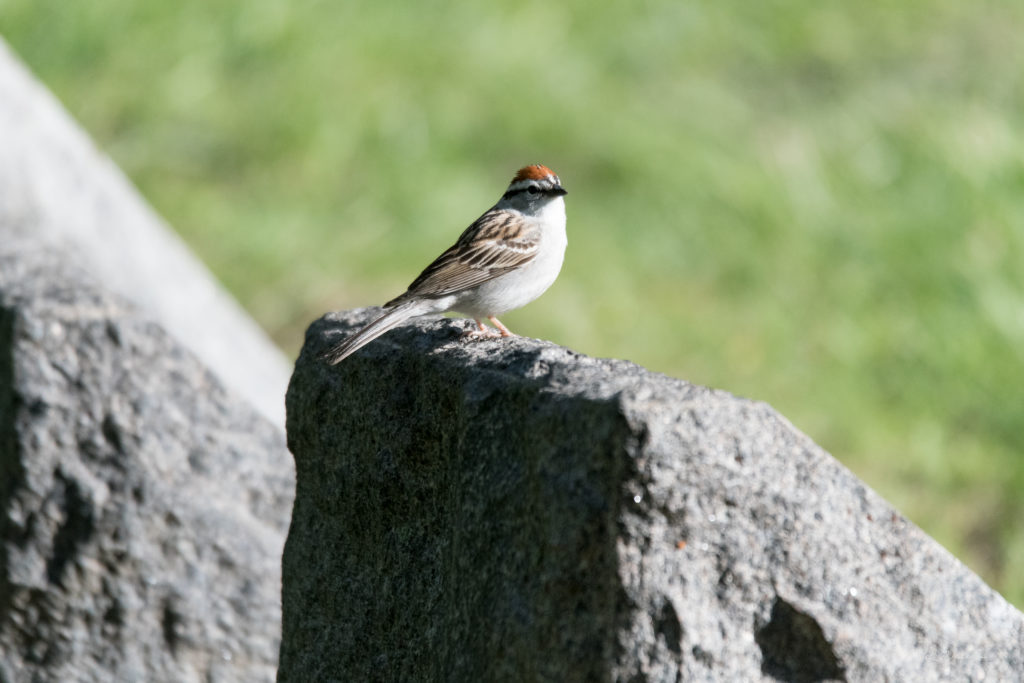
We also had lovely looks of those dainty Chipping Sparrows, appreciating their smart little chestnut colored cap, the snappy black eye stripe and white supercilium that adds a dashing look to their face. This pair was entertaining us as one kept a lookout from the top of a few monuments, while the other flew from place to place, picking up small, dead branches. Was it the female supervising the males choices or was it the male sitting and keeping a look out while the female chose the nesting material?


                                                    How is this piece honey?
                                                            Chipping Sparrow – photo by Lisa Vreede

                                         I’m not sure. What else can you find?
                                                               Chipping Sparrow – photo by Lisa Vreede                                                           


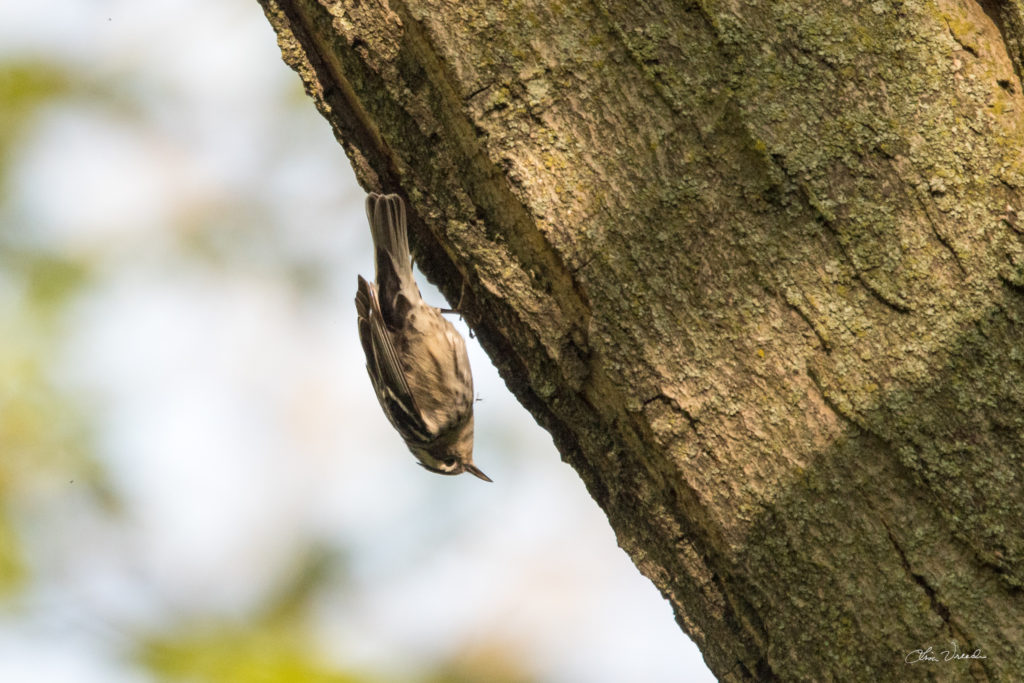
The Black and White Warblers started us off with an easy lesson in getting an active bird into our binoculars – at least they stay on the areas of a tree where their locations are relatively easy to describe and find. Looking like little wind up birds, they crept and turned up and down and over the branches in search of insects. While they may not have exotic color, the placement of their black and white makes for a wonderful pattern to appreciate.

Black and White Warbler – photo by Lisa Vreede

We found numerous Parula Warblers – all of them eating from the foliage on the far ends of branches, moving very slowly as they fed. If we weren’t watching them, we were hearing them. I estimate that we had at least 20 Parula Warblers for the morning. We had some excellent opportunities to see their brightly colored neckwear, the bright yellow of their throats accented by the dark and rufous breast band and the vibrant chartreuse on their back as they stretched to reach an insect morsel.

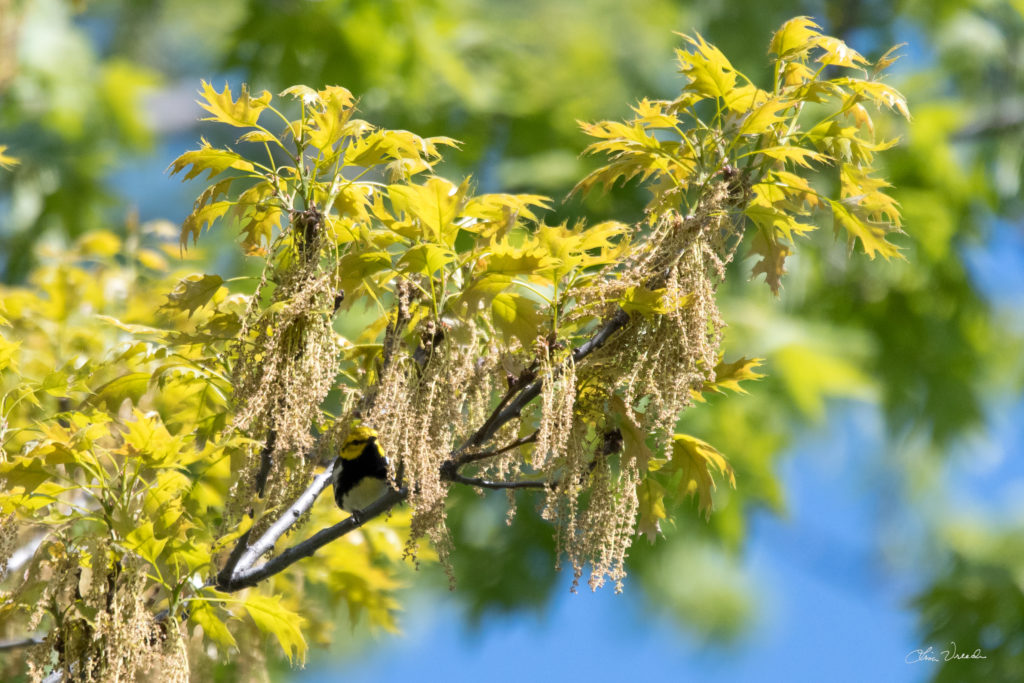
The Parulas were not the only Woodland Warblers to grace our morning. Black-throated Green Warblers were singing in many places and we had stunning views of them from lower branches including watching one grab a caterpillar that was the same glowing green as parts of the birds’ plumage. Chestnut-sided Warblers were also putting on a great show with easy visibility.

                                                             Find the Warbler
                                     Black-throated Green warbler by Lisa Vreede

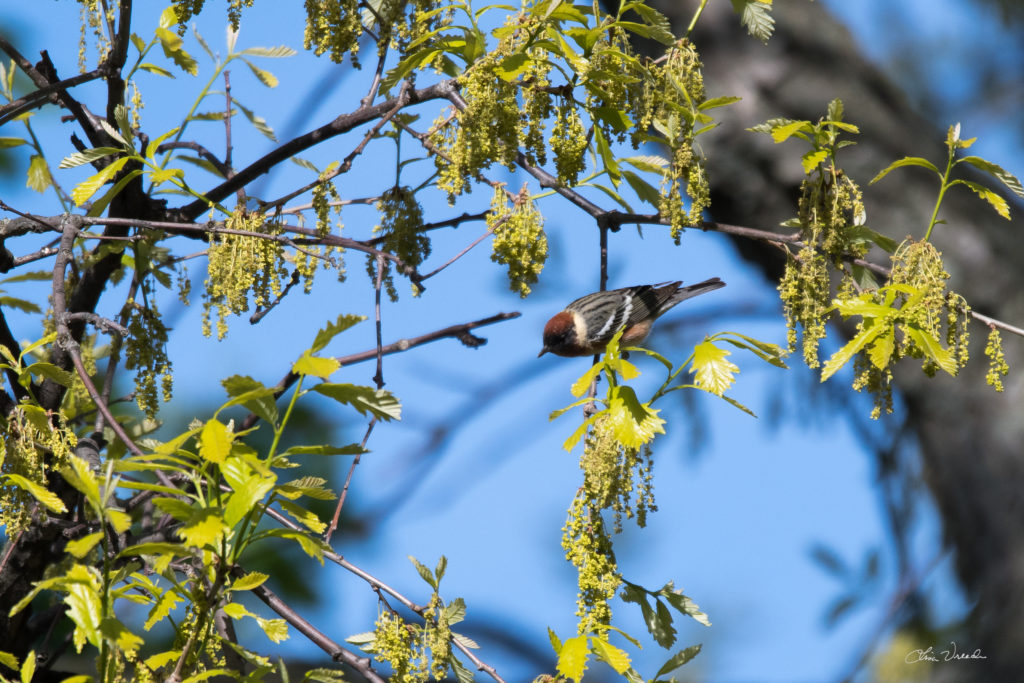
Although we did not see more than one each of a Bay-breasted Warbler and a Blackburnian Warbler, they were both worth getting “warbler neck” over. Such stunning and tiny birds and have flown so far to breed and are not yet near their final destination. We marveled at their plumage and the story of their journey.

                              Bay-breasted Warbler – photo by Lisa Vreede

A Merlin streaked across the bright blue sky and I imagined that he would be the only bird that could catch one of the many aptly-named Swifts that were careening across the sky as well. I love that Falcon and am always joyful to be able to see one.

I was surprised by the presence of a Red-breasted Nuthatch. There was an excellent representation of species that were breeding including Northern Cardinal, Mourning Dove, Eastern Phoebe, and a very vocal Tufted Titmouse.

We were thrilled to discover the nest of a Cooper’s Hawk with one of the adults sitting tight on the nest. The other adult appeared and vocalized a few times before landing in a nearby tree where we had great views of this handsome raptor.

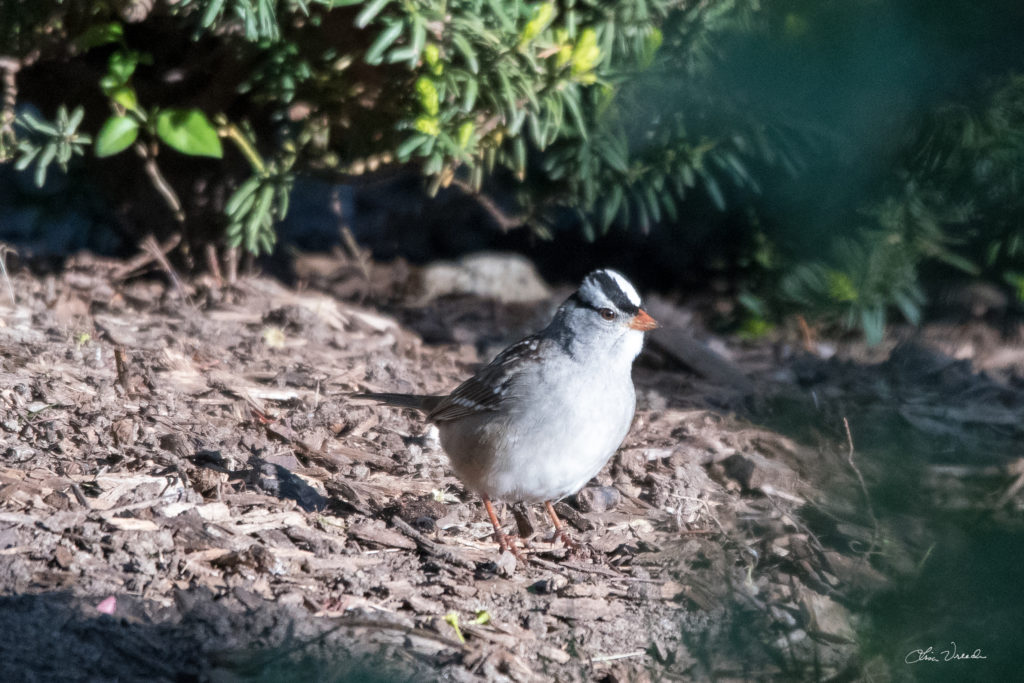
We ended back at the Gate House where we tallied up our morning’s species. The three hours went by so quickly. Weren’t we just here at the fence line admiring the White-crowned Sparrows? I’m so thankful for being able to share birds with the group this morning and to have the help of Jim Szelc as scope bearer and co-leader, and Lisa Vreede as my photographer. It was a delightful experience to Bring People & Nature Together at Historic Elmwood Cemetery.

                                White-crowned Sparrow – Photo by Lisa Vreede


Rosann Kovalcik, Owner
Wild Birds Unlimited
Grosse Pointe Woods

Species seen at Elmwood Cemetery on May 12, 2017

Canada Goose
Wood Duck
Mallard
Cooper’s Hawk
Merlin
Ring-necked Pheasant
Ring-billed Gull
Mourning Dove
Chimney Swift
Red-bellied Woodpecker
Downy Woodpecker
Northern Flicker
Eastern Phoebe
Blue Jay
American Crow
Tree Swallow
Barn Swallow
Black-capped Chickadee
Tufted Titmouse
Red-breasted Nuthatch
White-breasted Nuthatch
Ruby-crowned Kinglet
Blue-gray Gnatcatcher
Swainson’s Thrush
American Robin
European Starling
Northern Parula
Yellow Warbler
Chestnut-sided Warbler
Black-throated Green Warbler
Blackburnian Warbler
Bay-breasted Warbler
Black and White Warbler
Ovenbird
Chipping Sparrow
White-crowned Sparrow
Northern Cardinal
Rose-breasted Grosbeak
Brown-headed Cowbird
Red-winged Blackbird
Common Grackle
Baltimore Oriole
House Finch
American Goldfinch
House Sparrow

45 species

Have you joined our email list? Click here to sign up, it’s free and gives you access to sales, coupons, nature news, events, and more!

Posted in Events & Outings, Spring, Wild Bird Facts | Leave a comment |

Recent Posts

  • Killdeer – our most common Plover returns
  • Red-tailed Hawks, the Common Buteo
  • Bald Eagles –
  • What other owls can you find ?
  • Eastern Screech Owl

Archives

  • March 2023
  • February 2023
  • January 2023
  • April 2022
  • March 2022
  • December 2021
  • September 2021
  • April 2021
  • March 2021
  • May 2020
  • April 2020
  • February 2020
  • January 2020
  • November 2019
  • August 2019
  • July 2019
  • March 2019
  • February 2019
  • December 2018
  • October 2018
  • August 2018
  • July 2018
  • May 2018
  • April 2018
  • March 2018
  • January 2018
  • December 2017
  • November 2017
  • October 2017
  • September 2017
  • August 2017
  • July 2017
  • May 2017
  • April 2017
  • February 2017
  • January 2017
  • December 2016
  • October 2016
  • September 2016
  • August 2016
  • July 2016
  • May 2016
  • February 2016
  • October 2015
  • August 2015
  • July 2015
  • June 2015
  • March 2015
  • October 2014

Categories

  • Bird Feeding Solutions
  • Bird Songs
  • Events & Outings
  • Fall
  • Native Plants
  • Nesting
  • Spring
  • Squirrels
  • Summer
  • Uncategorized
  • Wild Bird Facts
  • Winter

Enter your email address:

Delivered by FeedBurner

© Wild Birds Unlimited of GPW - Website by TBD Web Services