• Home
  • About Us
  • Blog

Tag Archives: wild birds

Where are the Juncos?

Posted on January 9, 2020 by Rosann Kovalcik

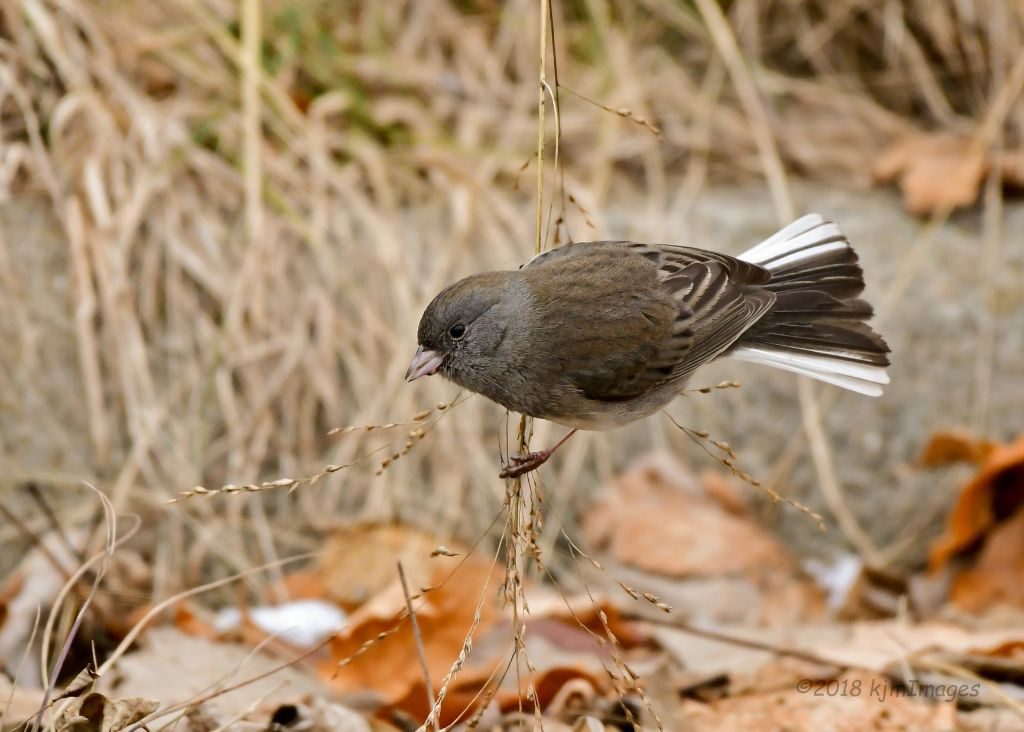
Dark-eyed Junco by Kevin Murphy, Eliza Howell Park, Detroit

Where are all the Juncos?

We have had a number of customers recently ask where the Dark-eyed Juncos have been. Many have not yet seen them at the feeders this winter. My best experience with Juncos this year has been when we had a recent small snowfall. They were perched on the stems of plants I leave up all winter to provide seeds for the birds.

Now that we are not experiencing snow cover, the seeds available to Juncos make their visits to our feeder less of a necessity. I have been missing their subtle gray coloration and their white “snowy” bellies. I also love that their two outer tail feathers are white on each side, looking like a cheerleader skirt as it flies or spreads its tail.

To attract them to your yard, offer White Proso Millet on a tray feeder. The feeder can be on legs and close to the ground, or on a pole system and higher off of the ground. Either way, this stable platform allows them to eat in a way that true sparrows prefer, simulating their groundfeeding preference.

Enjoy this winter visitor while you can!

Rosann Kovalcik, Owner

Wild Birds Unlimited, Grosse Pointe Woods

Have you joined our email list? Click here to sign up, it’s free and gives you access to sales, coupons, nature news, events, and more!


Posted in Bird Feeding Solutions, Winter | Tags: climate, dark-eyed junco, Grosse Pointe Woods, junco, millet, seasonal, snow, sparrow, weather, wild birds, wild birds unlimited, Winter | Leave a comment |

Fascinating Blue Jays

Posted on August 12, 2019 by Rosann Kovalcik

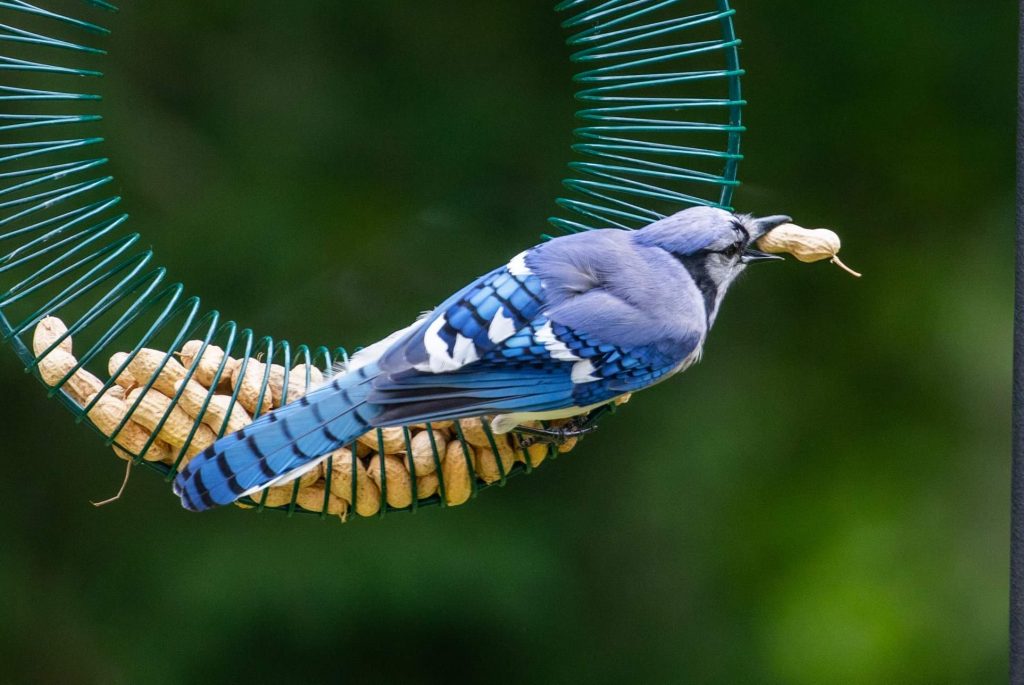
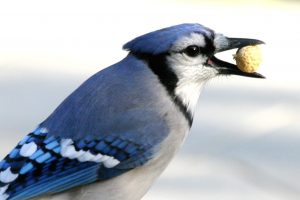
Blue Jay with Peanut by Emily Wolfe

Blue Jays – The Sights and Sounds

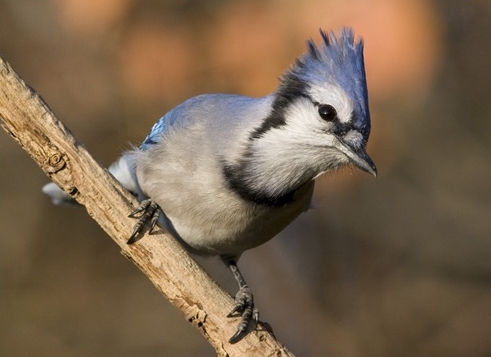
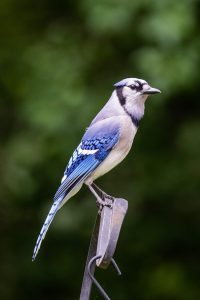
I find Blue Jays to be fascinating – I’m listening to them now as they sing out their “tootle-oot, tootle-oot” from the oak tree. They have such a rich complexity of vocal sounds. The same can be said about their plumage, a rich complexity of blues of every shade. Such a handsome bird with both males and females looking alike, their faces framed by a dark collar. Perhaps one of their finest features is their crest, raised and lowered at will depending upon their mental state – up when alert, feeling territorial, and down when there’s no reason, giving the back of the head a little “flair”.

The Brains

Blue Jay by Emily Wolfe

Jays play an important role among the birds in our yards. They will sound the “Jay! Jay!” alarm when a potential predator is nearby. This allows all of the birds to be on the lookout for the hawk, cat or human that caused the Jay to give the neighbors a warning. One of the most amazing vocalizations of the Blue Jay is their ability to vocally imitate hawks – they have turned my head with the calls of a Red-shouldered Hawk and a Broad-winged Hawk, only to spot them in my binoculars. And just a few short minutes after I wrote that, I heard a Cooper’s Hawk calling from the rooftop – except it was a Blue Jay. Perhaps he was using this as a scare tactic to keep the other birds away so he could swoop down and feed on the seed cylinder I had just put out. Smart move.

Blue Jays can be entertaining and unafraid in your yard. They will come quite close when any kind of a nut is involved as they naturally seek the mast of trees. Capable of storing a few acorns in their gular pouch, a holding area in the throat, they will transport the acorns to an area to stash away. Placing the acorns on the ground and covering them with leaves, or pushing them into the soil with their strong beaks, they hope to save them for future food. Many of those acorns will grow into trees and in this way, the Blue Jay plays forester for us.

Peanuts in the shell evoke the same mental response in Jays.  They simply cannot resist them when offered and will carry them away where they can hold them with their feet and use their beak to break away the shell and eat the protein-packed nut inside.

Blue Jay

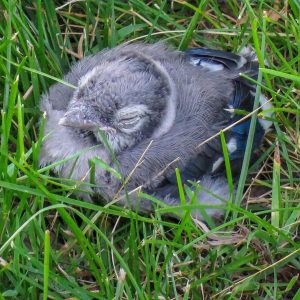
Baby Blue Jay by Samantha Mason

The Babes

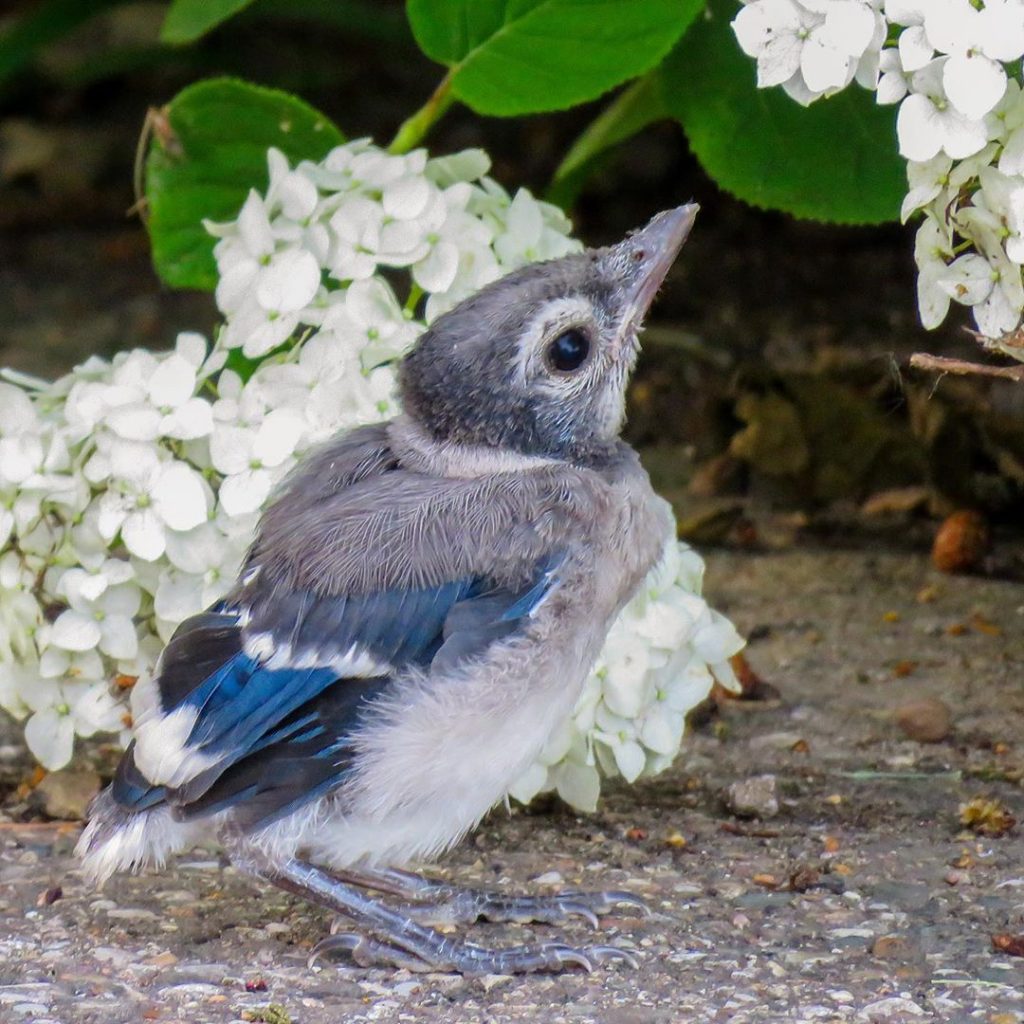
Both male and female Blue Jays take an active part in raising their brood of two to seven. They are quite secretive during nesting season as they find food for their young and deliver it to the nestlings. Jays are omnivorous and will eat a wide variety of plants and animals. Once the young fledge the nest, they will travel in family groups for feeding purposes. You can hear their contact calls to each other as they move about the trees.

Movement

Blue Jays take part in their spring and fall migration in very large numbers. They migrate in daytime flocks, unlike many of the small passerines that use the cover of night for migration. We have seen these flocks of hundreds of Blue Jays flying over us at the Ford House during our bird walks. The wing beats blink light and dark flashes as they travel along – a magnificent sight.

Enjoy this adaptable, gorgeous bird and all of the vocalizations that make Jays so unique.

Baby Blue Jay by Samantha Mason

Enjoy your birds!!

Rosann Kovalcik, Owner

Wild Birds Unlimited, Grosse Pointe Woods

Have you joined our email list? Click here to sign up, it’s free and gives you access to sales, coupons, nature news, events, and more!
Posted in Wild Bird Facts | Tags: Bird Feeding, birds, blue jays, Grosse Pointe Woods, jay, Michigan, summer, wild birds, wild birds unlimited | Leave a comment |

Decluttering Your Bird Feeders… Or Not

Posted on March 25, 2019 by Rosann Kovalcik

Much has been written about decluttering lately. And so, of course, my thoughts turn to bird feeders.

A common bit of wisdom regarding decluttering is to ask yourself if an item brings you Joy.

Cylinder Feeders

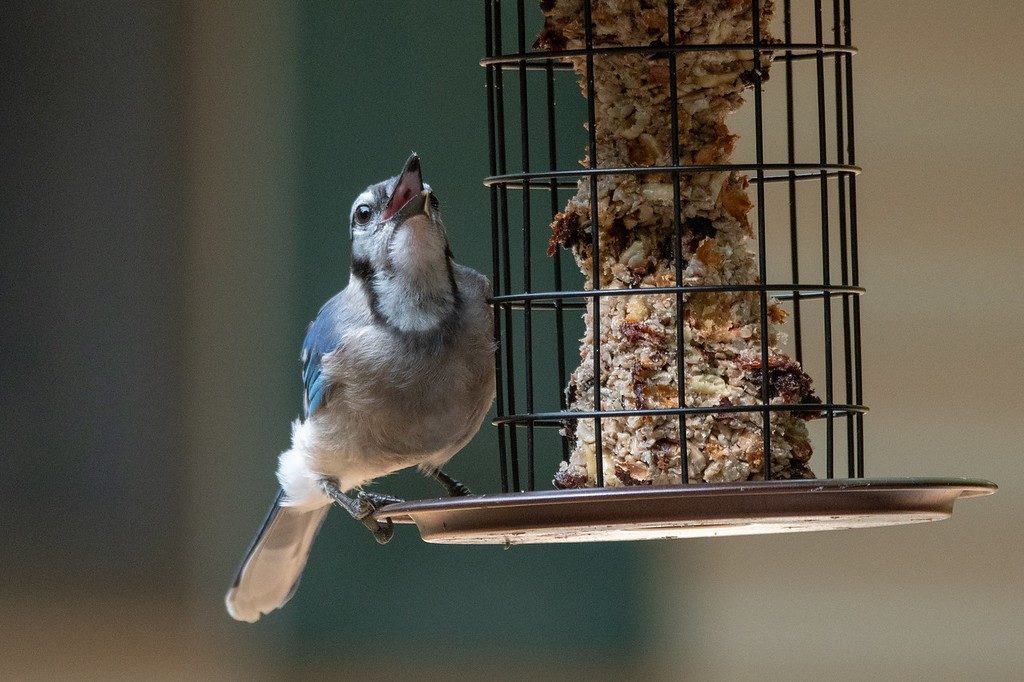
Blue Jay on Cylinder Feeder (Photo by Lisa Vreede)

When I fill my cylinder feeder with a new No-Mess seed cylinder, I notice Blue Jays coming in groups. Perhaps the first jay to discover the gleaming peanuts will stand atop the pole and give a little bounce up and down as he calls to the others in his tribe. Then the hammering begins; the birds’ feet holding on tightly, their heads moving back and forth, excavating each peanut with precision. Then off the Jay flies to a branch to eat its prize. Or maybe it plans to stash the peanuts. The flurry of blue from feeder to tree branches is so beautiful to watch.

Okay – Joy with the cylinder feeder… keep it!

Suet Feeders

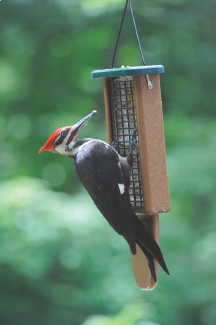
Pileated Woodpecker on Double Tail Prop Feeder

Then I consider my suet feeders. I have a lot of those. Tail prop feeders – I have two of the extra-large version. Last time I filled them with Nuts and Berries Suet I was in Boyne City, and when I was done, I called out to the woods ,“Hey Buddy (my male Pileated Woodpecker’s  given name), I just filled the feeders for you!” And I kid you not; within two minutes, he flew into the woods along the road and hammered away at one of his favorite trees, doing some serious excavation. Then, as I backed away from the feeders, he came in on his landing tree. By the time I was in the house, I had the Pileated Woodpecker on one of the double tail-prop suet feeders, and a Hairy Woodpecker on the other one.

Okay –  true Joy with the double tail-prop suet feeders – keep them. All of them.

Finch Feeders

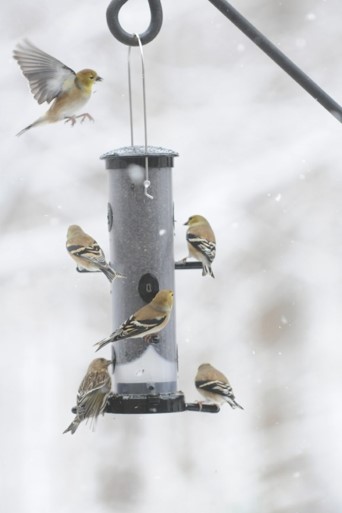
American Goldfinches

Next I reflect on my finch feeders. Yes, that’s plural as well. This past winter, it was so exciting to watch for finches of all varieties. The Winter Finch Forecast predicted we would have many irruptions into our area. This happens when seed crops are not optimal in Ontario, so irregularly occurring species move south in search of plentiful food sources. Pine Siskins can be identified at a distance by their very pointy beaks, looking like just-sharpened pencils. Careful observations need to be made to notice the potential Common Redpoll – such a dainty bird with the sweetest red cap. Of course, these winter visitors mix in well with American Goldfinches who visit the feeders all year long. As we move into spring, I watch my goldfinches carefully with binoculars to note when I see the first hint of yellow feathers as they molt into spring plumage.

Joy with the finch feeders – keep those too!

Hopper Feeders

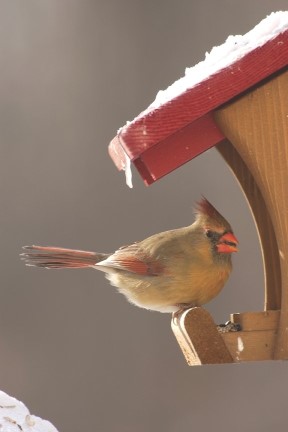
Female Northern Cardinal at Hopper Feeder

Time to evaluate the large hopper feeder, which holds an abundance of seed. I am relieved when the birds visit first thing in the morning, proof they made it through another challenging night. I feel so fortunate to be able to provide them with readily available food that has no shells, allowing for quick energy. If it’s cold enough, birds can go through all of their fat reserves in one night just to keep alive.

More Joy with the foundational hopper feeder – keep it.

Specialty Feeders

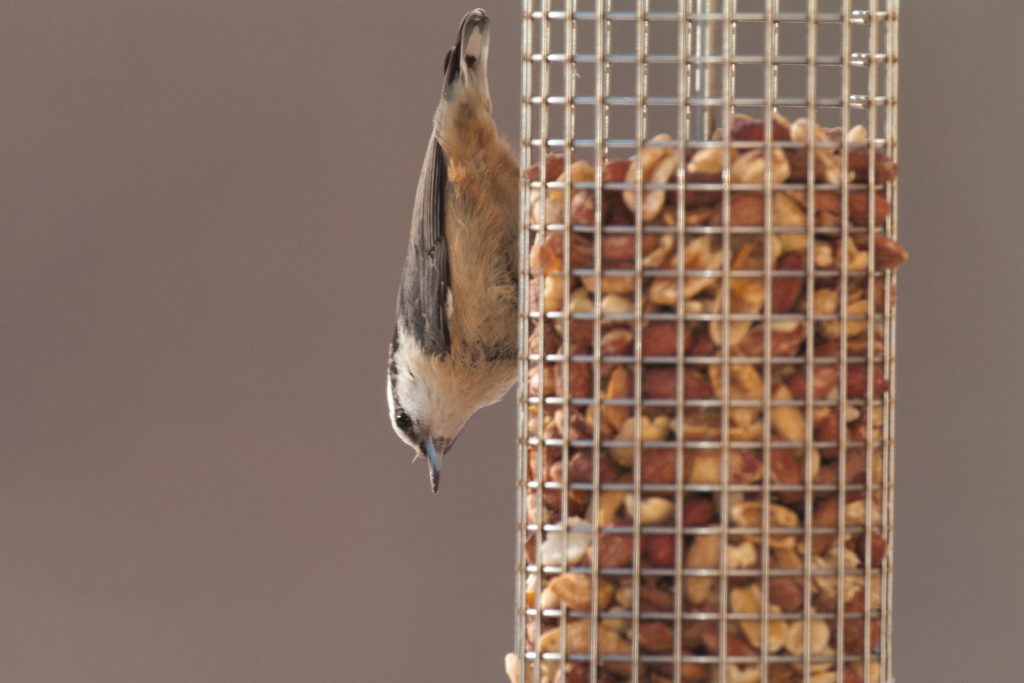
Red-breasted Nuthatch (Photo by Bill Rapai)

Then there is the peanut feeder, a draw for specific birds. It is certainly a favorite of Red-breasted Nuthatches that cling on upside-down.  I love to watch their bodies teeter back and forth like little sledge hammers as they pound away to extract a peanut. They make the dearest sounds, similar to small squeak toys. It has been an irruptive season for Red-breasted Nuthatches and I wouldn’t want to miss a moment of them.

Joy with my peanut feeder – keep it!

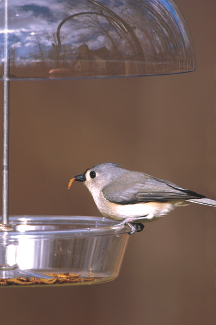
Tufted Titmouse on Dinner Bell Feeder

Finally, my thoughts turn to the variety of foods I offer the birds when I’m in a time crunch. For example, I can simply open a bag of Bark Butter Bits and pour them into my Dinner Bell feeder. This feeder is the most versatile and I dare say one of my absolute favorites. I can lower the weather dome so just the smaller birds fit between the tray and the dome, even excluding House Sparrows if low enough. It gives the Black-capped Chickadees a place they can dart to, picking up the beak-sized Bark Butter Bit and flying off to a branch. It is so fun to watch as they hold it in their feet and eat it with dainty bites. The Dinner Bell is also great for mealworm feeding. Mealworms give birds the protein they need for feather production when molting and for calcium when they are ready for egg-laying season.

Okay – Joy with my Dinner Bell Feeder – keep them.  Both of them.

So much for ridding myself of the “clutter” of bird feeders. Anything that bring me this much Joy is a keeper!

Posted in Bird Feeding Solutions, Spring, Wild Bird Facts | Tags: bird feeder, birds, blue jay, chickadee, declutter, finch, Spring, tidy, wild birds, wild birds unlimited, Winter, woodpecker | Leave a comment |

Bird Spotlight: Long-eared Owl

Posted on December 2, 2018 by Rosann Kovalcik

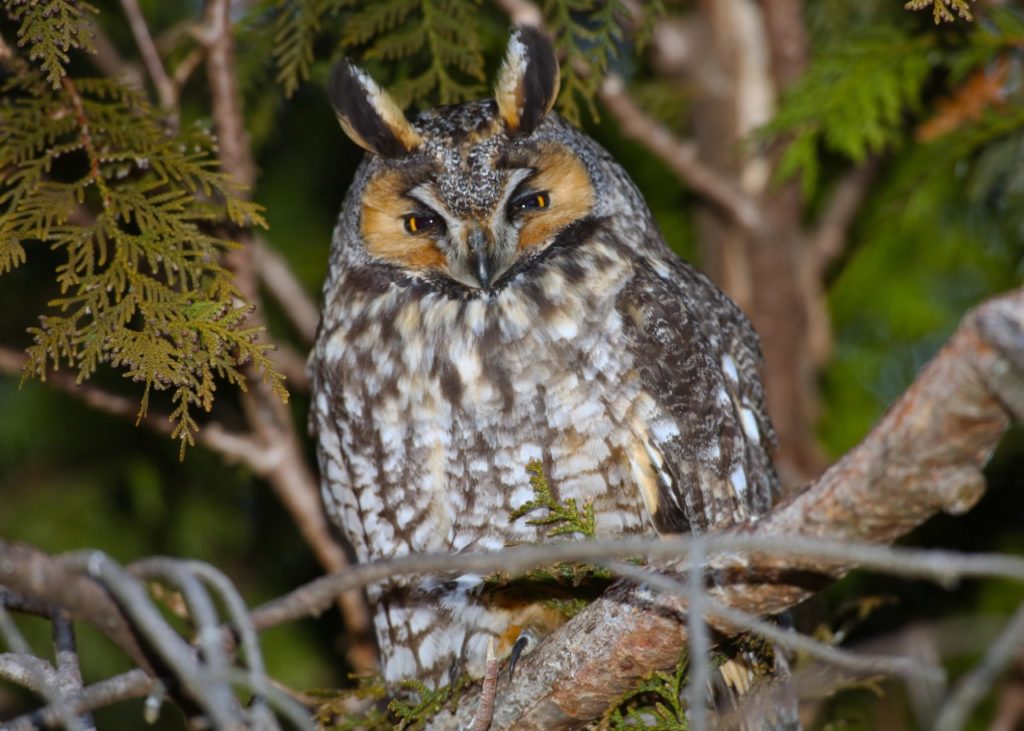
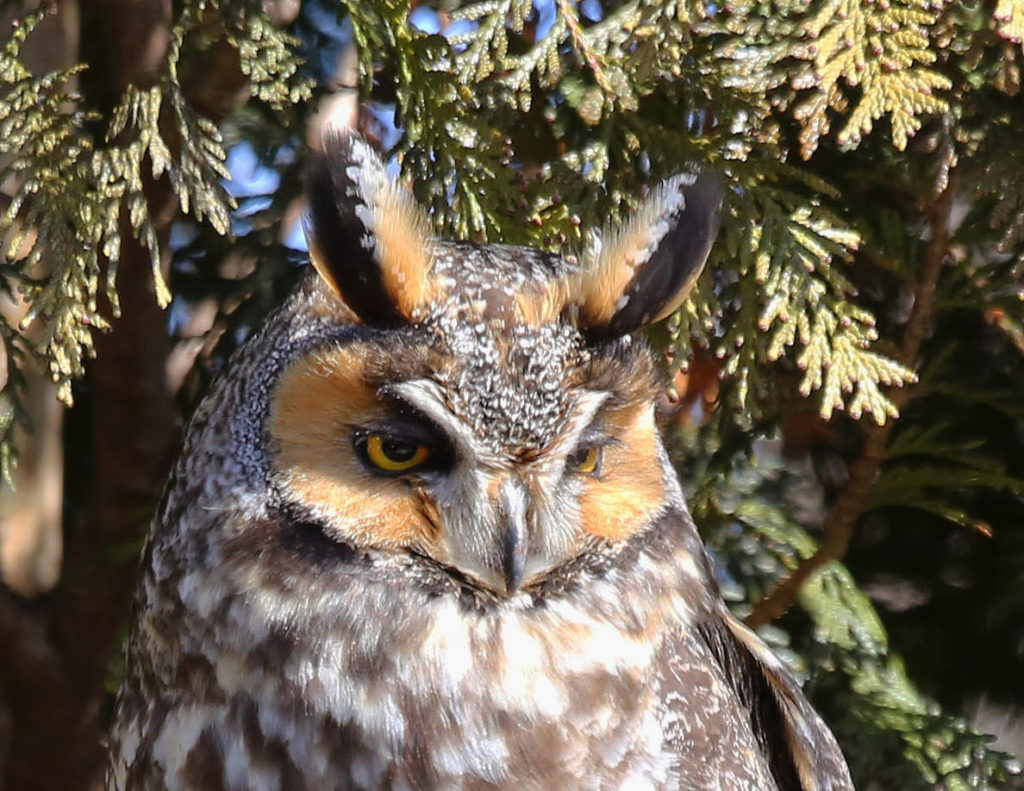
Long-eared Owl (Photo by John Graffius)

An Owl Appears

I can still hear the excitement in my friend Debbie Graffius’ voice as she explained what she was seeing. She was looking in her yard at a large owl with ear tufts. She knew enough to know it was not a Great-horned Owl.

At this point, I grabbed my binoculars, as there was only one answer. I quickly headed to her house in the north part of Grosse Pointe Woods (not far from Lake Shore). Sure enough, perched on a limb open to the sun, yet protected by surrounding evergreens, was a Long-eared Owl. When Debbie’s husband John returned home, his photography skills came into play. Some excellent shots of this comfortably roosting owl resulted.

A Little Bit of Background…

We spotted this bird on March 29th of 2013. We don’t often see Long-eared Owls in our area. The only other time I am aware of was in April 2004, when Tufted Titmice in my yard began to scold. This led to an investigation on my part. Sure enough, a Long-eared Owl was in the evergreens in my 75 x 150 Grosse Pointe Woods yard. This is a great testimony to the need for evergreens as shelter. The bird did not budge during the daylight. Mike Florian, my good buddy and President of the Grosse Pointe Camera Club, was able to get some great photo opportunities that day.

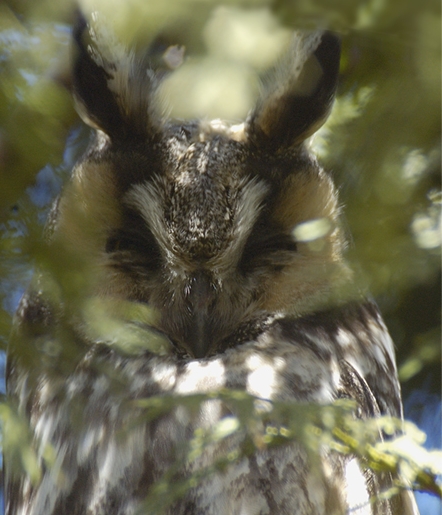
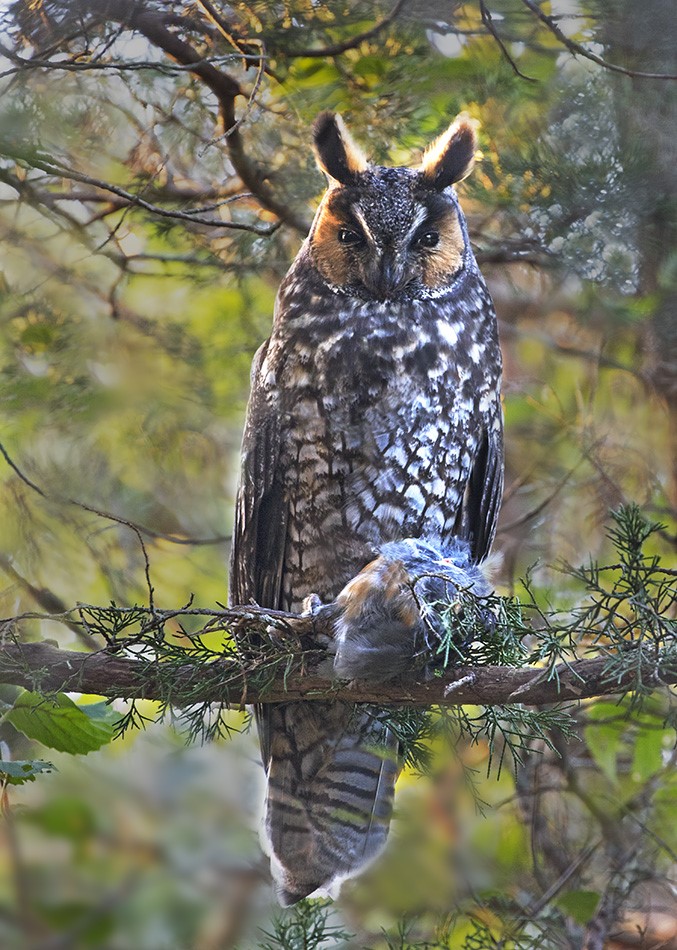
This behavior is typical of Long-eared Owls do. They roost during the day in dense evergreens, typically near field edges. When trying to conceal themselves, Long-eared Owls sit erect, tightening their body feathers,“ear” tufts sticking straight up. One of the most interesting facts I have read about these owls is how they use the same distraction technique as that of Killdeer. When luring predators away from the nest, both the owl and the killdeer often feign a broken wing as they drag themselves along the ground.

Long-eared Owl (Photo by Mike Florian)

Bird Stats

The wingspan-to-body-length ratio of this bird is quite amazing; head to toe it is only 13 – 16 inches tall, with a wingspan tripling that at 39 inches! For a bird this size, it is amazing they weigh only 8 ounces to 1 pound.

To raise their young, Long-eared Owls use the abandoned nests of hawks and crows. These are usually 20 feet or more above ground. They lay between 2 – 10 eggs, with an incubation period of 35 – 40 days. The young are fed the same diet as the adults, torn into bite-sized pieces. This diet consists of mammals including: mice, shrews, voles, rats, rabbits and less commonly, birds. The adults kill the prey with a bite to the back of the neck of the mammal, and eat their prey whole.

Long-eared Owl (Photo by John Graffius)

Owl sounds are always magical to me, and the sounds of a Long-eared Owl are no exception. The male gives a low hoot call, similar to the sound of blowing across the top of an empty bottle. The owls repeat this call sometimes up to 200 times, between 2 -4 seconds apart. The sound carries more than a half mile away. When disturbed during nesting season, the owls clack their mandibles together and also give a call that sounds like the bark of a small dog.

As set forth on the Cornell web-site, Long-eared Owls are rated as a 13 out of 20 on the Continental Concern Score and they are listed on the 2016 State of North America’s Birds Watch List. This list was compiled to bring attention to those species that are at risk of extinction unless conservation measures are taken to reverse the challenges that they face. For Long-eared Owls, this includes loss of habitat including wooded areas and grasslands. Continued protection of our small wetlands is a step in the right direction for this species’ survival, since many of these wetland areas are adjacent to wooded areas.

Final Reflections

Long-eared Owl (Photo by Kevin Karlson)

Some of my best memories of this bird is watching their moth-like flight as they lift from the trees at dusk at Whitefish Point, on their way to migrate further north. This is when their wingspan can truly be appreciated. Knowing this is their behavior, I advised Deb and John if we sat and patiently watched the Long-eared Owl in their yard, it would become active at dusk. And as if on cue, when the sun began to set, the bird sat more erect and stretched its wings. Looking about, it then flew to the top of the nearest phone pole and after another stretch, lifted itself and headed north.

Do you want to see this owl? Mark your calendar for the Michigan Audubon Spring Fling on April 28th and 29th at Whitefish Point in Paradise, Michigan. Stand on the hawk watch platform at dusk and wait for the magic to begin.

Enjoy your birds!

Rosann Kovalcik, Owner

Wild Birds Unlimited, Grosse Pointe Woods


Have you joined our email list? Click here to sign up, it’s free and gives you access to sales, coupons, nature news, events, and more!
 

Posted in Wild Bird Facts | Tags: audubon, birding, birds, cornell, Grosse Pointe Woods, long-eared owl, Michigan, nature, owl, whitefish point, wild birds, wild birds unlimited | Leave a comment |

The Joy of Listening

Posted on August 6, 2018 by Rosann Kovalcik

Working in the garden in the summer can be a delightful experience when we pay attention to the sounds of the birds. It’s educational and entertaining to concentrate on birds sounds and look for the stories behind them. You’ll be surprised at what you can learn just by listening, finding joy in the process.

A Morning In the Garden: The Birdsong Begins!

Blue Jay (Photo by John Graffius)

This morning I heard a conversation between a family of Blue Jays, murmuring to each other with a tone that reminded me of an interplay between The Three Stooges. They seemed to be comparing notes about where they would go to find food. Later, I heard the familiar “Jay! Jay!”  Were they sounding the “jay alarm” for the good of the group, because of a threat of some kind? Or was this practice just a “fire drill”?

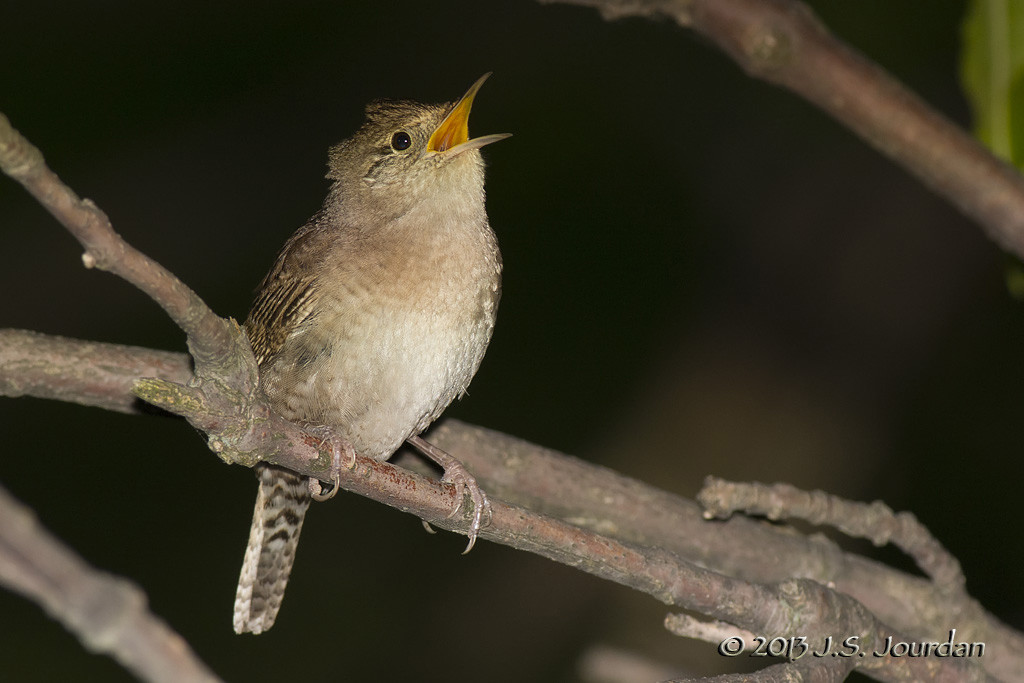
House Wrens are singing less compared to the constant song which announced their arrival back in May. It seems my neighborhood wren gives an earnest song just once or twice these days, and nothing more. Done nesting, there is no need to advertise territory.

House Wren (Photo by Jerry Jourdan)

Afternoon Sounds

At this moment, the Robins are the most vocal. Two spot-breasted youngsters are incessantly reminding mom they are hungry. The young can be easily located by their shrill “peek” calls. Mom is quite silent as she searches continuously for food. This is very different from her morning routine. At daybreak, I hear her frantically repeating, “peek, peek, tut, tut.” She does not stop until both youngsters respond, a way to let her know they made it through the night.

Heard but not easily seen are my neighborhood Northern Flickers, White-breasted Nuthatches and Chickadees. All of them are making contact calls between adults and fledglings, giving clues as to where they are feeding. The nuthatches seem to be in the most constant contact – soft and repeated many times. Maybe this serves as encouragement to the young, that they are doing well finding the bugs they need.

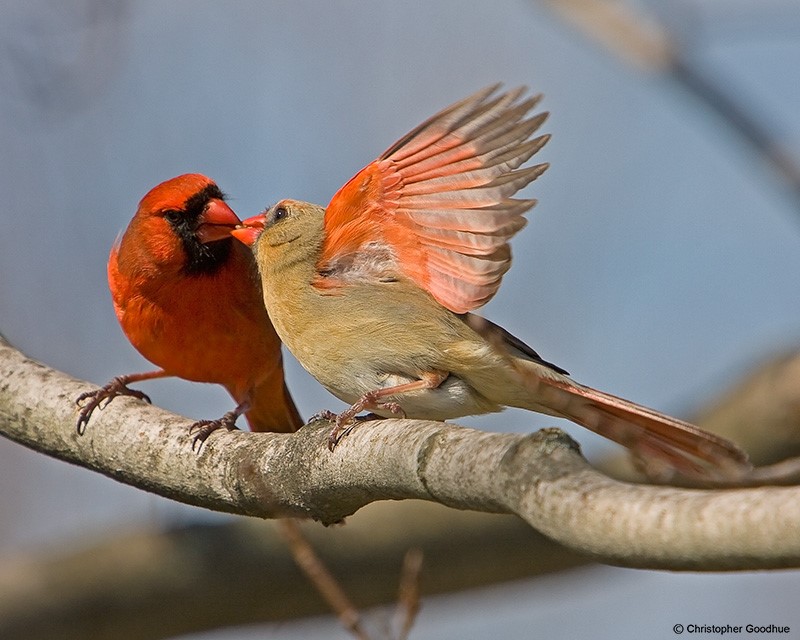
The Northern Cardinal definitely has a second brood of young. How do I know? His song is constant in the neighborhood. He sings from perches in the yards that surround mine, as well as from two places in my yard. These singing points define his territory. When he is closest to the nest site, I can hear the female sing back to him from her place on the nest. Cardinals are one of the few bird species that engage in counter-singing between the pair.

Male & Female Cardinals (Photo by Christopher Goodhue)

Song & Dance

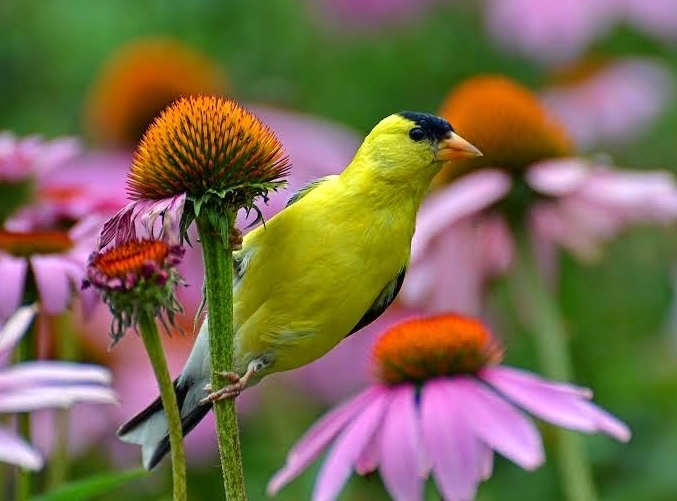
American Goldfinches are in full-on breeding mode. A male makes his presence known, taking flight from the neighbors’ birch trees, singing “per chicory” over and over as he flies. His flight is undulating, a gentle loop up and down, singing continuously. I watch him define his territory, cutting diagonally across my yard, then over two yards, then across towards the fringe of Ferry Elementary property and back to the birch trees. This display is gently repeated about every fifteen minutes.

American Goldfinch (Photo by Rodney Campbell)


Bird Sounds at Dusk

High-pitched calls in the trees overhead give away the presence of Cedar Waxwings. If I watch the area where they are calling long enough, I will eventually see the family group leave in flight together, off to another feeding stop.

As evening approaches, I hear the familiar chatter of Chimney Swifts. Gladly, I take a break from the garden and look up, admiring the family group of six that are flying in unison. Soon after, I know I will hear the Common Nighthawk’s raspy display call, a sound I will dearly miss once they have migrated this fall.

Make your next venture into the yard an auditory experience – you may be amazed at the Joy that listening brings!


Enjoy your Birds!

Rosann Kovalcik, Owner

Wild Birds Unlimited

Grosse Pointe Woods

Have you joined our email list? Click here to sign up, it’s free and gives you access to sales, coupons, nature news, events, and more!
Posted in Summer, Wild Bird Facts | Tags: american robin, august, backyard, birds, blue jay, Cardinal, cedar waxwing, chickadee, chimney swift, common nighthawk, garden, gardening, goldfinch, Grosse Pointe Woods, house wren, joy, july, nature, northern flicker, nuthatch, outdoors, summer, summertime, wild birds | Leave a comment |

Common Nighthawks: Aerial Marvels

Posted on July 9, 2018 by Rosann Kovalcik

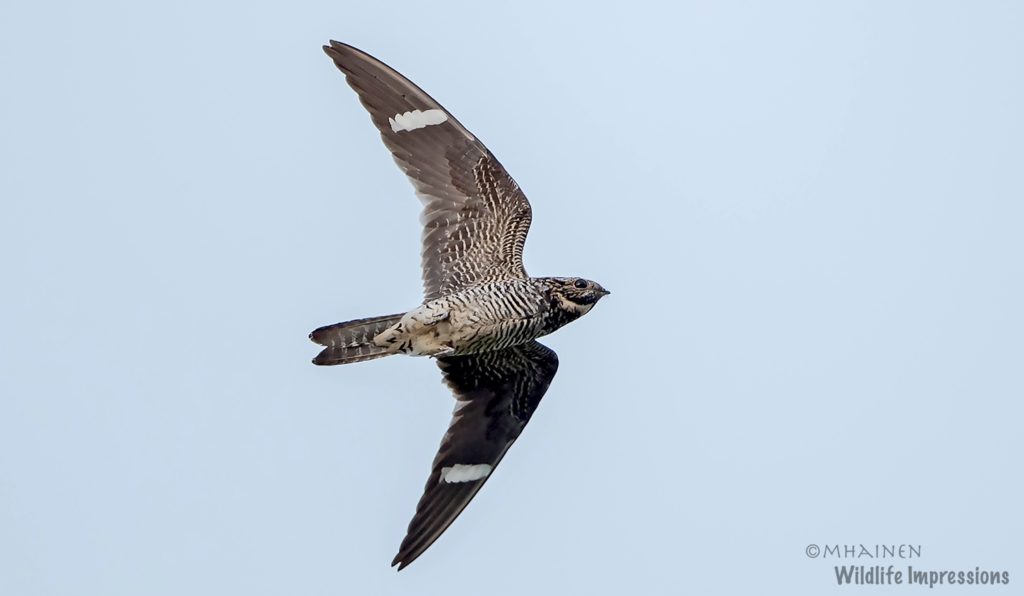
Common Nighthawk (Photo by Mark Hainen)

For me, the sounds of summer include the sounds of Common Nighthawks.

A pair of nighthawks has nested on top of Ferry Elementary School for as long as I can remember. First thing in the morning, and I mean before sunrise, I see him flying in his erratic pattern. I’m not sure of how to describe the call that accompanies the flight. I’ve seen it written as buzz BEEErzh and peent (click here to listen on Cornell’s All About Birds website).

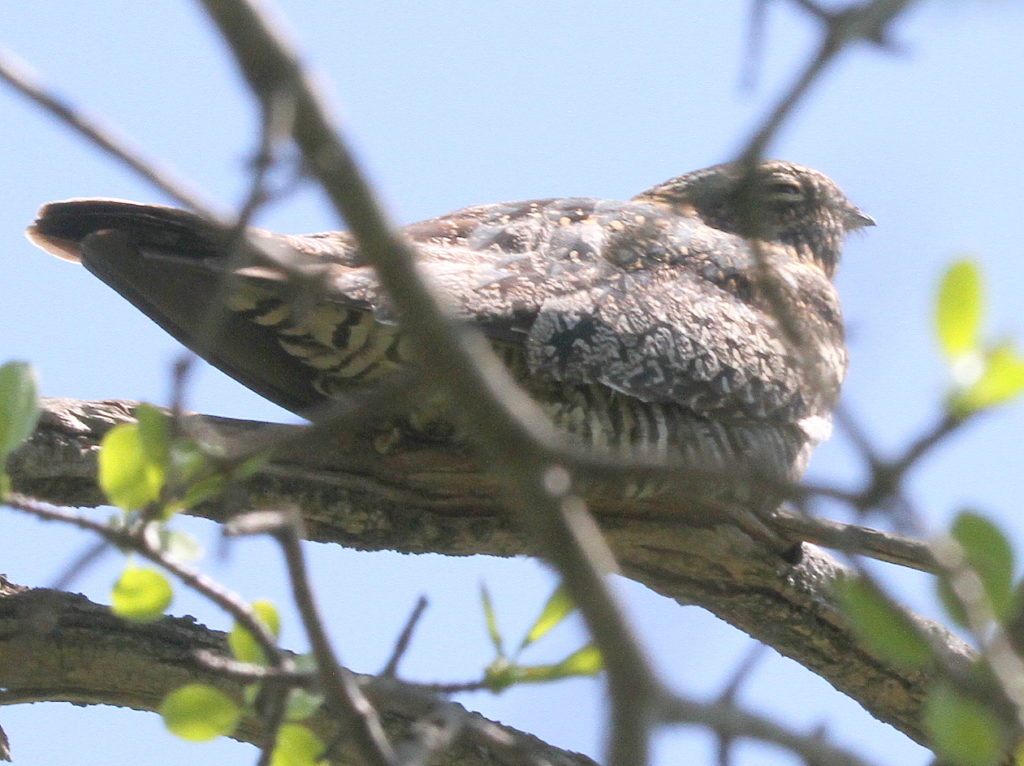
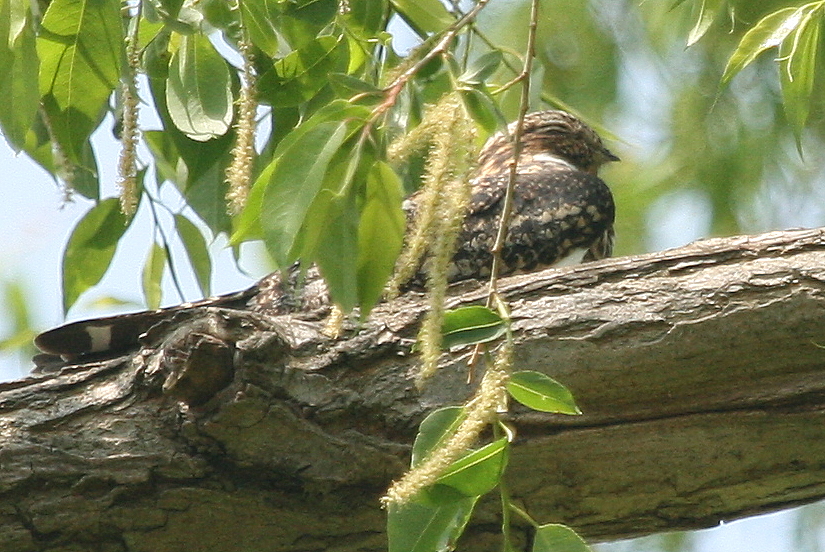
Common Nighthawk perched (Photo by Don Chalfant)

It is sharp and loud, a call to look up to the sky and wait for the wonderful sound to follow. The male nighthawk climbs higher and higher, then dives toward the ground, flexing his wings downward as he peels out of his dive. This causes a sound reminiscent of a race car rounding the edge of the track. To me, it sure sounds like vroom! This wonderful display gets repeated in the evening, a second treat for the summer day. This display serves two purposes; first, to attract a female and bond with her. It also lets other males know the territory is taken.

Common Nighthawk (Photo by Don Chalfant)

Field Marks

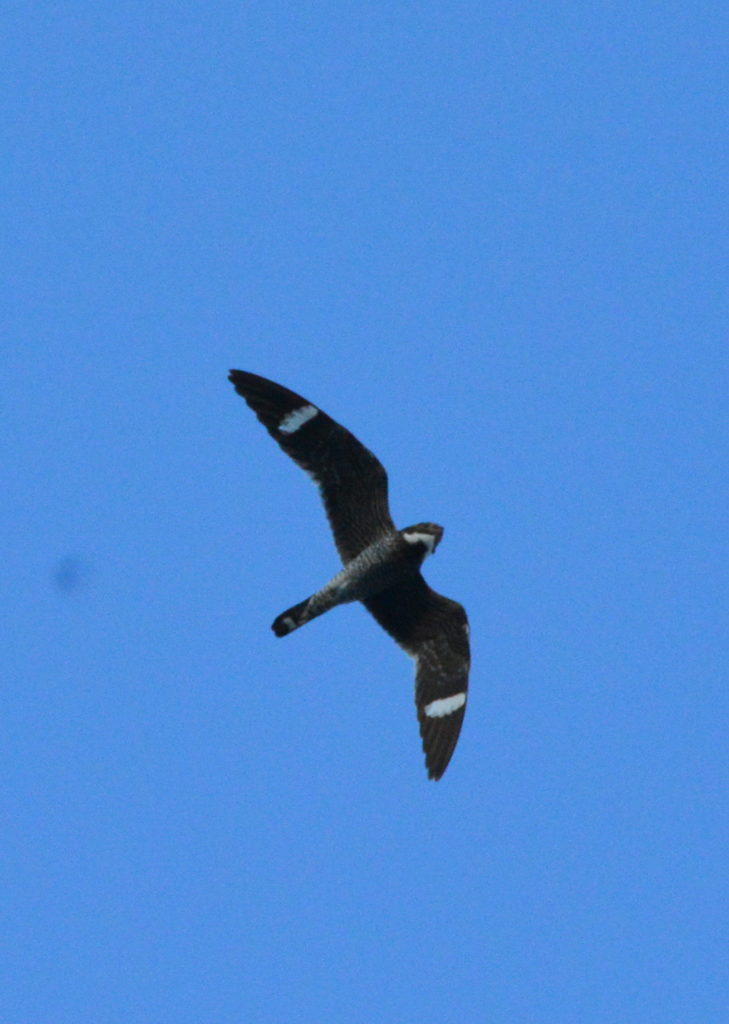
To identify Common Nighthawks, look for a slim, long-winged bird with white patches on the wing. Their pointy wings and streamlined shape make them appear larger than their measurements would indicate. Each bird is typically 9.5” long with a wing span of 24” and a weight of only 2.2 ounces. The type of flight is key – erratic and bounding – look for the white patch which is quite distinct in flight.

Common Nighthawk in flight (Photo by Karen Wade)

Nesting

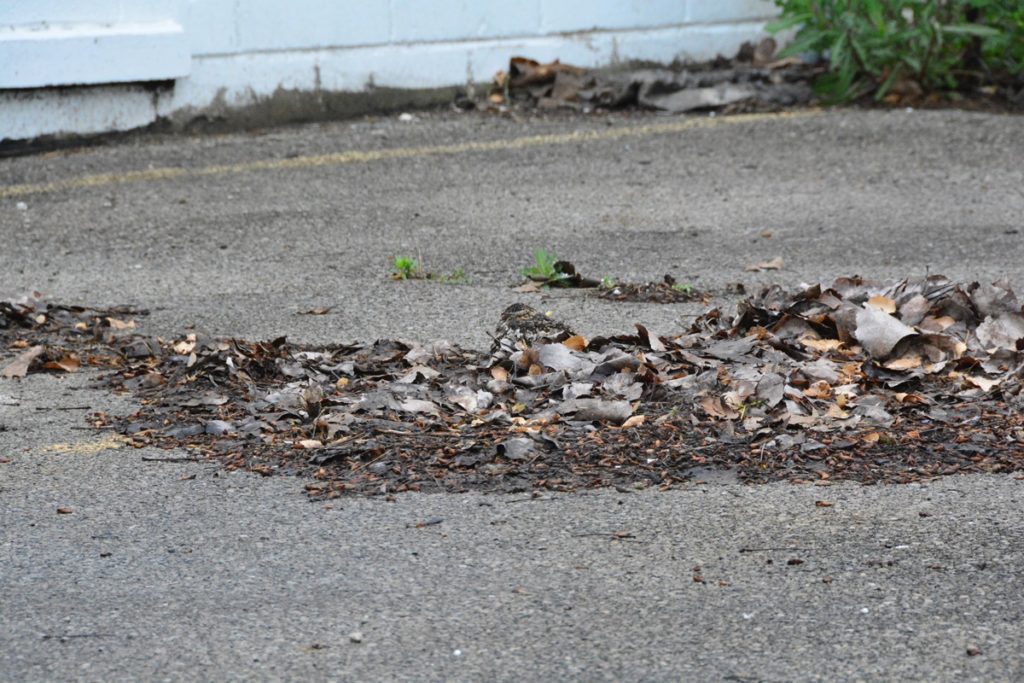
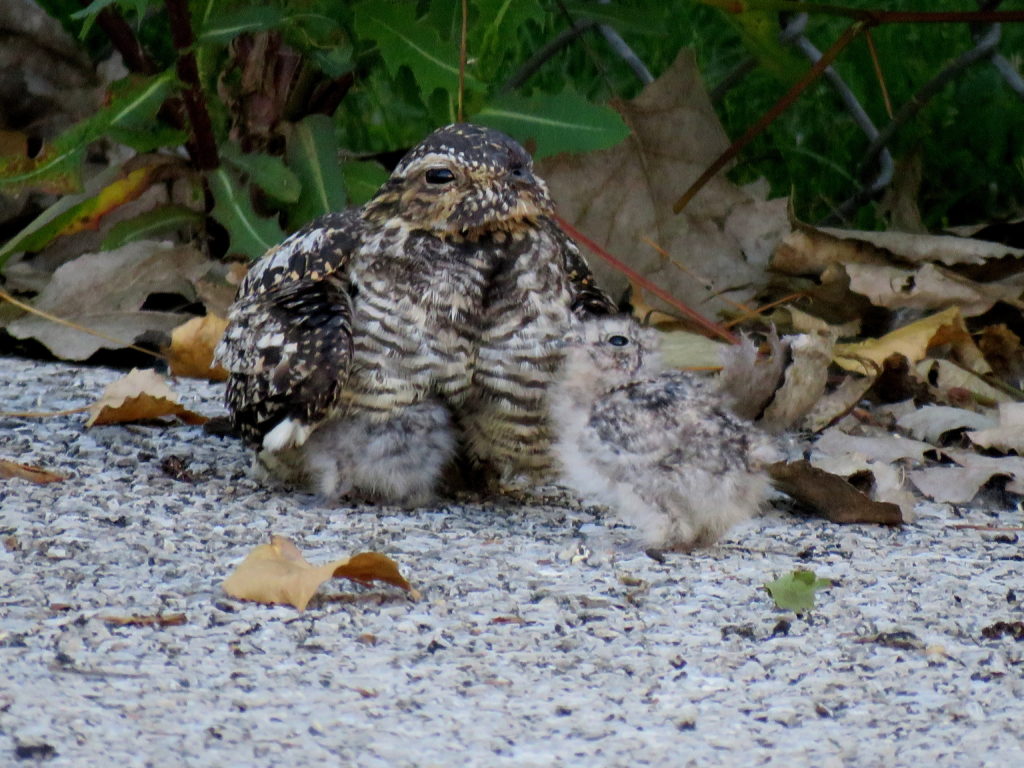
Common Nighthawks nest on open ground, gravel beaches, openings in the forest floor and in our area, on gravel roof tops. Nighthawks, including the eggs and the young, have excellent camouflage in their nesting habitats. These birds need to be hidden from view, so the trend from older style roofs with pebbles to rubber roofs without pebbles is not a good one. This shift leads to a decrease in prime nighthawk nesting habitat. If you can influence a roofing company to keep a corner of the roof covered in pebbles, we can maintain sufficient nesting habitat.

Common Nighthawk female, camouflaged on parking lot nest (Photo by Karen Wade)

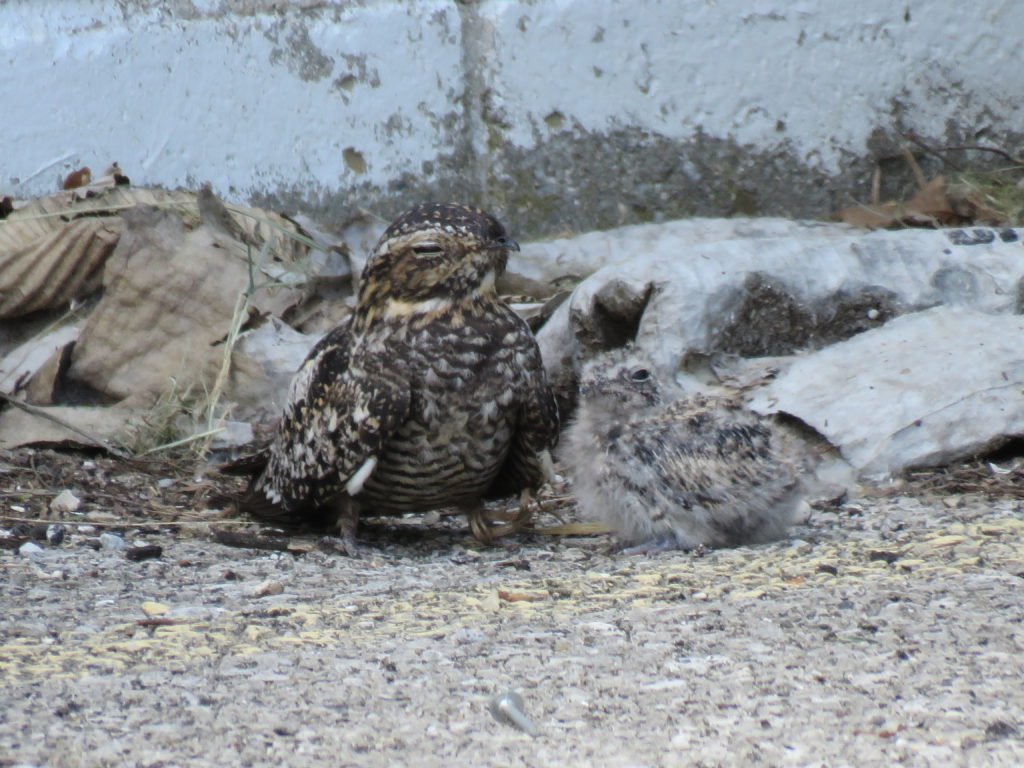
The female lays just one or two eggs at a time, and the pair may have two broods in a season. Females are the primary incubators. At times she will stand over the young with open wings, creating a shade umbrella when needed.

Common Nighthawk with nestling (Photo by Karen Wade)

Common Nighthawk female with young (Photo by Karen Wade)

Diet & Distribution

Common Nighthawks eat flying insects exclusively. Once prey is sighted, the bird will fly toward it, open its beak, and maneuver to catch and swallow the insect. The young are fed these insects in regurgitated form – yummy!

As one would expect of a bird that is an insect-eater, Common Nighthawks migrate south with the change of the seasons. Often in late summertime, Bill Rapai, President of Grosse Pointe Audubon and my co-leader on bird walks, calls to inform me the migration is evident, with streams of nighthawks moving south over Lake St. Clair. Their journey may take them anywhere from 1,600 to 4,200 miles as they have been reported in Ecuador, Peru, Brazil and as far south as Argentina.

I hope that you get a chance to listen for these unique birds, and then look to the sky and experience these seasonal marvels.


Enjoy your birds!

-Rosann Kovalcik

Owner, Wild Birds Unlimited, Grosse Pointe Woods

Have you joined our email list? Click here to sign up, it’s free and gives you access to sales, coupons, nature news, events, and more!
Posted in Summer, Wild Bird Facts | Tags: birds, common nighthawk, Grosse Pointe Woods, nighthawk, summer, wild birds, wild birds unlimited | Leave a comment |

Recent Posts

  • Welcome the Wood Duck as our State Duck
  • Killdeer – our most common Plover returns
  • Red-tailed Hawks, the Common Buteo
  • Bald Eagles –
  • What other owls can you find ?

Archives

  • March 2026
  • March 2023
  • February 2023
  • January 2023
  • April 2022
  • March 2022
  • December 2021
  • September 2021
  • April 2021
  • March 2021
  • May 2020
  • April 2020
  • February 2020
  • January 2020
  • November 2019
  • August 2019
  • July 2019
  • March 2019
  • February 2019
  • December 2018
  • October 2018
  • August 2018
  • July 2018
  • May 2018
  • April 2018
  • March 2018
  • January 2018
  • December 2017
  • November 2017
  • October 2017
  • September 2017
  • August 2017
  • July 2017
  • May 2017
  • April 2017
  • February 2017
  • January 2017
  • December 2016
  • October 2016
  • September 2016
  • August 2016
  • July 2016
  • May 2016
  • February 2016
  • October 2015
  • August 2015
  • July 2015
  • June 2015
  • March 2015
  • October 2014

Categories

  • Bird Feeding Solutions
  • Bird Songs
  • Events & Outings
  • Fall
  • Native Plants
  • Nesting
  • Spring
  • Squirrels
  • Summer
  • Uncategorized
  • Wild Bird Facts
  • Winter

Enter your email address:

Delivered by FeedBurner

© Wild Birds Unlimited of GPW - Website by TBD Web Services