• Home
  • About Us
  • Blog

Tag Archives: Winter

Where are the Juncos?

Posted on January 9, 2020 by Rosann Kovalcik

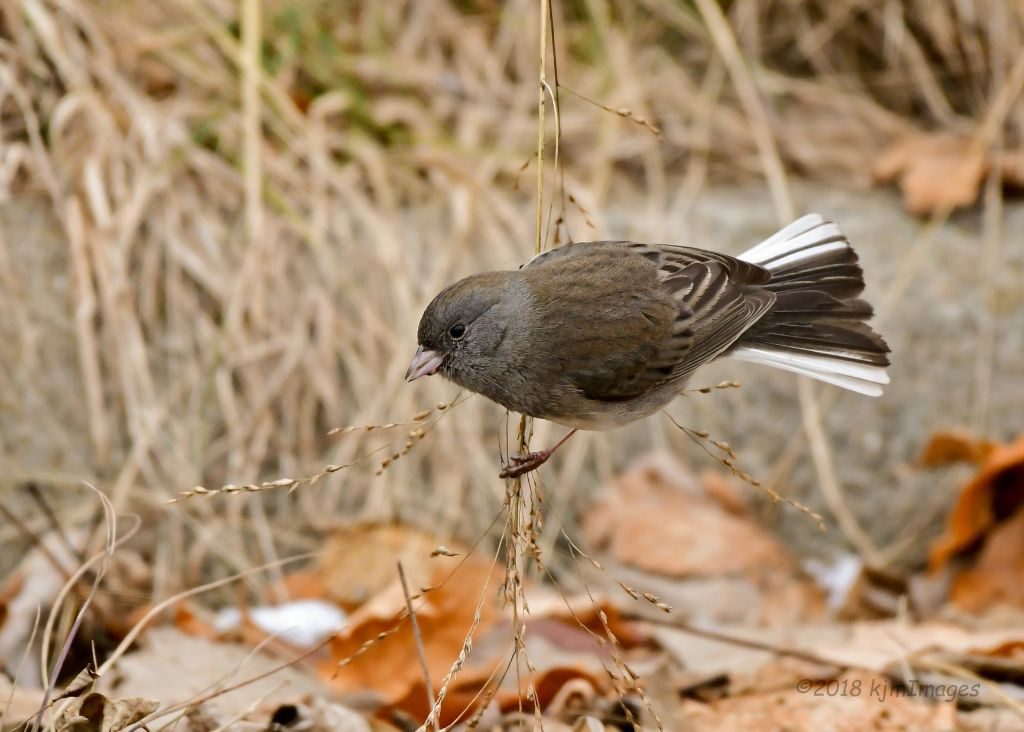
Dark-eyed Junco by Kevin Murphy, Eliza Howell Park, Detroit

Where are all the Juncos?

We have had a number of customers recently ask where the Dark-eyed Juncos have been. Many have not yet seen them at the feeders this winter. My best experience with Juncos this year has been when we had a recent small snowfall. They were perched on the stems of plants I leave up all winter to provide seeds for the birds.

Now that we are not experiencing snow cover, the seeds available to Juncos make their visits to our feeder less of a necessity. I have been missing their subtle gray coloration and their white “snowy” bellies. I also love that their two outer tail feathers are white on each side, looking like a cheerleader skirt as it flies or spreads its tail.

To attract them to your yard, offer White Proso Millet on a tray feeder. The feeder can be on legs and close to the ground, or on a pole system and higher off of the ground. Either way, this stable platform allows them to eat in a way that true sparrows prefer, simulating their groundfeeding preference.

Enjoy this winter visitor while you can!

Rosann Kovalcik, Owner

Wild Birds Unlimited, Grosse Pointe Woods

Have you joined our email list? Click here to sign up, it’s free and gives you access to sales, coupons, nature news, events, and more!


Posted in Bird Feeding Solutions, Winter | Tags: climate, dark-eyed junco, Grosse Pointe Woods, junco, millet, seasonal, snow, sparrow, weather, wild birds, wild birds unlimited, Winter | Leave a comment |

Decluttering Your Bird Feeders… Or Not

Posted on March 25, 2019 by Rosann Kovalcik

Much has been written about decluttering lately. And so, of course, my thoughts turn to bird feeders.

A common bit of wisdom regarding decluttering is to ask yourself if an item brings you Joy.

Cylinder Feeders

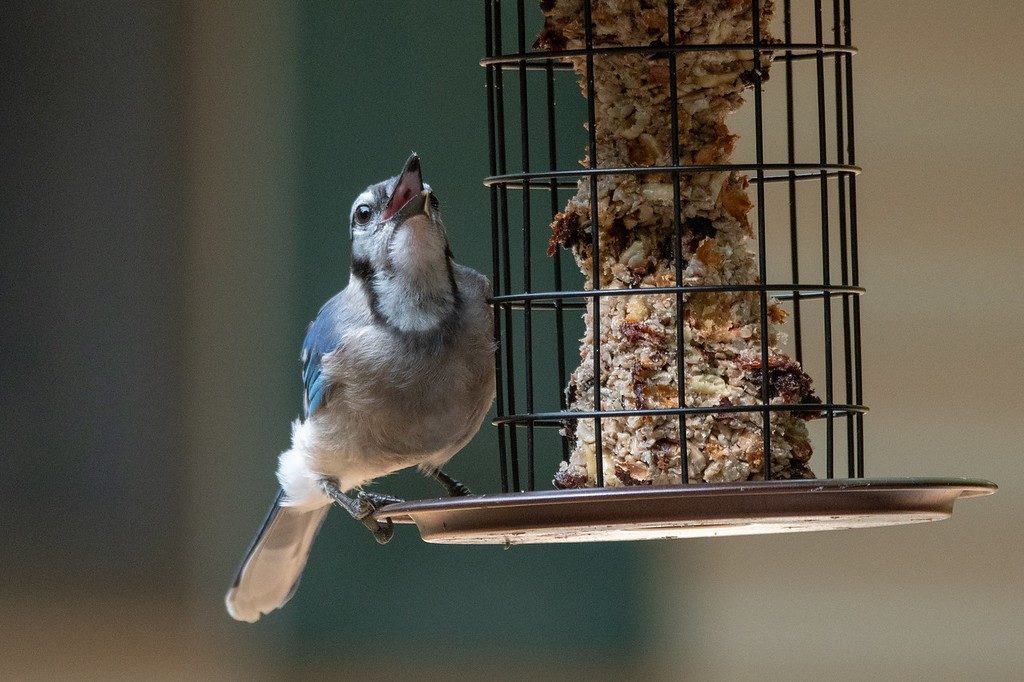
Blue Jay on Cylinder Feeder (Photo by Lisa Vreede)

When I fill my cylinder feeder with a new No-Mess seed cylinder, I notice Blue Jays coming in groups. Perhaps the first jay to discover the gleaming peanuts will stand atop the pole and give a little bounce up and down as he calls to the others in his tribe. Then the hammering begins; the birds’ feet holding on tightly, their heads moving back and forth, excavating each peanut with precision. Then off the Jay flies to a branch to eat its prize. Or maybe it plans to stash the peanuts. The flurry of blue from feeder to tree branches is so beautiful to watch.

Okay – Joy with the cylinder feeder… keep it!

Suet Feeders

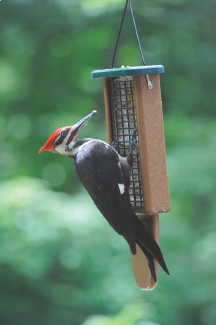
Pileated Woodpecker on Double Tail Prop Feeder

Then I consider my suet feeders. I have a lot of those. Tail prop feeders – I have two of the extra-large version. Last time I filled them with Nuts and Berries Suet I was in Boyne City, and when I was done, I called out to the woods ,“Hey Buddy (my male Pileated Woodpecker’s  given name), I just filled the feeders for you!” And I kid you not; within two minutes, he flew into the woods along the road and hammered away at one of his favorite trees, doing some serious excavation. Then, as I backed away from the feeders, he came in on his landing tree. By the time I was in the house, I had the Pileated Woodpecker on one of the double tail-prop suet feeders, and a Hairy Woodpecker on the other one.

Okay –  true Joy with the double tail-prop suet feeders – keep them. All of them.

Finch Feeders

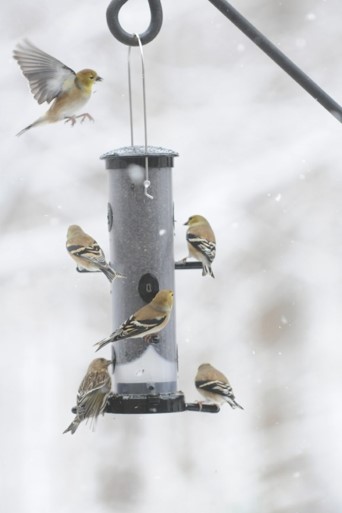
American Goldfinches

Next I reflect on my finch feeders. Yes, that’s plural as well. This past winter, it was so exciting to watch for finches of all varieties. The Winter Finch Forecast predicted we would have many irruptions into our area. This happens when seed crops are not optimal in Ontario, so irregularly occurring species move south in search of plentiful food sources. Pine Siskins can be identified at a distance by their very pointy beaks, looking like just-sharpened pencils. Careful observations need to be made to notice the potential Common Redpoll – such a dainty bird with the sweetest red cap. Of course, these winter visitors mix in well with American Goldfinches who visit the feeders all year long. As we move into spring, I watch my goldfinches carefully with binoculars to note when I see the first hint of yellow feathers as they molt into spring plumage.

Joy with the finch feeders – keep those too!

Hopper Feeders

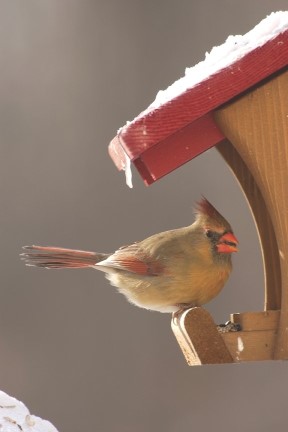
Female Northern Cardinal at Hopper Feeder

Time to evaluate the large hopper feeder, which holds an abundance of seed. I am relieved when the birds visit first thing in the morning, proof they made it through another challenging night. I feel so fortunate to be able to provide them with readily available food that has no shells, allowing for quick energy. If it’s cold enough, birds can go through all of their fat reserves in one night just to keep alive.

More Joy with the foundational hopper feeder – keep it.

Specialty Feeders

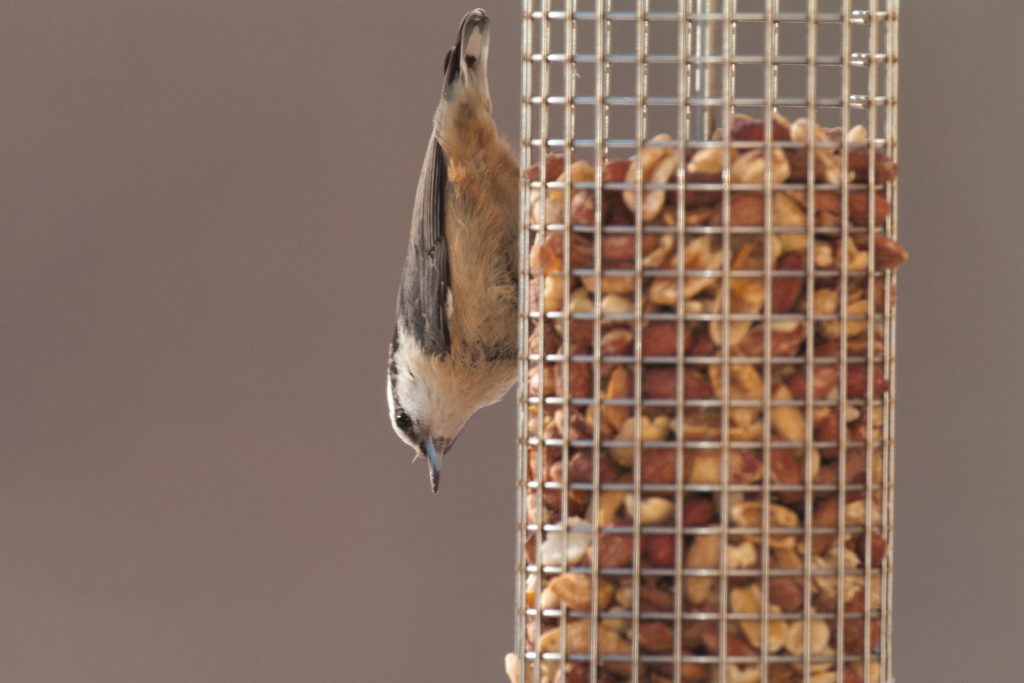
Red-breasted Nuthatch (Photo by Bill Rapai)

Then there is the peanut feeder, a draw for specific birds. It is certainly a favorite of Red-breasted Nuthatches that cling on upside-down.  I love to watch their bodies teeter back and forth like little sledge hammers as they pound away to extract a peanut. They make the dearest sounds, similar to small squeak toys. It has been an irruptive season for Red-breasted Nuthatches and I wouldn’t want to miss a moment of them.

Joy with my peanut feeder – keep it!

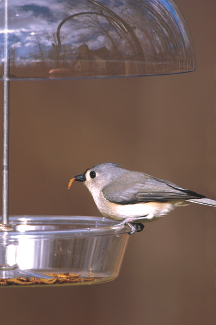
Tufted Titmouse on Dinner Bell Feeder

Finally, my thoughts turn to the variety of foods I offer the birds when I’m in a time crunch. For example, I can simply open a bag of Bark Butter Bits and pour them into my Dinner Bell feeder. This feeder is the most versatile and I dare say one of my absolute favorites. I can lower the weather dome so just the smaller birds fit between the tray and the dome, even excluding House Sparrows if low enough. It gives the Black-capped Chickadees a place they can dart to, picking up the beak-sized Bark Butter Bit and flying off to a branch. It is so fun to watch as they hold it in their feet and eat it with dainty bites. The Dinner Bell is also great for mealworm feeding. Mealworms give birds the protein they need for feather production when molting and for calcium when they are ready for egg-laying season.

Okay – Joy with my Dinner Bell Feeder – keep them.  Both of them.

So much for ridding myself of the “clutter” of bird feeders. Anything that bring me this much Joy is a keeper!

Posted in Bird Feeding Solutions, Spring, Wild Bird Facts | Tags: bird feeder, birds, blue jay, chickadee, declutter, finch, Spring, tidy, wild birds, wild birds unlimited, Winter, woodpecker | Leave a comment |

Winter Tree Birds

Posted on February 4, 2019 by Rosann Kovalcik

After spring and summer, the majority of birds in Michigan leave for the south. Their instincts pull them to return to wherever they have a full diet of insects and fruits. Those winter birds that stay for the colder months are marvels at finding food. What can they possibly eat? How do they find food?

Black-capped Chickadee

Chickadees: The Flock Masters

Whenever I hear the calls of Chickadees in winter, their “dee dees” catching my attention, I know to look for them if I want to locate other winter birds. The Chickadees are what I call the “Flock Masters”. Very hardy and inquisitive, they are usually the first to locate a food source, whether natural foods or those found at feeders. Other birds are keen to the Chickadees’ ability to find food.

Downy Woodpeckers, Tufted Titmice, White-breasted Nuthatches and Brown Creepers make up the companion group that follow Black-capped Chickadees as they forage for food. Even those birds that come to our feeders for sunflower, suet and peanuts will continue to forage for natural foods. They eat what protein they can find, including insect eggs and cocoons, in addition to the insects hidden within the trees. They perform a great service as they keep our trees healthy and strong.

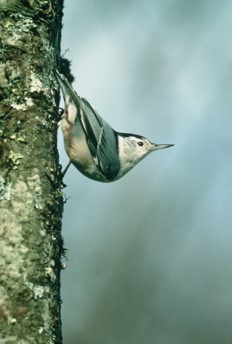
White-breasted Nuthatch

Working on the tiny twigs of the trees is the smallest of the team, the Black-capped Chickadee. The ability to hang upside down and investigate with their sharp eyesight and small, probing beaks enables them to find the eggs and hiding insects on the smallest of twigs.


Tufted Titmice: The Cousins

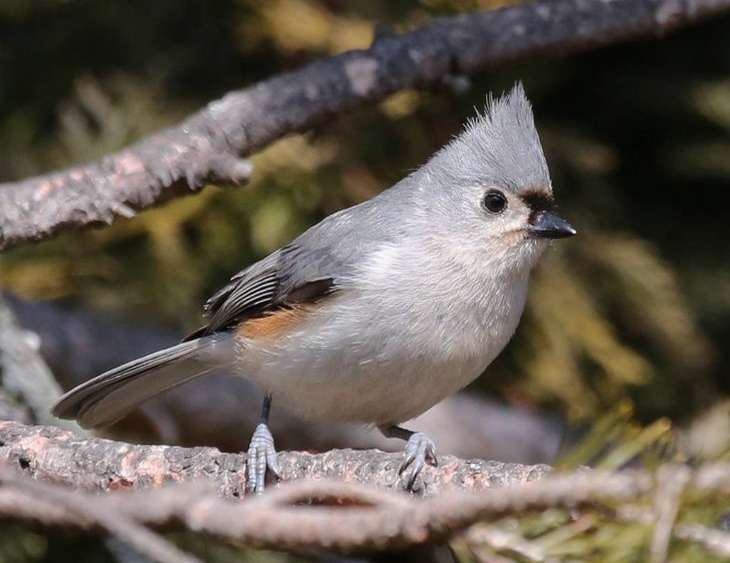
The Tufted Titmouse, a cousin to the Black-capped Chickadee, is a little larger and can focus its energy on the larger twigs. They work more slowly and usually move around in mated pairs. Their comparatively louder calls ring out clearly in the winter time, as “Peter, Peter” or “Cheer, Cheer, Cheer.” Titmice are also adept at hanging on to branches in an acrobatic manner. Sometimes when they are very intent on their food gathering, their head crest will remain down. At other times, the feathers of their crest become erect as a warning. Perhaps they feel a hawk is in the area or a squirrel is getting too close to their food source and they do not want to share.

Tufted Titmouse (Photo by John Graffius)

Downy Woodpeckers: The Listeners

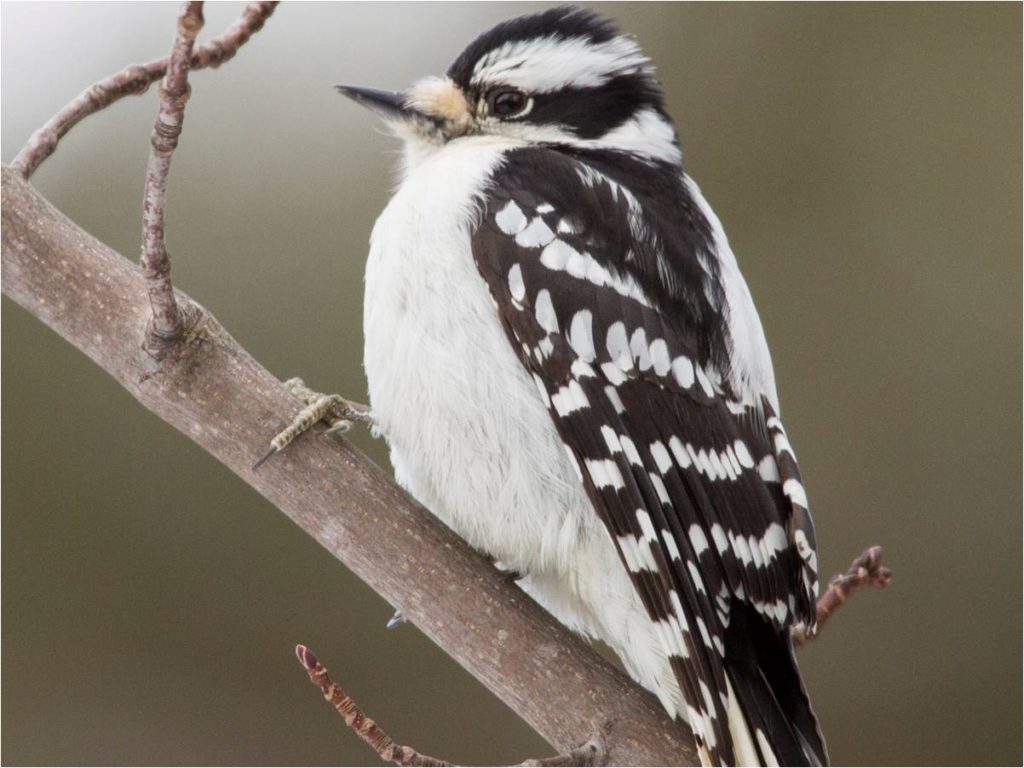
The Downy Woodpecker is an even larger bird in the team of Winter Tree Birds. They work on the limbs and larger branches of the tree. Not only do they look for insects, eggs and cocoons on the branches of the trees, they listen for the sound of insects moving inside the trees. This is why you may watch a Downy Woodpecker clinging to the side of the tree, moving its head from side to side – it is listening for the insects. Once it locates them, it uses its small beak to chisel a hole and extract the insects inside. A woodpecker has special tools for this function, a barbed tongue with sticky saliva that is excellent for extracting the insects it finds.

Downy Woodpecker

Nuthatches & Creepers: The Bark Bandits

The deep cracks in the bark of some trees are a perfect place to find cocoons, insects, and eggs, sheltered from rain and snow. This is where the White-breasted Nuthatch and Brown Creeper are very adept – their beaks well-suited to the job. White-breasted Nuthatches have a thin dagger-like bill that is slightly upturned on the bottom edge to create an angle, perfect for the type of feeding it does. When seeking food, the Nuthatch travels upside down and from top to bottom on the tree trunks. This allows them to find the food the right-side-up birds do not see.

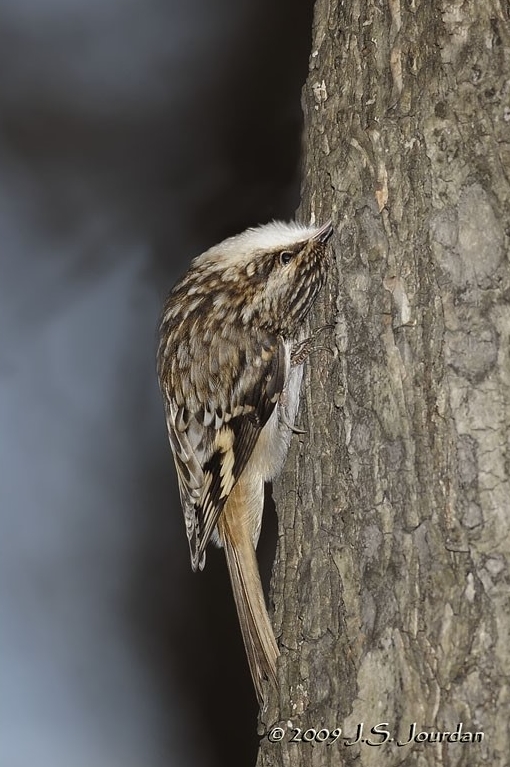
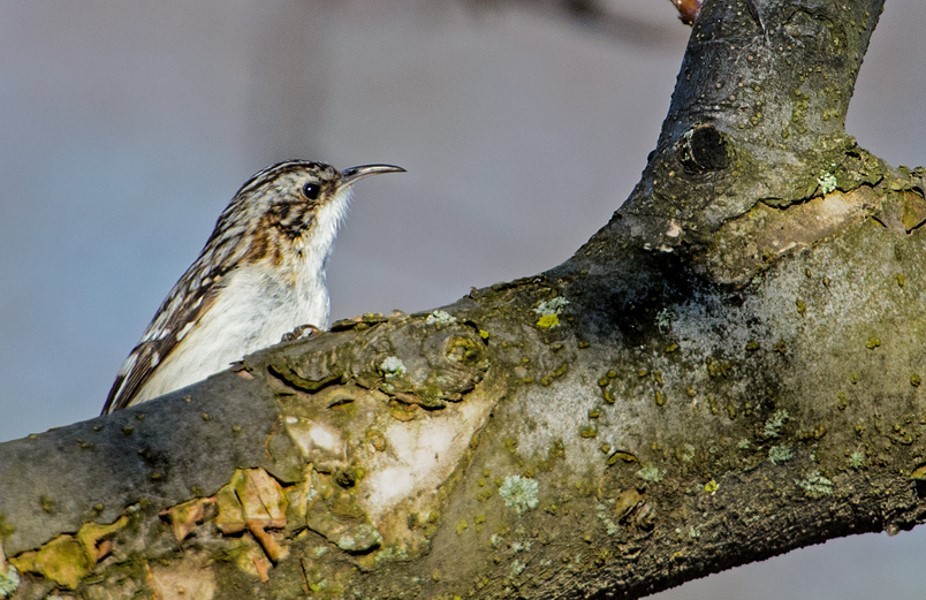
On the other end of the spectrum is the Brown Creeper, who can be identified by its behaviors. Flying from one tree to another, the Brown Creeper lands at the base of the tree and work its way up, searching along the bark for food, and circling the tree as it climbs. Its long, needle-like bill allows for deep probing within the nooks and crannies of trees. This bird eats only insects in the winter – an admirable accomplishment.

Brown Creeper (Photo by Jerry Jourdan)

Brown Creeper

The Black-capped Chickadee takes care of the tiny twigs, the Tufted Titmouse gleans from the larger twigs, the Downy Woodpecker from limbs and branches and the White-breasted Nuthatch and Brown Creeper take from the trunks and larger branches of the trees, travelling in opposite directions. By working as a team, these five species of birds help to keep our trees healthy and strong.

Enjoy your birds!!

Rosann Kovalcik, Owner

Wild Birds Unlimited, Grosse Pointe Woods


Have you joined our email list? Click here to sign up, it’s free and gives you access to sales, coupons, nature news, events, and more!
Posted in Wild Bird Facts, Winter | Tags: birds, brown creeper, chickadee, Grosse Pointe Woods, nature, nuthatch, trees, wild birds unlimited, Winter, woodpecker | Leave a comment |

Northern Cardinal – A Crimson Jewel in the Garden

Posted on March 5, 2018 by Rosann Kovalcik

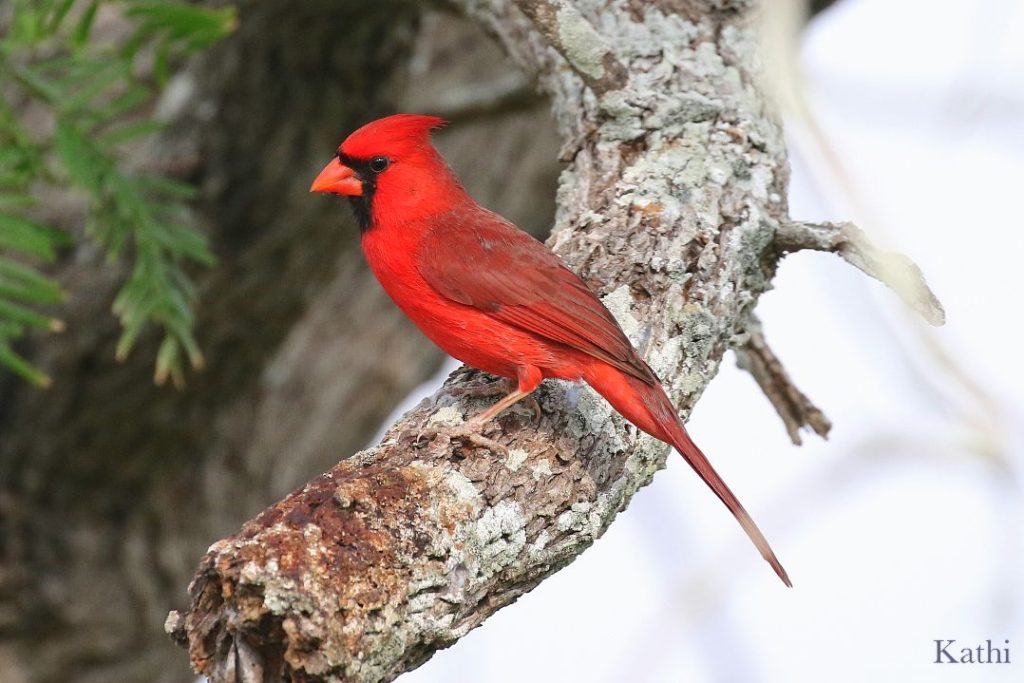
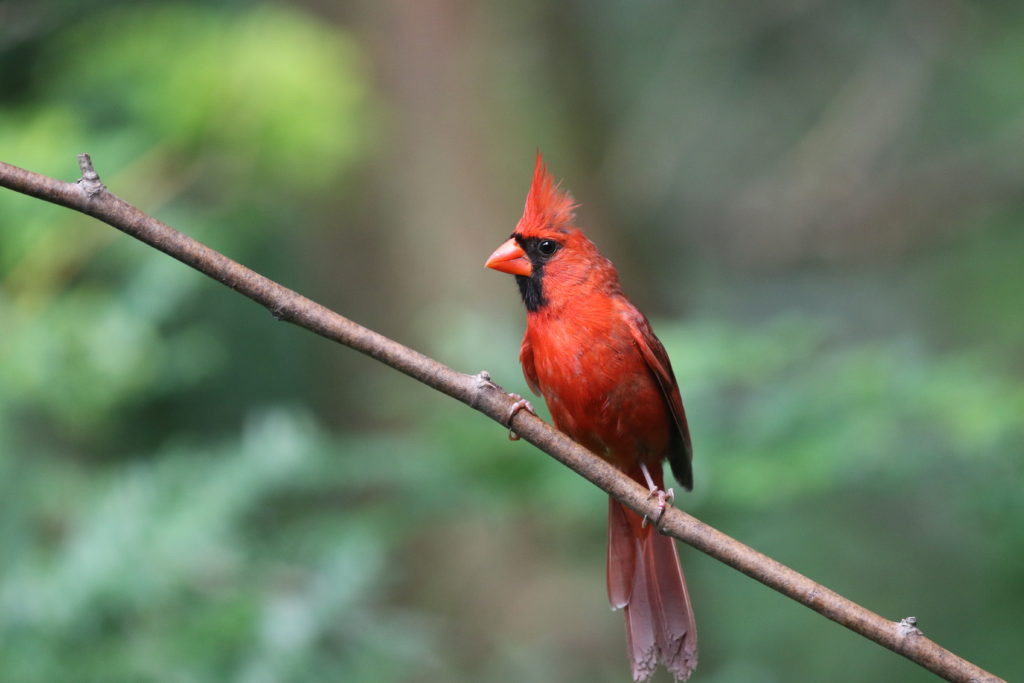
male Northern Cardinal by Kathi Hince

One of the moments I like most about late winter is hearing the Northern Cardinal beginning to sing. Prompted by the length of day, the Northern Cardinal sings to mark its territory.

If we’re lucky, we can hear two male Cardinals calling in tandem in a hormonal duel. Unlike many other songbirds, the females also sing. Often in response to the song the male initiates, the female will sing from the nest. Many times, her song is longer and more complex than the male’s! During nesting season, this is her way of asking her mate for food, as she is the sole incubator and does not leave the nest. Cardinals have an amazing physiology within their syrinx which allows for their complex song. Click here for a link to recordings and explanations.

Northern Cardinals appeared in Michigan in the late 1800’s, expanding their range due to deforestation. Cardinals prefer the opening of forest edges as well as low shrubs, so our yards make great habitat for these birds!

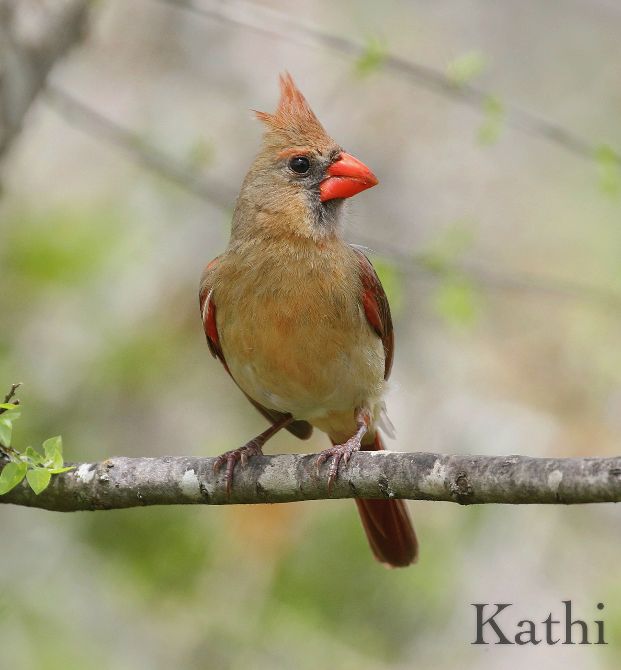
female Northern Cardinal by Kathi Hince

Nesting

The female Cardinal is responsible for nest building. She bends twigs around her body and uses her feet to push them into a cup shape. There are four layers to the nest including: coarse twigs, a mat of leaves, thin bark, and a soft top layer of grasses, rootlets and pine needles.

In Michigan, Northern Cardinals start to nest in mid-April, laying 2 to 4 eggs. Incubation takes up to two weeks. After hatching, the young stay in the nest another few weeks fledging. The young are fed protein in the form of caterpillars and other soft-bodied insects. Adults are omnivorous, adding seeds and fruits to their diet of insects.

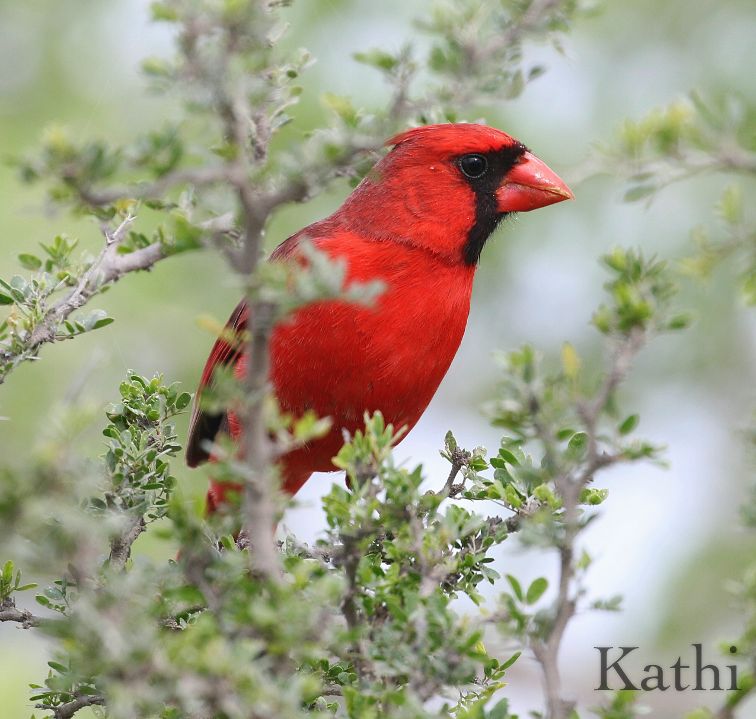
male Northern Cardinal by Kathi Hince

More Fun Facts

These birds are named for their bright red plumage thought to be reminiscent of the cleric by that name. The have the distinctive honor of being the State Bird of no fewer than seven states, which is more than any other bird.

Another endearing aspect of Cardinals is how the male feeds the female as part of courtship display. This is a change from their behavior in the winter, when it is every bird for itself.

Juvenile Cardinals look like the females, a warm brown with golden overtones, and a lighter belly color, sporting red in their tail feathers,  wings and crest. The difference between female Cardinals and the young is the females have a bright red beak, whereas young birds have a gray/black beak.

The males have a prominent black facial mask larger and more striking than the females’. The beak is a distinctive characteristic in Northern Cardinals. It is very short and robust – a true seed cracking tool. The cardinal holds a seed in the beak, with a crunch down to crack the shell, then a roll of the tongue to rotate the seed until the shell falls away. This leaves the nut “meat” for the bird to consume. This method of eating allows the Cardinals to stay at feeders and eat. Other birds like Chickadees must instead fly off to a perch where they can hold the seed in their feet in order to extricate the edible portion of the seed.

Window Strikes

Northern Cardinals are one of the species of birds that are known to attack their reflection in a window or car mirror, repeatedly striking the surface, much to our frustration and dismay. This behavior takes place because the bird believes it is attacking another bird, an intruder in the nesting territory. In order to stop this behavior, block the birds’ reflection on the outside of the window. A product aptly named Stop Bird Attack is sprayed on the outside of the window, easily removed when no longer needed (this product sold at Wild Birds Unlimited in Grosse Pointe Woods).

male Northern Cardinal by Kathi Hince

Attracting Northern Cardinals

To attract Northern Cardinals, offer black oil sunflower either in or out of the shell, safflower and shelled peanuts. All of these seeds can be place in a hopper feeder with a larger ledge or a tube feeder with an added tray, essential for their body size if they are to reach the feeding ports.

Take a listen for this beautiful songster, filling the days with sound that will lift your spirit.

Enjoy your birds!

-Rosann Kovalcik

Owner, Wild Birds Unlimited, Grosse Pointe Woods

Have you joined our email list? Click here to sign up, it’s free and gives you access to sales, coupons, nature news, events, and more!
Posted in Spring, Wild Bird Facts, Winter | Tags: Backyard birds, Bird Feeding, birds, Cardinal, Northern Cardinal, Spring, Winter | Leave a comment |

Recent Posts

  • Killdeer – our most common Plover returns
  • Red-tailed Hawks, the Common Buteo
  • Bald Eagles –
  • What other owls can you find ?
  • Eastern Screech Owl

Archives

  • March 2023
  • February 2023
  • January 2023
  • April 2022
  • March 2022
  • December 2021
  • September 2021
  • April 2021
  • March 2021
  • May 2020
  • April 2020
  • February 2020
  • January 2020
  • November 2019
  • August 2019
  • July 2019
  • March 2019
  • February 2019
  • December 2018
  • October 2018
  • August 2018
  • July 2018
  • May 2018
  • April 2018
  • March 2018
  • January 2018
  • December 2017
  • November 2017
  • October 2017
  • September 2017
  • August 2017
  • July 2017
  • May 2017
  • April 2017
  • February 2017
  • January 2017
  • December 2016
  • October 2016
  • September 2016
  • August 2016
  • July 2016
  • May 2016
  • February 2016
  • October 2015
  • August 2015
  • July 2015
  • June 2015
  • March 2015
  • October 2014

Categories

  • Bird Feeding Solutions
  • Bird Songs
  • Events & Outings
  • Fall
  • Native Plants
  • Nesting
  • Spring
  • Squirrels
  • Summer
  • Uncategorized
  • Wild Bird Facts
  • Winter

Enter your email address:

Delivered by FeedBurner

© Wild Birds Unlimited of GPW - Website by TBD Web Services