• Home
  • About Us
  • Blog

Category Archives: Events & Outings

A Fall Bird Walk at Elmwood Cemetery

Posted on September 21, 2017 by Rosann Kovalcik

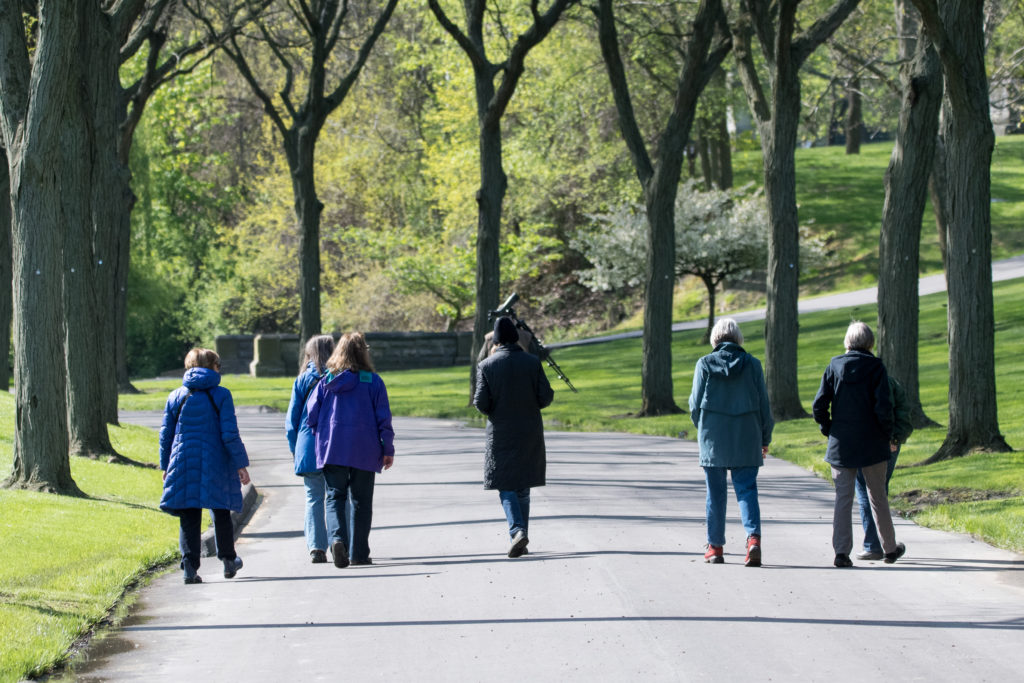
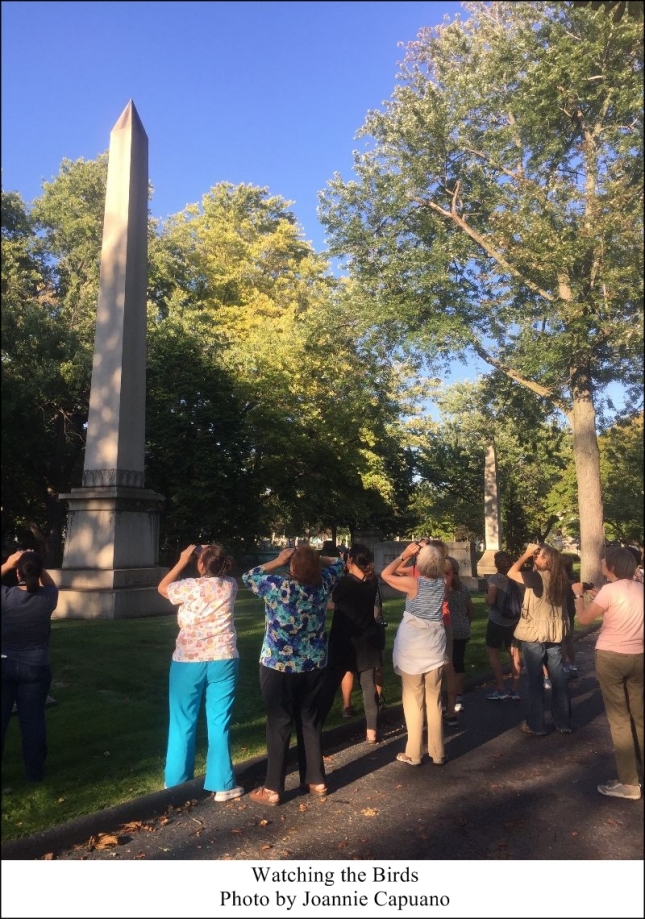
Who would have imagined, a Bird Walk at Elmwood Cemetery on September 20th with 80 degree temperatures!? Despite the unusual warmth, our crowd of 15 had a delightful time walking around this historic cemetery – and Detroit’s only certified Arboretum.

We love our hostess, Joanie Capuano, who fills in the blank on the history of the “who’s who” in the cemetery and what certain headstones mean, and is as engaged in the birds as everyone else.

The flycatchers were high in the trees and, with the size of the trees here, that’s way up! Through the scope we were able to identify Great-crested Flycatcher – the rest we chalked up to “flycatcher species”, as they can all look extremely similar. American Robins were in abundance all over the cemetery. The fruit crops here are ideal for them and they were gorging themselves on this energy rich sustenance, perfect fuel for the migration ahead.
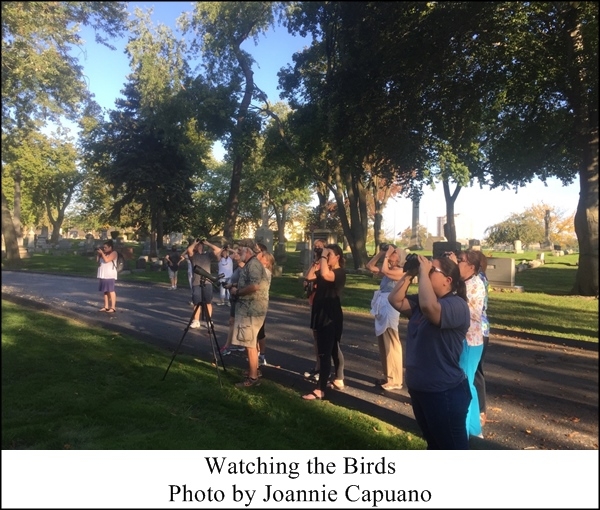
Our view of warblers and other small birds was in a backlit, dead tree. The scope came in handy again as we then had enough light to enable us to see the coloration on the Yellow-rumped Warblers, American Redstart and American Goldfinches that were preening in the late sun.

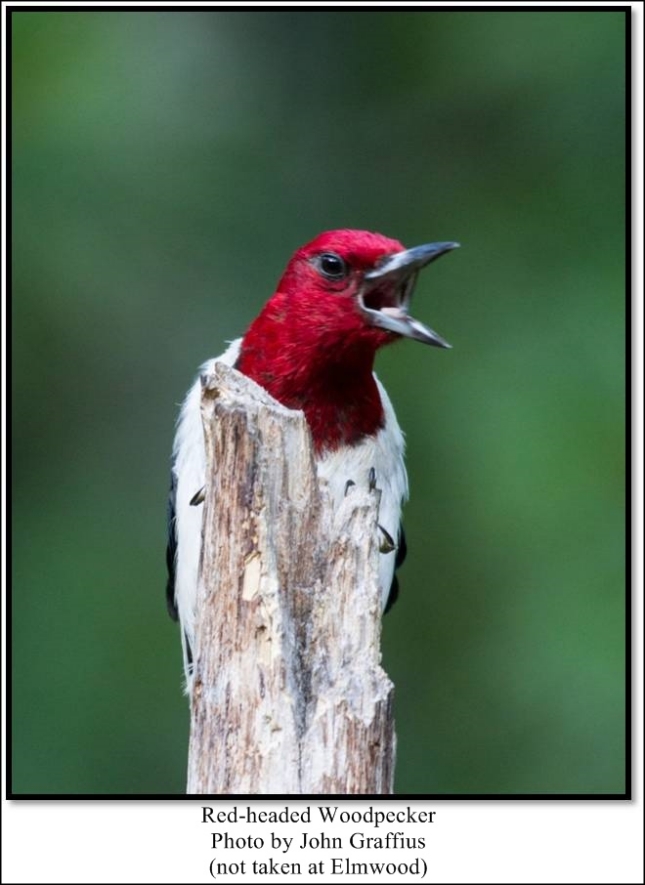
We expected Chimney Swifts and were not disappointed as they flew overhead in steady numbers. What we didn’t expect, and brought much excitement, was a Red-headed Woodpecker. The unmistakable black and white in flight had me calling out the birds’ name. It then very cooperatively hung out on a silver maple, perfectly poised for most to see through their binoculars and in the telescope as well. The stunning beauty of their crimson head colors never fails to delight me. We were all excited about this rare find.
As we were walking our final stretch, the antics of a Belted Kingfisher entertained us. He flew back and forth across the pond, rattling as he flew. Many times he perched long enough for us to view him through the telescope, commenting about his crazy head feathers.

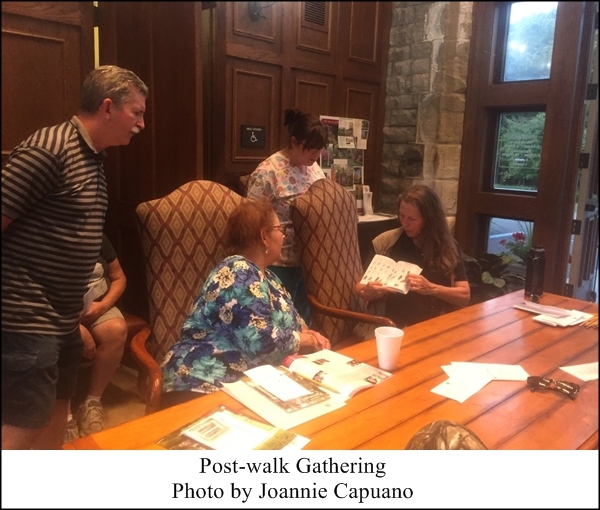
We relaxed after the walk, tallying up our species and looking through the field guide to expand upon our experience. A lovely time was had by all!
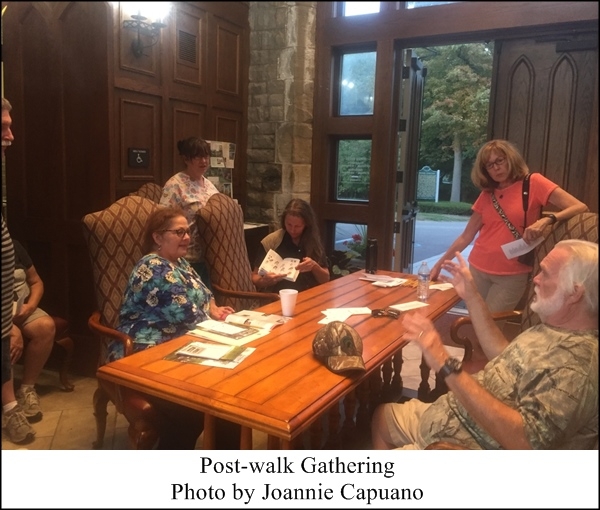
Much thanks to Joanie Capuano for hosting us and to Jim Szelc for co-leading and carrying the scope, a worth-while effort and much appreciated.

Rosann Kovalcik, Owner
Wild Birds Unlimited, Grosse Pointe Woods

Species seen at Elmwood Cemetery on September 20, 2017 – 20 Species

Canada Goose
Ring-billed Gull
Mourning Dove
Common Nighthawk
Chimney Swift
Belted Kingfisher
Red-headed Woodpecker
Red-bellied Woodpecker
Downy Woodpecker
Great-crested Flycatcher
Blue Jay
Black-capped Chickadee
American Robin
European Starling
Yellow-rumped Warbler
American Redstart
Chipping Sparrow
Rose-breasted Grosbeak
American Goldfinch
House Sparrow

Have you joined our email list? Click here to sign up, it’s free and gives you access to sales, coupons, nature news, events, and more!

Posted in Events & Outings, Fall | Leave a comment |

Chimney Swifts – Aerial Artists

Posted on August 8, 2017 by Rosann Kovalcik

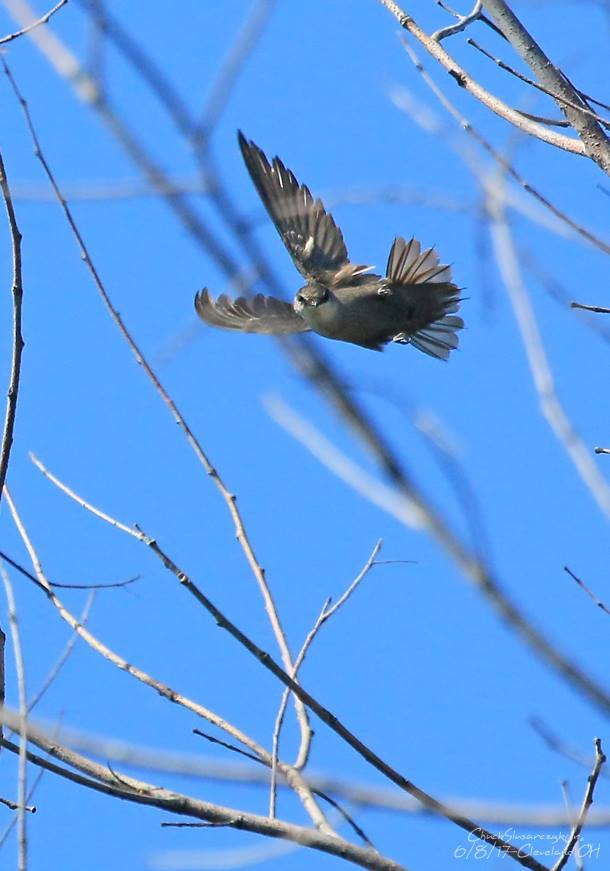
Perhaps one of the happiest sounds in my yard during the warmer months is the chattering of Chimney Swifts as they race by in the sky. Looking like a cigar with sickle-shaped wings, they are usually seen flying in pairs or family groups. (Photo courtesy of Chuck Slusarczyk Jr.)

Their wings quiver in flight, swift and shallow, as they maneuver to catch insects. Feeding “on the wing,” they capture flies, bugs, wasps, and other insects.

Chimney Swifts spend more time flying than other species of birds. They copulate in flight, and drink and bathe in the rain while flying. They do stop flying to sit on eggs and to roost at night for sleep.

Chimney Swifts previously nested in caves and hollow trees. With the advent of chimneys on this continent, they acclimated to this new hollow for nesting purpose as well as using air vents, old wells, silos, barns, lighthouses, sheds and other similar structures.

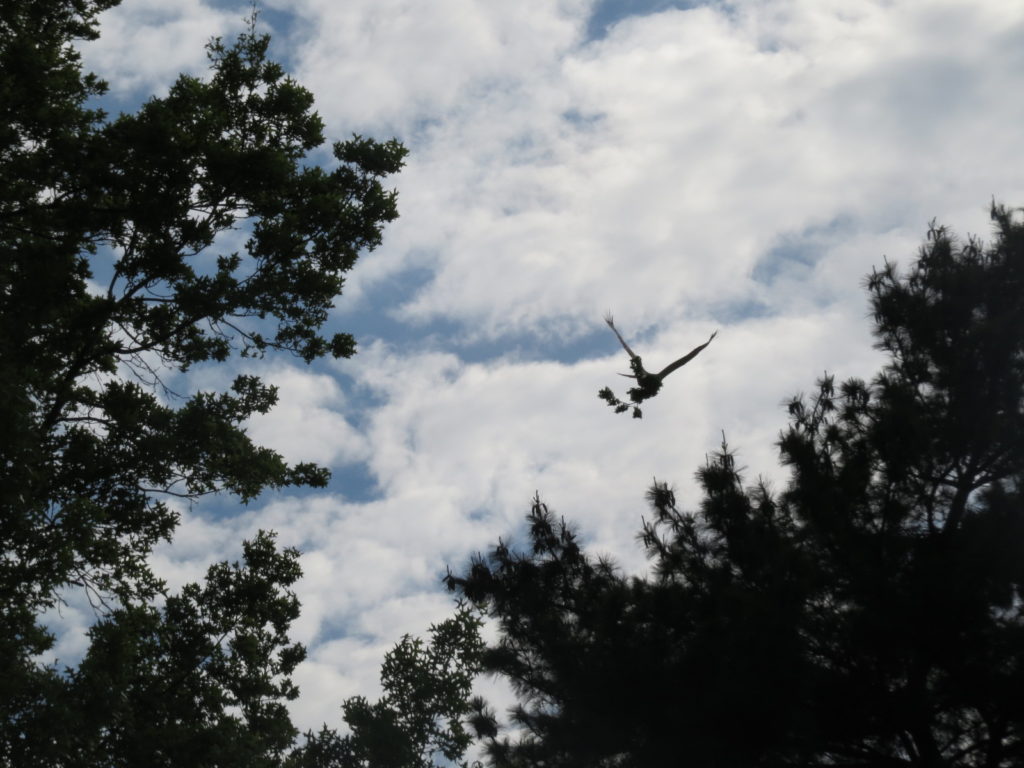
The nest of a Chimney Swift is a work of art. Both parents contribute to the nest, breaking off small twigs with their feet while flying through branches, and returning to the nest site with the twigs in their bills.  The bird in the photo above is slowing down to be able to break off a twig with its’ beak while in flight.

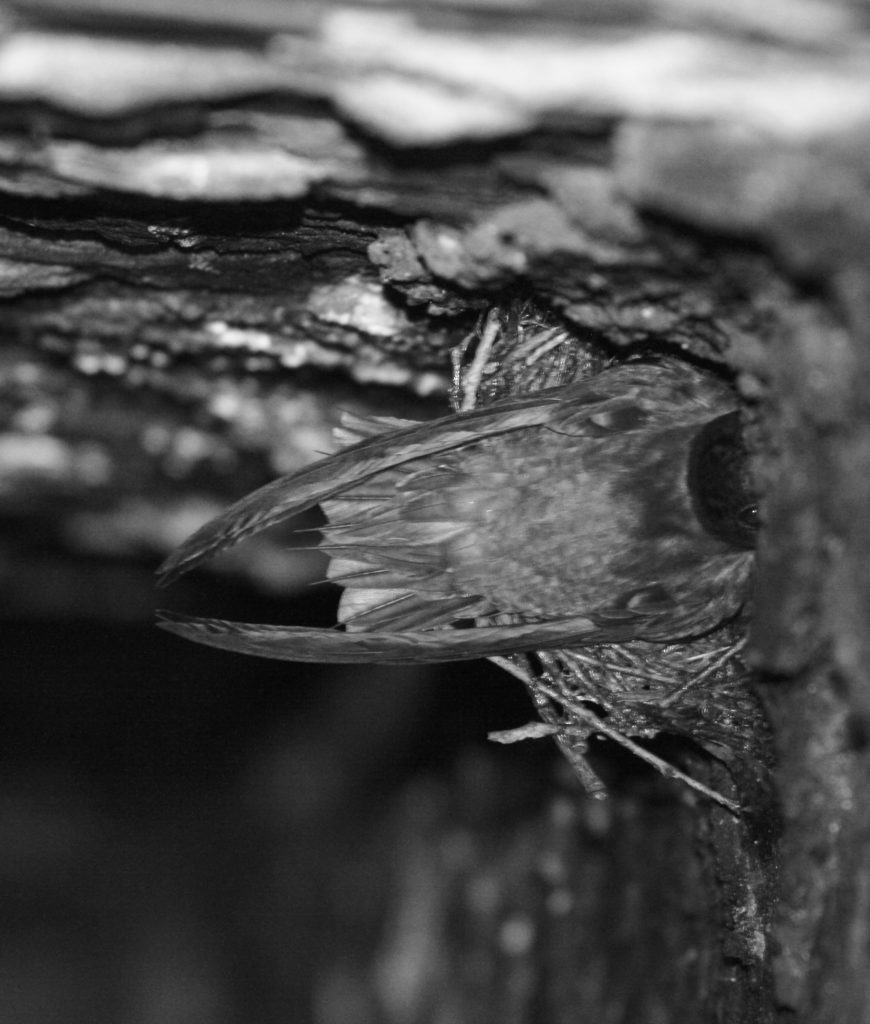
The nest is a half-saucer of loosely woven twigs, measuring 2 to 3 inches from front to back, 4 inches wide and an inch deep. Remarkably, it is stuck together and cemented to the chimney wall with the bird’s glue-like saliva.  This female below faces the wall of the chimney – you can just see her eye at the far right.  Check out the very stiff tail feathers which are used to hold onto vertical surfaces when the birds are not incubating eggs.  (Photo courtesy of Bruce Dilabio)

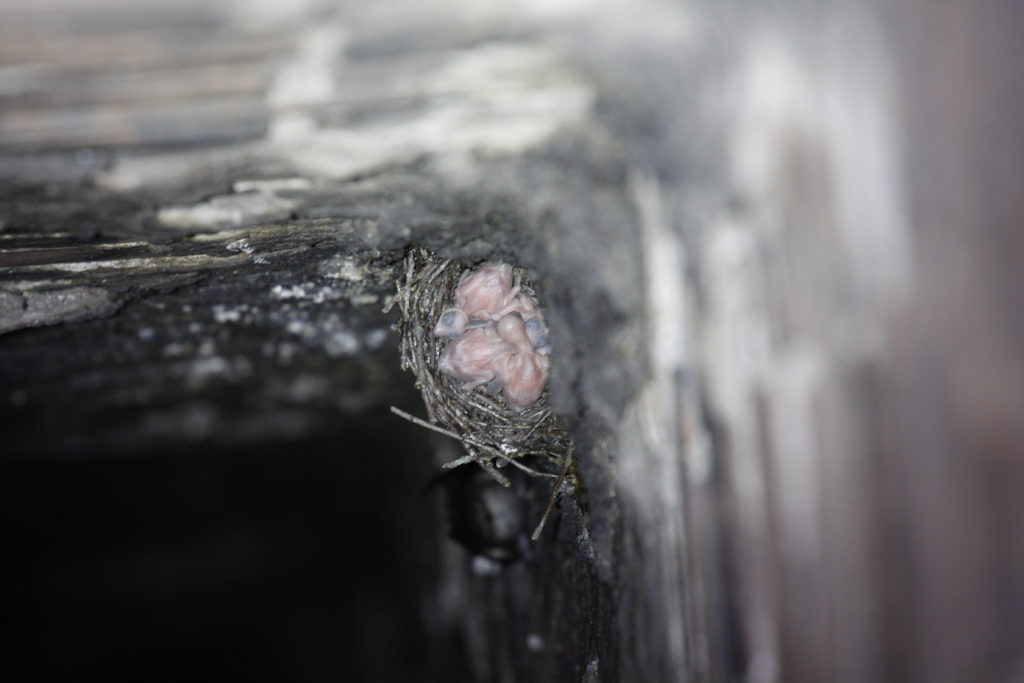
Three to five white eggs are laid with a 16 – 21 day incubation period. The nestlings are born naked and helpless as shown in the photo below. (Photo courtesy of Bruce Dilabio)


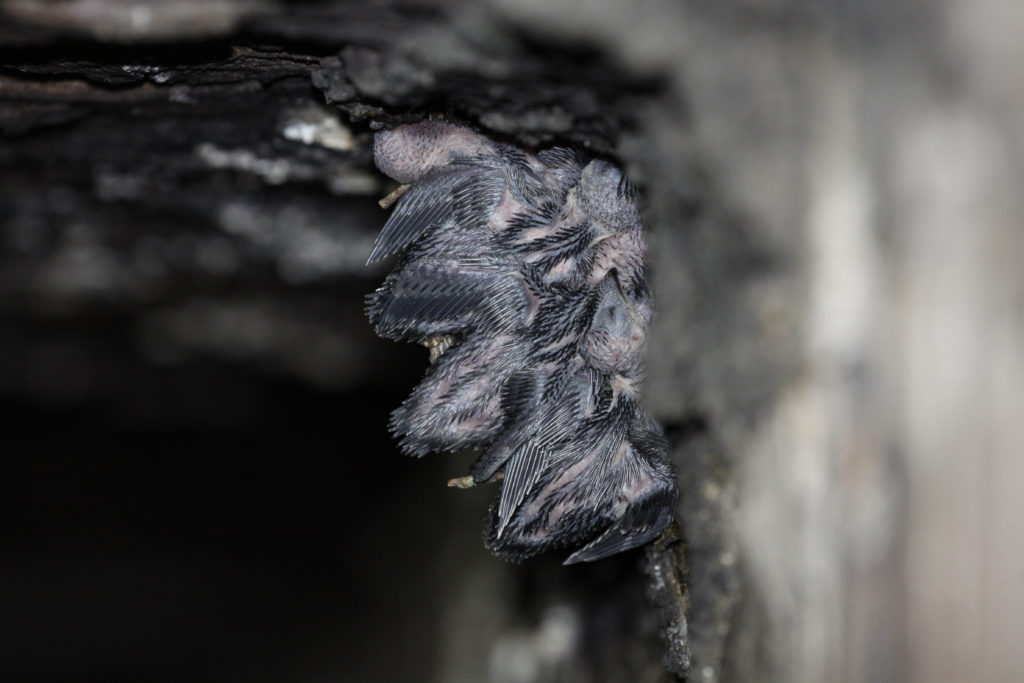
The young outgrow the nest and cling vertically to the walls while the parents continue to feed them for another 14 – 19 days. At that point, they launch themselves out to flight and join their parents.  Shown below, these same nestlings are older but not yet ready to leave the nest.  Look at how they are crowded together and all facing the wall of the chimney.


Large numbers of Chimney Swifts roost together in a single chimney during the non-breeding season. During cool nights, the numbers of birds together may raise the temperature inside the roost to 70°F warmer than the outside air.
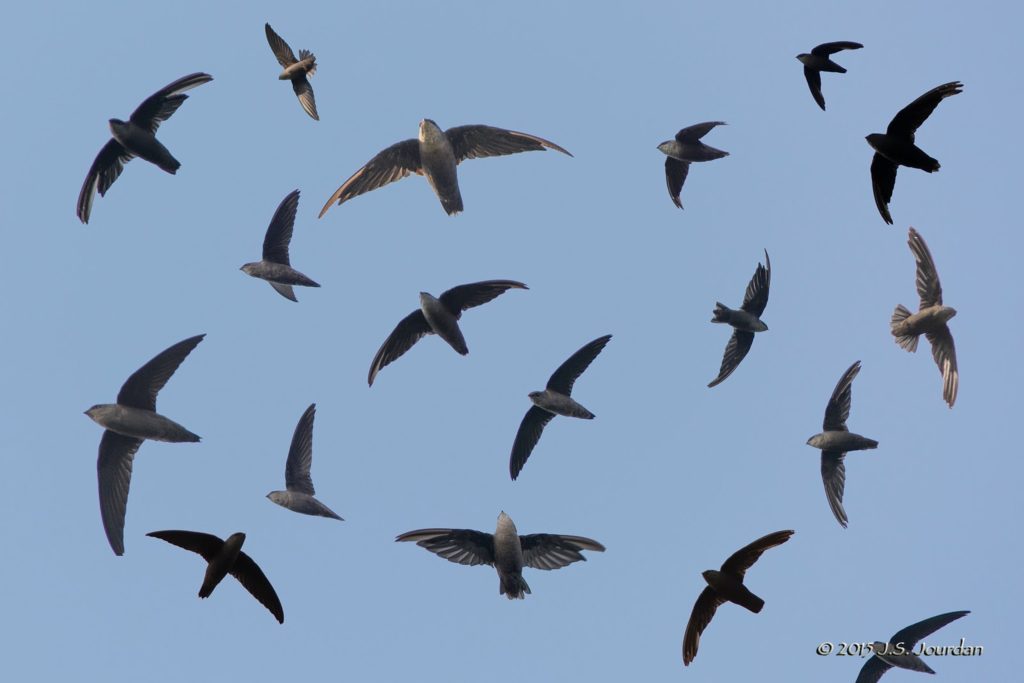
The largest known Chimney Swift roost in North America is on Grand River in Farmington Hills. There, up to 50,000 swifts can be seen dramatically diving down into the 150 foot chimney stack of the former LaSalle Winery at dusk. Mark your calendar and join Detroit Audubon for “Swifts Night Out” on September 23rd and 24th – See you there!

(Photo courtesy of Jerry Jourdan)

In the meantime, look to the sky and you will certainly be rewarded with the sight of these fascinating birds as they race their way across the sky.

Posted in Events & Outings, Fall, Summer, Wild Bird Facts | Leave a comment |

Grosse Pointe Birding Challenge 2017

Posted on May 31, 2017 by Rosann Kovalcik

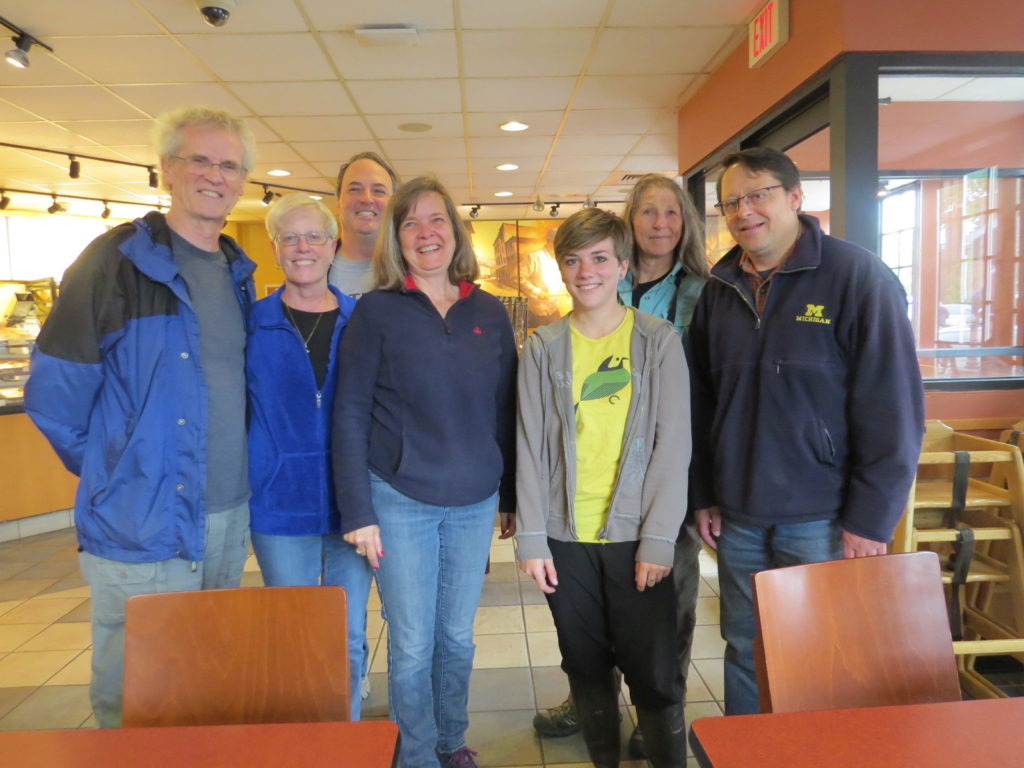
The following includes a recap of this year’s Grosse Pointe Birding Challenge, a yearly tradition which was started back in 2005. During each challenge, individuals or small teams pair up to count birds within their assigned Grosse Pointe territories. This year’s competition included Bill Rapai in Grosse Pointe City, Mike Florian, Judy Florian and Tina Bresser in GP Park, Mark O’Keefe in the Farms, and Andrea Rose (first timer!) and myself in GP Woods.

Left to Right: Mike, Judy, Mark, Tina, Andrea, Rosann, Bill

This year’s event was held later in the month than usual, which accounted for a markedly lower total species count than in years past. However, with a total of 66 bird species seen by all of the teams, and perfect weather throughout, it was still a great day for some friendly competition and bird watching.

The Challenge started the same as all others – listening in my yard as the birds make themselves heard. First is always the Common Nighthawk, who begins to be heard at 5:15, such a welcome song returning to the neighborhood. I assume they nest on the elementary school rooftop as I often see them in display flight just above the school.

Then came the ubiquitous American Robins, singing from every area of the neighborhood. I am very fortunate to have nesting Northern Cardinal as a constant, such a beautiful song! The volume of the Tufted Titmouse seems abnormal for a small bird. It can be heard above all other bird songs. An American Goldfinch is  singing from its usual place in the neighbors birch while the Red-bellied Woodpecker called from my oak tree.

I observed a Black-capped Chickadee picking midges out of the air and landing back on the wire while a Blue Jay zipped through the yard. The House Wren had started what would eventually be a long day of perpetual singing. With the last bird sighted, a Common Grackle, I was off to the lakefront park. Not a bad start with ten species while I loaded the car.

The park delivered the usual species including Canada Goose, Barn Swallow and Eastern Kingbird as well as the Purple Martins nesting in the provided housing. Unfortunately, House Sparrows and European Starlings are also using some of the housing instead of the occupancy including only the intended birds.

The waterfront turned up Mute Swan, Tree Swallow, Mallard and Ring-billed Gull. It was notable that a Double-crested Cormorant was not seen.  Also absent were Chipping Sparrows, who usually nest in the spruce trees near the activity center.  Rough-winged Swallows entered the crevices between large sandstone rocks on a homeowner’s lakefront.

Along the fence line near the Ford House, Orioles were in abundance.  I had a quick glimpse of a small bird, so fast I could not get my binoculars up for a better look. I decided to pish, which consists of making a sound that tends to prompt investigation by nearby birds, ideally leading to an accurate ID. This time it worked! A Northern Waterthrush appeared, giving me great looks as it turned its body side to side rhythmically, like the pendulum of a clock, a tail flourish for emphasis with each turn.

After that magical moment, I was treated to another. There were two large birds on the ground, bouncing in synchronicity on the lawn, moving forward with each bounce. Thankful or my scope, I had great views of these male Northern Flickers. They flew to a nearby tree trunk, landing close to each other and low to the ground. The Flickers moved  sideways along the trunk in short little hops, first one way and then the other, their eyes never leaving each other. They looked stunning against the tree bark which had the greenish cast of some type of moss growth. After five solid minutes of posturing, they flew further up in the tree then away from the area.

The mature trees of the Edsel & Eleanor Ford House usually turn up a number of warblers and did not disappoint this year. I was treated to the song as well as good views of Black-and-white Warbler, Blackburnian Warbler, and Blackpoll Warbler, which turned out to be our most common warbler of the morning.


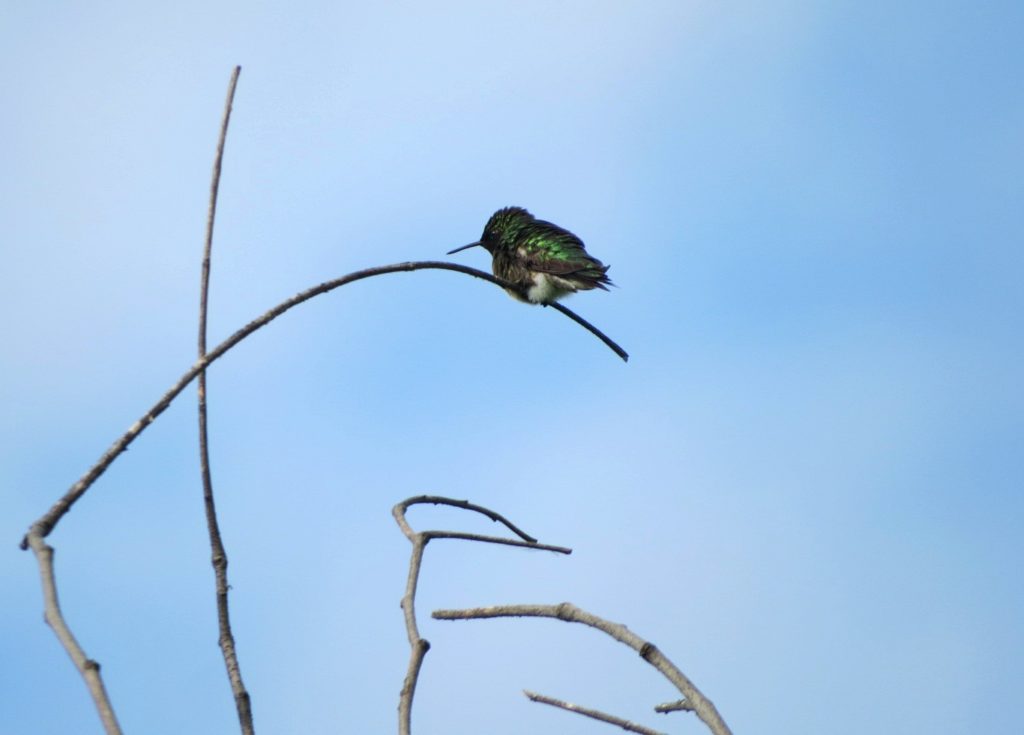
Ruby-throated Hummingbird on a snag, Photo: Andrea Rose

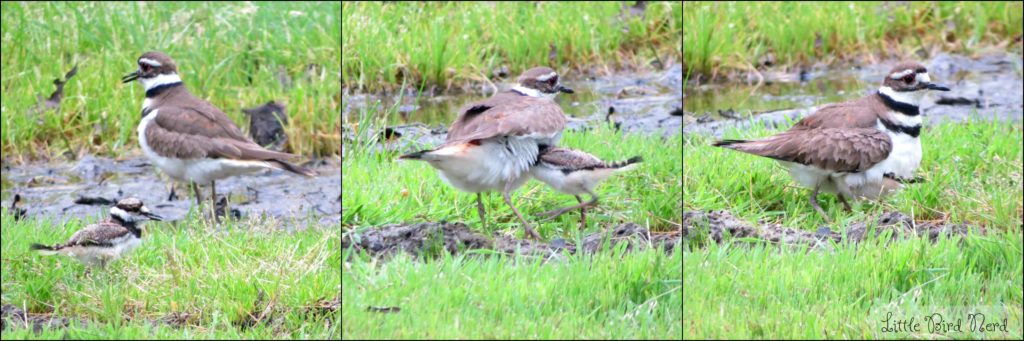
Once I covered the park, it was time to head over to the good habitat that is found at Lochmoor Country Club. I was fortunate to meet up with Andrea Rose Meldrum and we indulged ourself in a birding morning together. Lochmoor has wonderful natural areas and this year there were many areas that were mini-wetlands. This is where we found a Canada Warbler singing from deep within the tangle, had the male Ruby-throated Hummingbird on his customary snag of bare branches, and four young Killdeer following their parent around. Brown Thrashers were in a few places at the edges of the woods, American Redstarts sang from a number of places in the woods, and a peek into a break in the foliage revealed three male Wood Ducks sitting on a fallen log.

Killdeer chick runs for cover, Photo: Andrea Rose

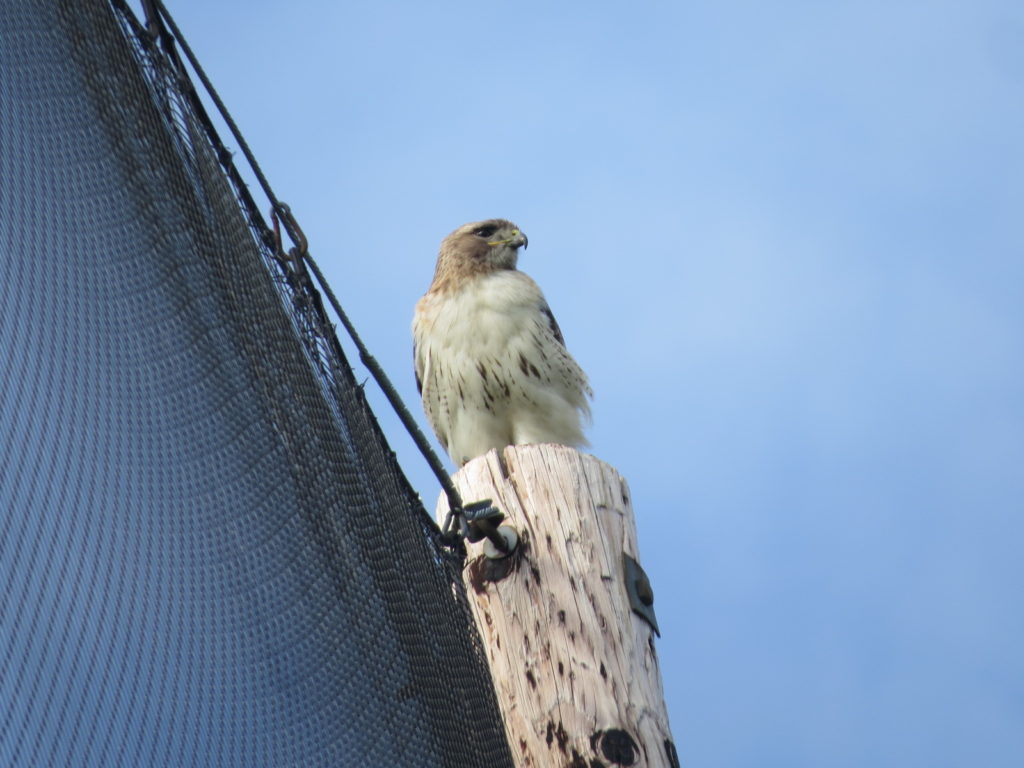
There has been a pair of Red-tailed Hawks nesting at the Club and we found one sitting on the tall pole that holds the netting in the driving range. Another one called and that brought our attention to look for the mate. We witnessed the bird fly over to a maple tree, break off a branch with leaves, and fly with it over to the nest tree. What a sight!

Red-tailed Hawk, Photo: Andrea Rose

…and the mate, nest building! Photo: Andrea Rose

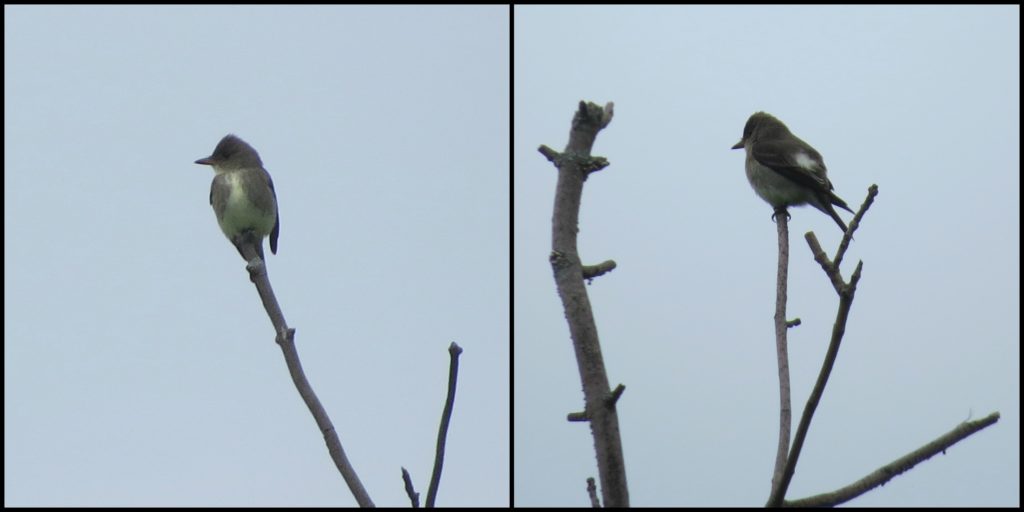
Perhaps our rarest bird of the morning, an Olive-sided Flycatcher, was sitting on the top of a tree, a behavior that is common for them as they survey the sky for flying insects. We had the bird fly several times and we able to relocate it each time to get a little bit of a different view. It was especially gratifying for Andrea to have the back view of the bird, allowing us to see the white tufts on the sides of the rump, a classic field mark. It’s gratifying to be with someone when they see a bird for the first time, a “lifer” and it was obvious that Andrea was enjoying her views of the Flycatcher as well as the photos she was able to take.


Olive-sided Flycatcher, Photo: Andrea Rose

The tree canopy on Heather Lane is another good habitat for warblers and proved that point with a load of Blackpoll Warblers and an additional species – Yellow-rumpled Warbler.

Our next few stops were not as productive as usual, perhaps owing to the later timing of this Challenge. The Hunt Club did not turn up a Chipping Sparrow either, although it was the only place we had House Finch, singing his heart out from atop a weathervane. Ghesquire Park was unusually silent and we found ourselves walking away from a lack of White-breasted Nuthatch and Cooper’s Hawk, much to our disappointment. However, we did run into a Wild Birds Unlimited customer who exchanged memories of living near this park, and who was very helpful in showing us some possible Cooper’s Hawk locations as we scanned the trees above.

Besides, a morning birding is always a joy, and finding suitable bird habitats in our assigned city is continually hopeful. 

At 12pm sharp, we all met at the Panera in the Village, and compared our tallies. For a little more excitement, we added a “bonus bird” to the challenge, meaning anyone who found this bird would be awarded a few extra points. The bird in question was a Scarlet Tanager, and Mark O’Keefe was successful in finding one in the Farms. Mark called this his favorite moment of the challenge, saying, “I heard its up-and-down song that is so similar to a robin’s song. The burry quality made me think it was a tanager. I listened for the distinctive ‘chick-burr’ call notes, but did not hear them. Finally, I was able to locate the bird high in the trees, and got some good looks at this stunning bird.” Bill Rapai, member of the Grosse Pointe City team, was content to sit patiently in his yard, listening for birds. Some of the birds he heard at this location were House Wren, Carolina Wren, and American Goldfinch. Sometimes sitting quietly in one spot is the best way to observe the birds!

In the end, Andrea and I were able to retain the title on behalf of the City of Grosse Pointe Woods, with 56 species. The Farms had 54 (inluding their bonus bird), the Park had 43, and the City had 30. We tallied a cumulative number of species for the morning at 66, accompanied by a lot of smiles at our tally lunch.

Have you joined our email list? Click here to sign up, it’s free and gives you access to sales, coupons, nature news, events, and more!
Posted in Events & Outings, Spring, Wild Bird Facts | Leave a comment |

Elmwood Cemetery – Birding in the D

Posted on May 13, 2017 by Rosann Kovalcik

Elmwood Cemetery Bird Walk – May 12, 2017

Nothing can make time stand still and yet move so quickly as a Bird Walk in May in the peaceful setting of Elmwood Cemetery in the heart of Detroit, Michigan.

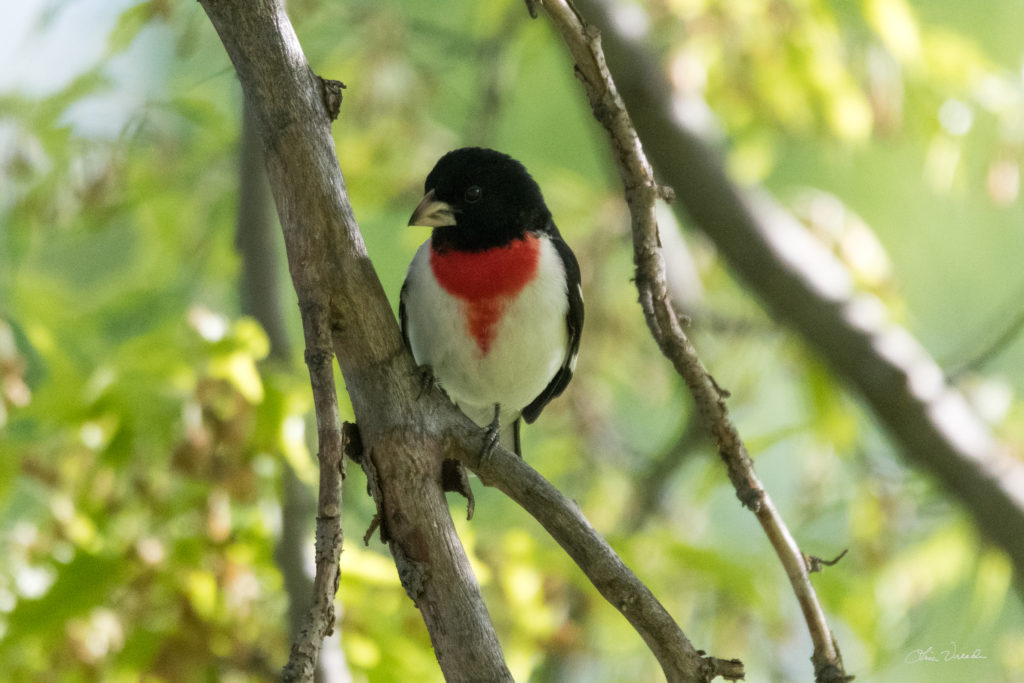
The background traffic noise is negligible and the ability to stand and listen to the bird song around you is a tremendous elixir for the mind, body and soul. Our cozy group of ten added the dimension of sound to our morning as we stood and listened to a Rose-breasted Grosbeak behind us, an American Robin to our right, a Parula Warbler in front of us and a Blue Jay off to the left as well as hearing the mechanical trills of a few Chipping Sparrows further in the distance.

                               Rose-breasted Grosbeak – photo by Lisa Vreede


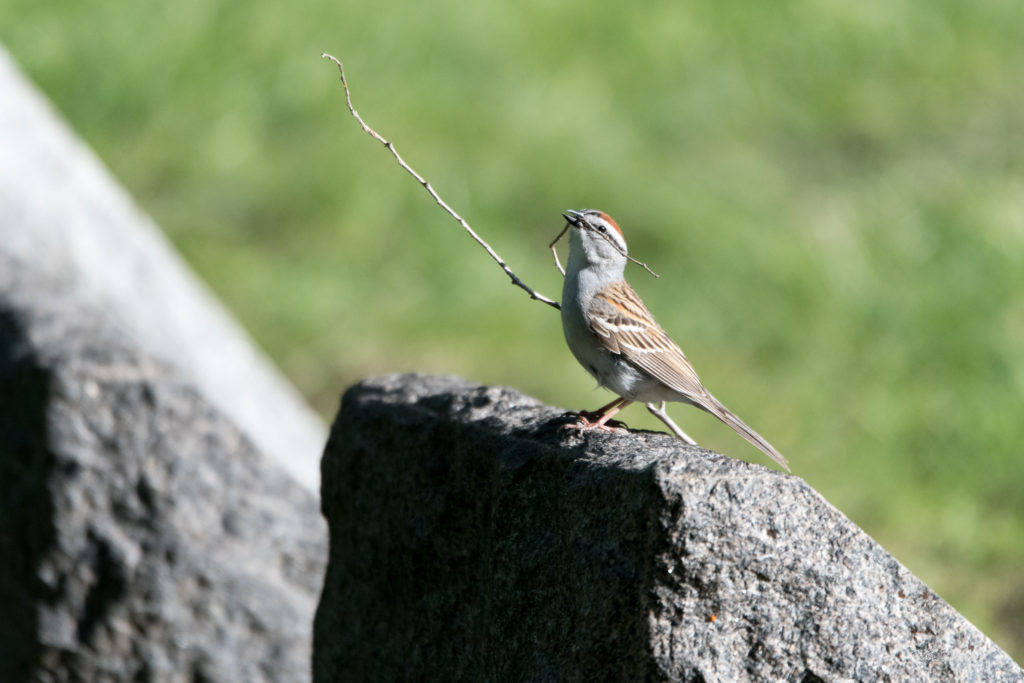
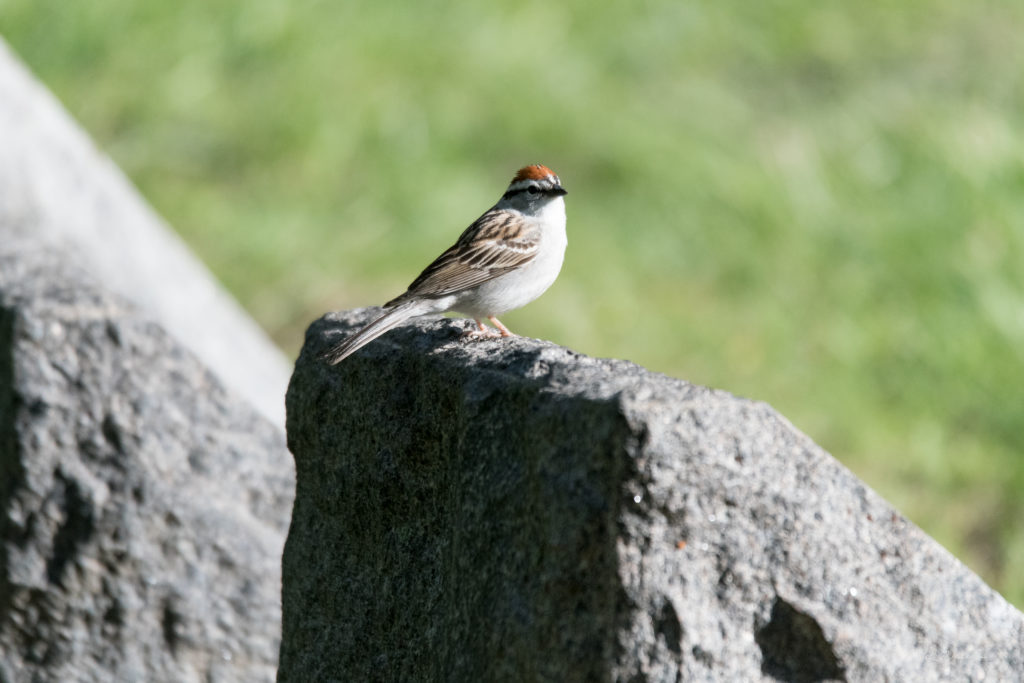
We also had lovely looks of those dainty Chipping Sparrows, appreciating their smart little chestnut colored cap, the snappy black eye stripe and white supercilium that adds a dashing look to their face. This pair was entertaining us as one kept a lookout from the top of a few monuments, while the other flew from place to place, picking up small, dead branches. Was it the female supervising the males choices or was it the male sitting and keeping a look out while the female chose the nesting material?


                                                    How is this piece honey?
                                                            Chipping Sparrow – photo by Lisa Vreede

                                         I’m not sure. What else can you find?
                                                               Chipping Sparrow – photo by Lisa Vreede                                                           


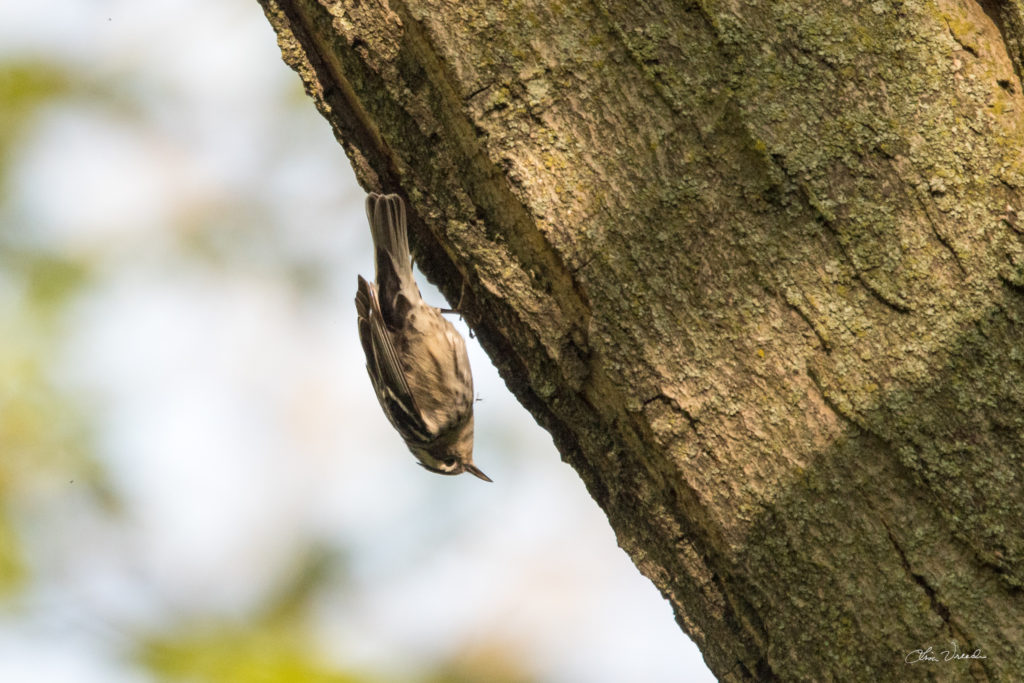
The Black and White Warblers started us off with an easy lesson in getting an active bird into our binoculars – at least they stay on the areas of a tree where their locations are relatively easy to describe and find. Looking like little wind up birds, they crept and turned up and down and over the branches in search of insects. While they may not have exotic color, the placement of their black and white makes for a wonderful pattern to appreciate.

Black and White Warbler – photo by Lisa Vreede

We found numerous Parula Warblers – all of them eating from the foliage on the far ends of branches, moving very slowly as they fed. If we weren’t watching them, we were hearing them. I estimate that we had at least 20 Parula Warblers for the morning. We had some excellent opportunities to see their brightly colored neckwear, the bright yellow of their throats accented by the dark and rufous breast band and the vibrant chartreuse on their back as they stretched to reach an insect morsel.

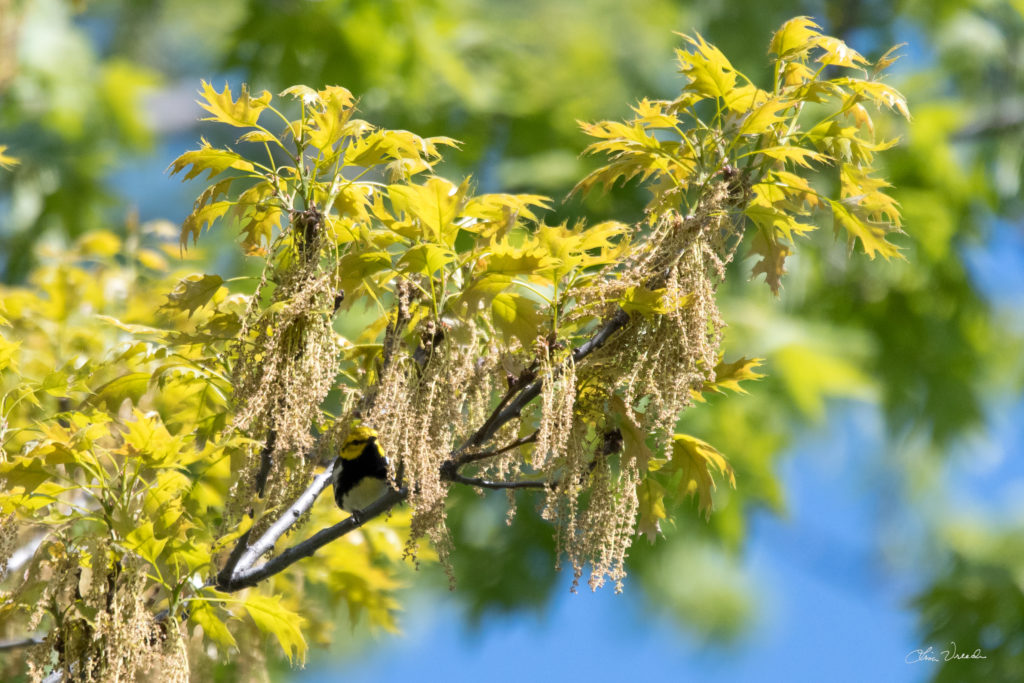
The Parulas were not the only Woodland Warblers to grace our morning. Black-throated Green Warblers were singing in many places and we had stunning views of them from lower branches including watching one grab a caterpillar that was the same glowing green as parts of the birds’ plumage. Chestnut-sided Warblers were also putting on a great show with easy visibility.

                                                             Find the Warbler
                                     Black-throated Green warbler by Lisa Vreede

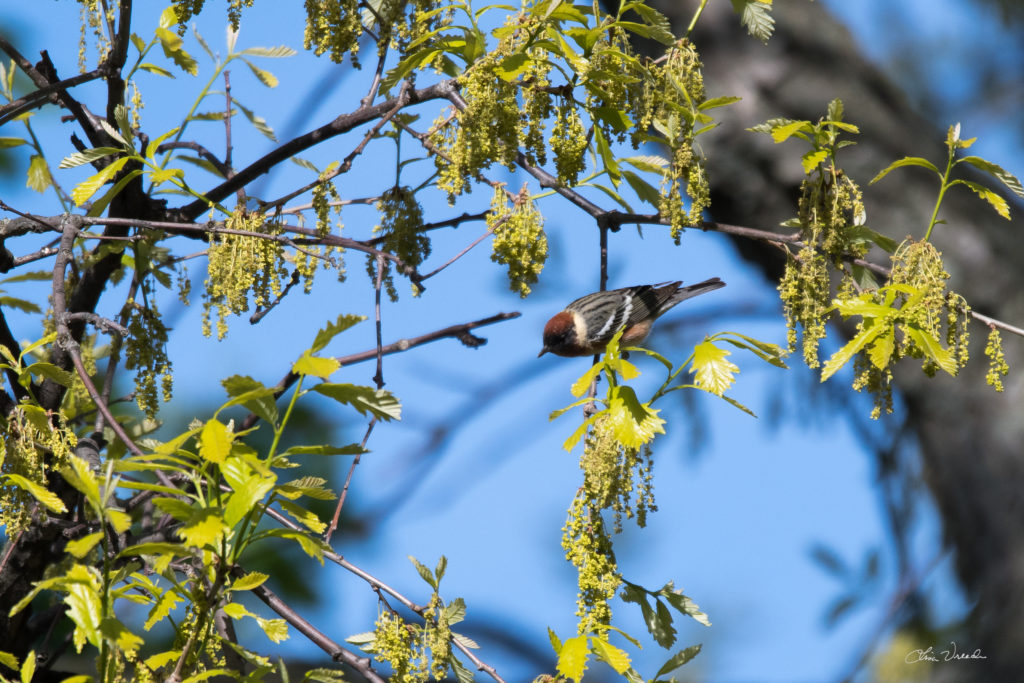
Although we did not see more than one each of a Bay-breasted Warbler and a Blackburnian Warbler, they were both worth getting “warbler neck” over. Such stunning and tiny birds and have flown so far to breed and are not yet near their final destination. We marveled at their plumage and the story of their journey.

                              Bay-breasted Warbler – photo by Lisa Vreede

A Merlin streaked across the bright blue sky and I imagined that he would be the only bird that could catch one of the many aptly-named Swifts that were careening across the sky as well. I love that Falcon and am always joyful to be able to see one.

I was surprised by the presence of a Red-breasted Nuthatch. There was an excellent representation of species that were breeding including Northern Cardinal, Mourning Dove, Eastern Phoebe, and a very vocal Tufted Titmouse.

We were thrilled to discover the nest of a Cooper’s Hawk with one of the adults sitting tight on the nest. The other adult appeared and vocalized a few times before landing in a nearby tree where we had great views of this handsome raptor.

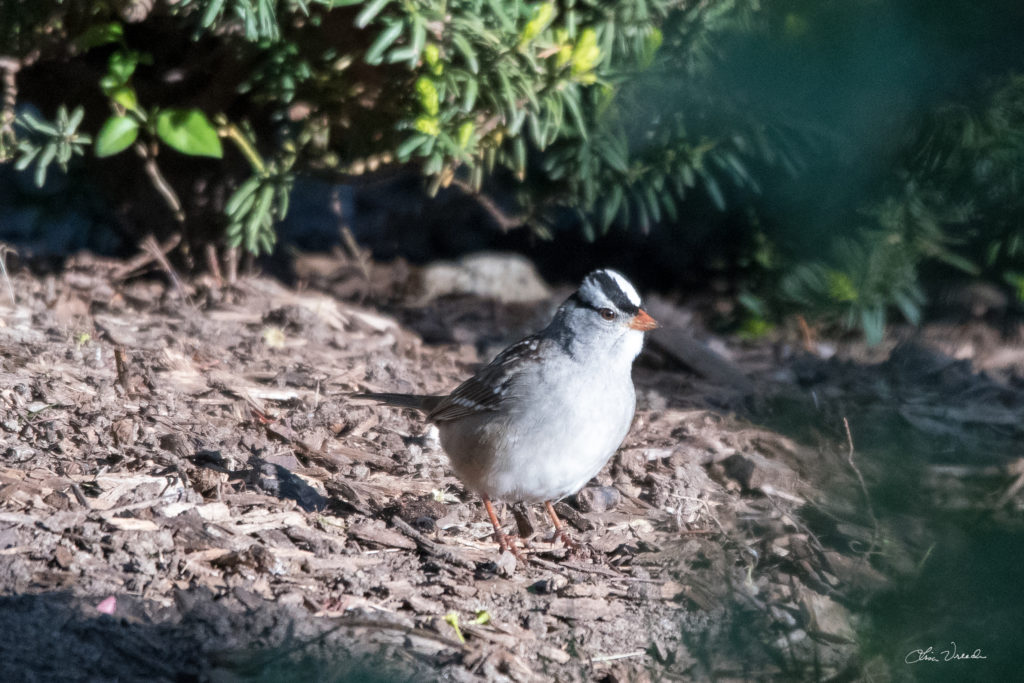
We ended back at the Gate House where we tallied up our morning’s species. The three hours went by so quickly. Weren’t we just here at the fence line admiring the White-crowned Sparrows? I’m so thankful for being able to share birds with the group this morning and to have the help of Jim Szelc as scope bearer and co-leader, and Lisa Vreede as my photographer. It was a delightful experience to Bring People & Nature Together at Historic Elmwood Cemetery.

                                White-crowned Sparrow – Photo by Lisa Vreede


Rosann Kovalcik, Owner
Wild Birds Unlimited
Grosse Pointe Woods

Species seen at Elmwood Cemetery on May 12, 2017

Canada Goose
Wood Duck
Mallard
Cooper’s Hawk
Merlin
Ring-necked Pheasant
Ring-billed Gull
Mourning Dove
Chimney Swift
Red-bellied Woodpecker
Downy Woodpecker
Northern Flicker
Eastern Phoebe
Blue Jay
American Crow
Tree Swallow
Barn Swallow
Black-capped Chickadee
Tufted Titmouse
Red-breasted Nuthatch
White-breasted Nuthatch
Ruby-crowned Kinglet
Blue-gray Gnatcatcher
Swainson’s Thrush
American Robin
European Starling
Northern Parula
Yellow Warbler
Chestnut-sided Warbler
Black-throated Green Warbler
Blackburnian Warbler
Bay-breasted Warbler
Black and White Warbler
Ovenbird
Chipping Sparrow
White-crowned Sparrow
Northern Cardinal
Rose-breasted Grosbeak
Brown-headed Cowbird
Red-winged Blackbird
Common Grackle
Baltimore Oriole
House Finch
American Goldfinch
House Sparrow

45 species

Have you joined our email list? Click here to sign up, it’s free and gives you access to sales, coupons, nature news, events, and more!

Posted in Events & Outings, Spring, Wild Bird Facts | Leave a comment |

More Cardinals and Cooper’s – Project Feederwatch Results

Posted on February 6, 2017 by Rosann Kovalcik

This year marks the 30th Anniversary of Project Feeder Watch, a partnership between Cornell Lab of Ornithology and Bird Studies Canada, sponsored by Wild Birds Unlimited. Through the efforts of those citizen scientists who report the number of birds at their feeders, a comprehensive look at continental wintertime populations of feeder birds has been compiled.

There were two noteworthy conclusions that I felt people in this area might be interested to know more about.

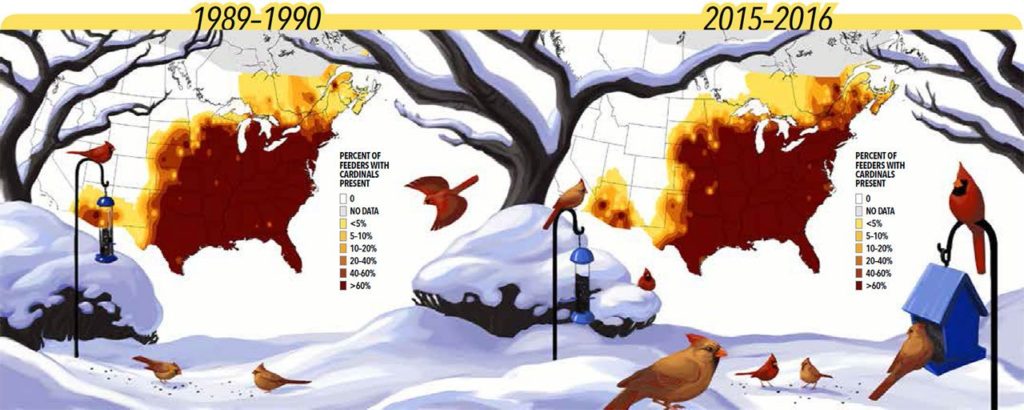
The first is the data for Northern Cardinals, which shows their range has expanded since 1989. This has been supported by the number of Feeder Watchers who are reporting Cardinals in Minnesota, Michigan, Maine and southeastern Canada. The citizen Science Director of Cornell’s Lab stated that “Cardinals, like people, like a free lunch. The abundance of food provided by people has helped the species to colonize new areas.” It was also noted that the addition of shrubbery in landscaping, a somewhat new trend, provides food in the way of fruit, and shelter for nesting habitat as well as cover in winter.
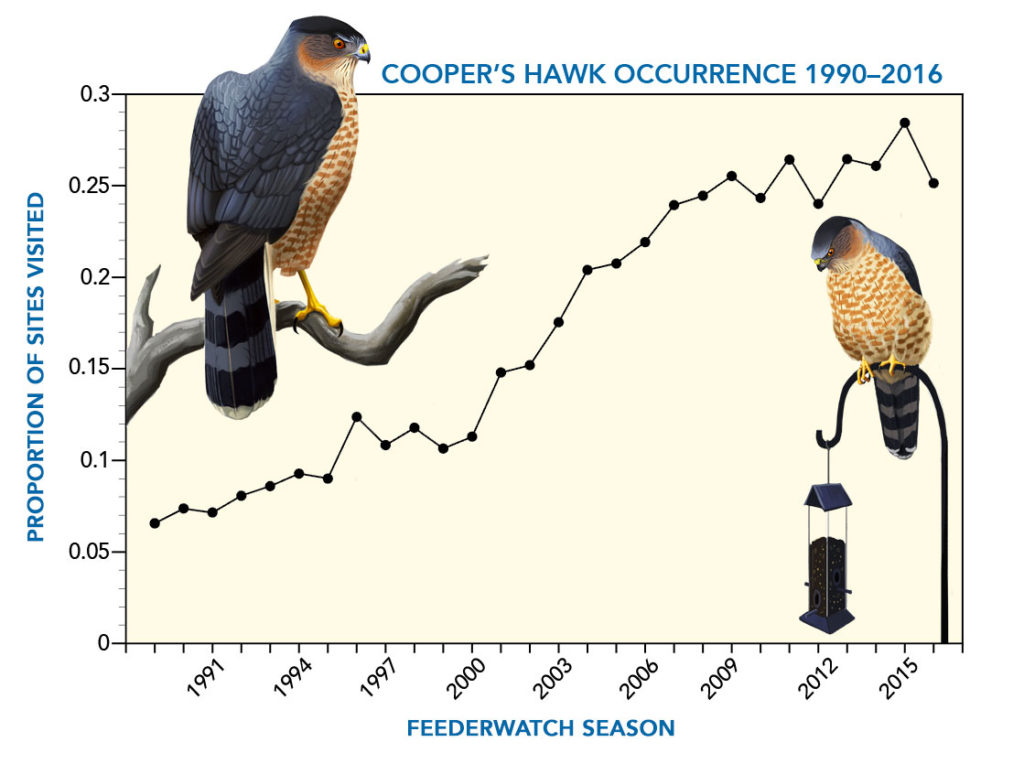
It comes as no surprise to us, here at Wild Birds Unlimited in Grosse Pointe Woods, that the prevalence of Cooper’s Hawks is on the rise. We hear about this trend on a daily basis and have witnessed the number of verified nests for this raptor species.


As stated in the report, the Feeder Watch data shows a clear and consistent increase in the proportions of backyards hosting Cooper’s Hawks in the winter. The current hypothesis is that the wintering strategy has changed from migrating to Mexico to overwintering where there are large groups of prey species at bird feeders. The data does not suggest that prey species numbers are stable.
Through Project Feeder Watch, your data can be added to the growing base of important information. The fee to participate is $18.00 ($15.00 for Cornell members), and includes your count kit tally sheet and calendar, access to online data, and a Common Feeder Birds poster. Counting concludes on April 7, 2017. Visit feederwatch.org to learn more.

You may also consider signing up with eBird, a free online program which helps record bird populations on a daily basis, year-round. Click here to learn more about Cornell & Audubon’s Great Backyard Bird Count, a bird-based citizen science project which uses eBird data inputs.

Have you joined our email list? Click here to sign up, it’s free and gives you access to sales, coupons, nature news, events, and more!

Posted in Events & Outings, Wild Bird Facts, Winter | Leave a comment |

Kirtland’s Warbler Festival 2016

Posted on May 29, 2016 by Rosann Kovalcik

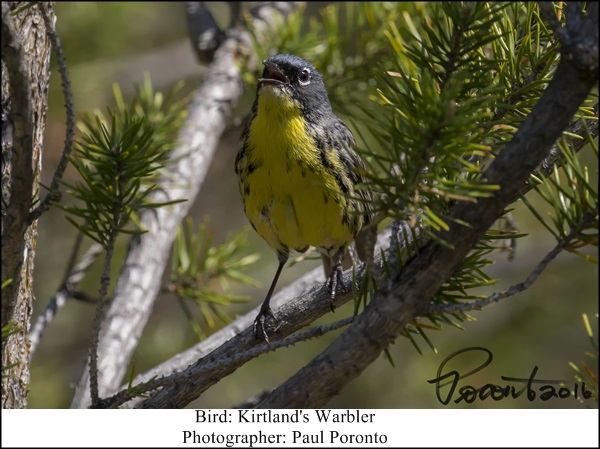
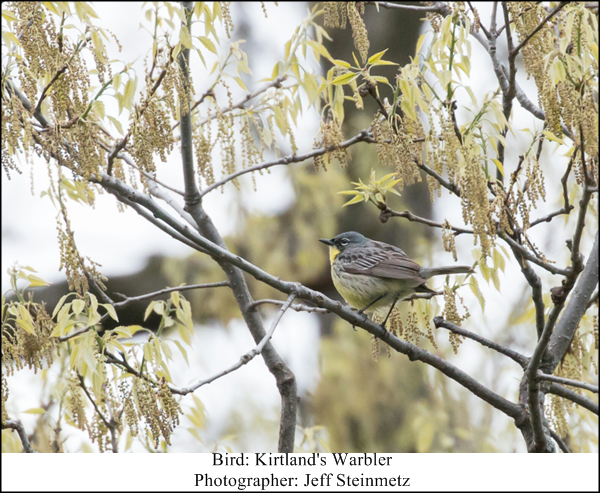
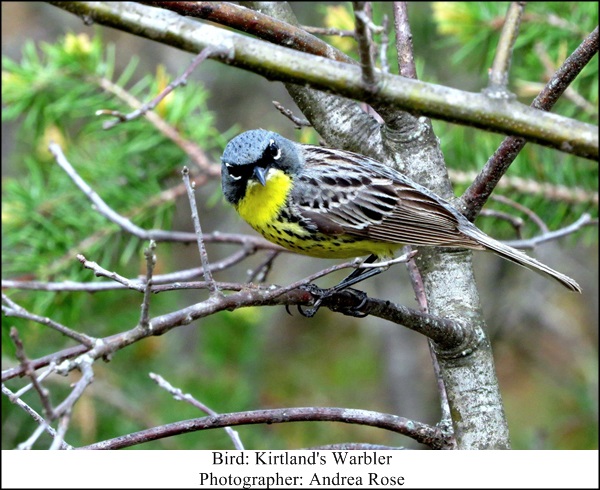
The Kirtland’s Warbler is an endangered songbird that nests almost exclusively in the jack pine forests of a small region of northern Michigan. This bird can be recognized both by its striking plumage (broken white eye ring, bright yellow chest, and blueish gray back) and its cheery, almost constant song (“chip-chip-che-way-o!”) sung from the young jack pines. But don’t let its size fool you; this little bird is a fighter! Dependent on fire for its habitat, it returned from near-extinction like a tiny Phoenix rising from the ashes.


kirtland-34

In honor of this bird’s remarkable comeback, people gather annually to the Kirtland’s Warbler Festival, held in Roscommon, MI. This year’s event kicks off on June 3rd with a presentation held at the Ralph A. MacMullan Center, also in Roscommon. The following day, June 4th, activities run from 7:00am-5:00pm (click here for a full event program). From 2:30-3:30pm, Rosann Kovalcik, owner of Wild Birds Unlimited Grosse Pointe Woods, will be giving a talk about how to attract birds to your backyard with suggestions on feeder placement, types of feeders, providing water, offering shelter, and using native plants. Other highlights include tours of Kirtland’s Warbler nesting sites, nature presentations, and even a 5k run!


20160514_142151

Be sure to mark your calendars for this exciting Pure Michigan event.

Contact Huron Pines at (989) 448-2293 x 21, email info@huronpines.org, or visit the Kirtland’s Warbler Festival website here. Tickets are $25 per person.


J

Enjoy your birds!

Have you joined our email list? Click here to sign up, it’s free and gives you access to sales, coupons, nature news, events, and more!

Posted in Events & Outings | Leave a comment |

Tawas Point Birding Festival 2016

Posted on May 28, 2016 by Rosann Kovalcik

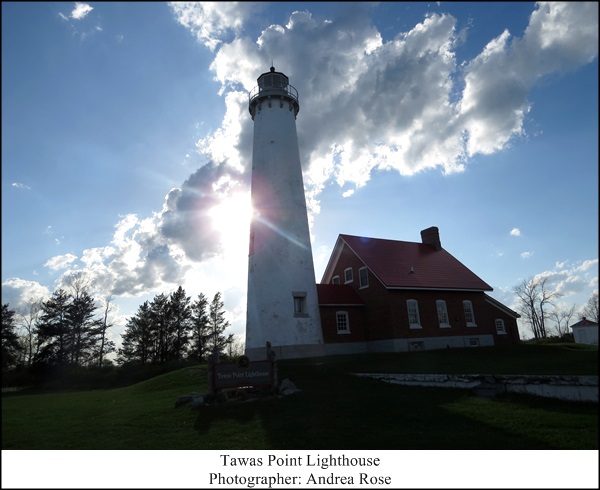
If you love birds, going to the Tawas Point Birding Festival should definitely be on your bucket list. This Michigan Audubon Signature Event is attended annually by bird watchers from all over the globe.

20160521_121904

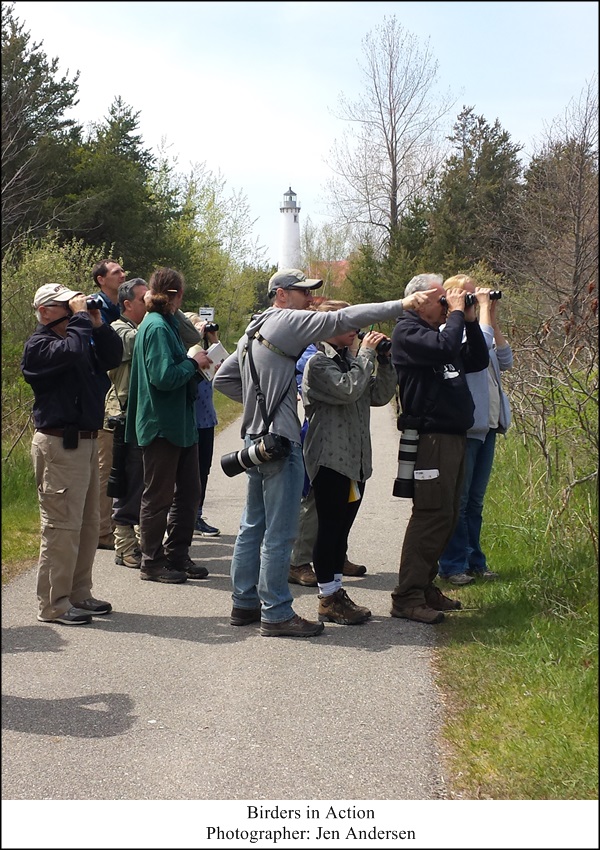
From beginning bird watchers to advanced birders and everyone in between, this festival has it all! Guided tours by boat, bike, and on foot are available. Various speakers lead educational sessions including this year’s keynote speaker, Ian Campbell, who talked about his life as a guide. Other fun events include the Birds and Brews social event, photography workshops, wildflower tours, and more. Attendees can pick and choose which events they’d like to attend, or simply go off and explore the grounds on their own, with the potential of seeing 180+ species of birds!

IMG_1571

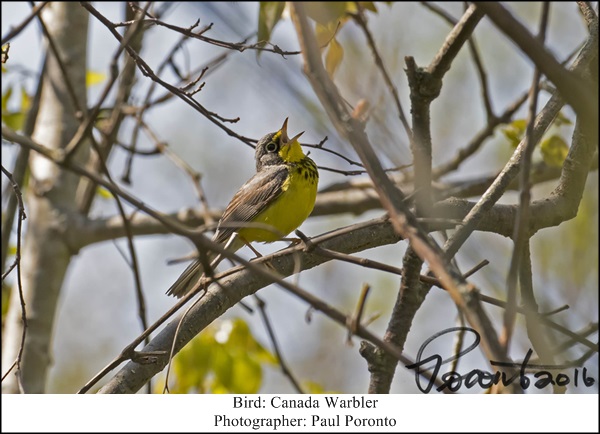
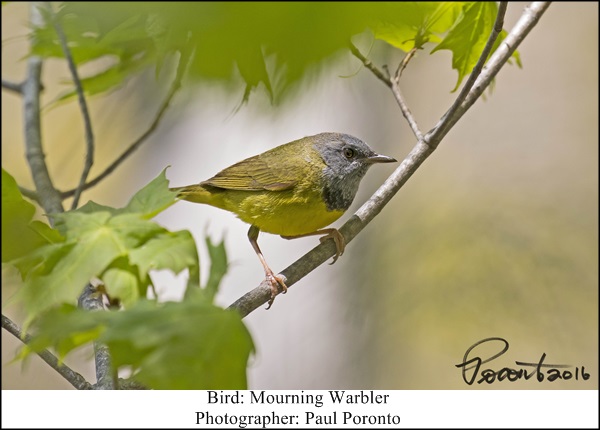
This year’s event had sunny weather and cheery faces, as people came together to share their love of birds. Although it was not the most warbler-saturated year as compared to other years, there were still plenty of beautiful birds to be found. Bright red Scarlet Tanagers and flame-orange Baltimore Orioles lit up the trees, while various warblers flitted about, capturing the attention of birders of all ages. It was exciting to see a group of elementary school boys who were learning and testing their ID skills, as well as a group of local birders doing a Birding Bachelor Party (including photographer and blogger Paul Poronto).


canada-warbler-singing

Mourning-2

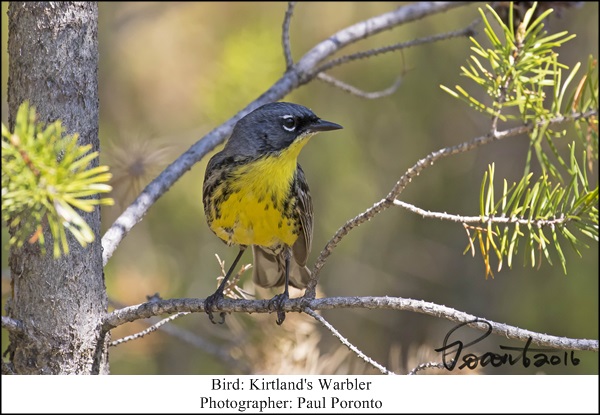
Another reason to visit this magical place is the presence of various endangered species, including the Piping Plover (click here to learn more) and the Kirtland’s Warbler (click here for more information). Unfortunately, the plovers did not make their usual appearance at this year’s festival, but the male Kirtland’s Warblers were singing their hearts out among the jack pine trees.


Kirtland-30-3

At Wild Birds Unlimited Grosse Pointe Woods, we believe in fostering and enjoying the love of birds. Attending events like this one are a wonderful way to share our passion and enjoy this beautiful state! Be sure to stay tuned for next year’s event. Check for dates at the Tawas Birding Festival website.


Enjoy your birds!

Have you joined our email list? Click here to sign up, it’s free and gives you access to sales, coupons, nature news, events, and more!

Posted in Events & Outings | Leave a comment |

Recent Posts

  • Killdeer – our most common Plover returns
  • Red-tailed Hawks, the Common Buteo
  • Bald Eagles –
  • What other owls can you find ?
  • Eastern Screech Owl

Archives

  • March 2023
  • February 2023
  • January 2023
  • April 2022
  • March 2022
  • December 2021
  • September 2021
  • April 2021
  • March 2021
  • May 2020
  • April 2020
  • February 2020
  • January 2020
  • November 2019
  • August 2019
  • July 2019
  • March 2019
  • February 2019
  • December 2018
  • October 2018
  • August 2018
  • July 2018
  • May 2018
  • April 2018
  • March 2018
  • January 2018
  • December 2017
  • November 2017
  • October 2017
  • September 2017
  • August 2017
  • July 2017
  • May 2017
  • April 2017
  • February 2017
  • January 2017
  • December 2016
  • October 2016
  • September 2016
  • August 2016
  • July 2016
  • May 2016
  • February 2016
  • October 2015
  • August 2015
  • July 2015
  • June 2015
  • March 2015
  • October 2014

Categories

  • Bird Feeding Solutions
  • Bird Songs
  • Events & Outings
  • Fall
  • Native Plants
  • Nesting
  • Spring
  • Squirrels
  • Summer
  • Uncategorized
  • Wild Bird Facts
  • Winter

Enter your email address:

Delivered by FeedBurner

© Wild Birds Unlimited of GPW - Website by TBD Web Services