
It’s official ! We have a State Duck, and what a beauty it is – the Wood Duck, Aix sponsa.
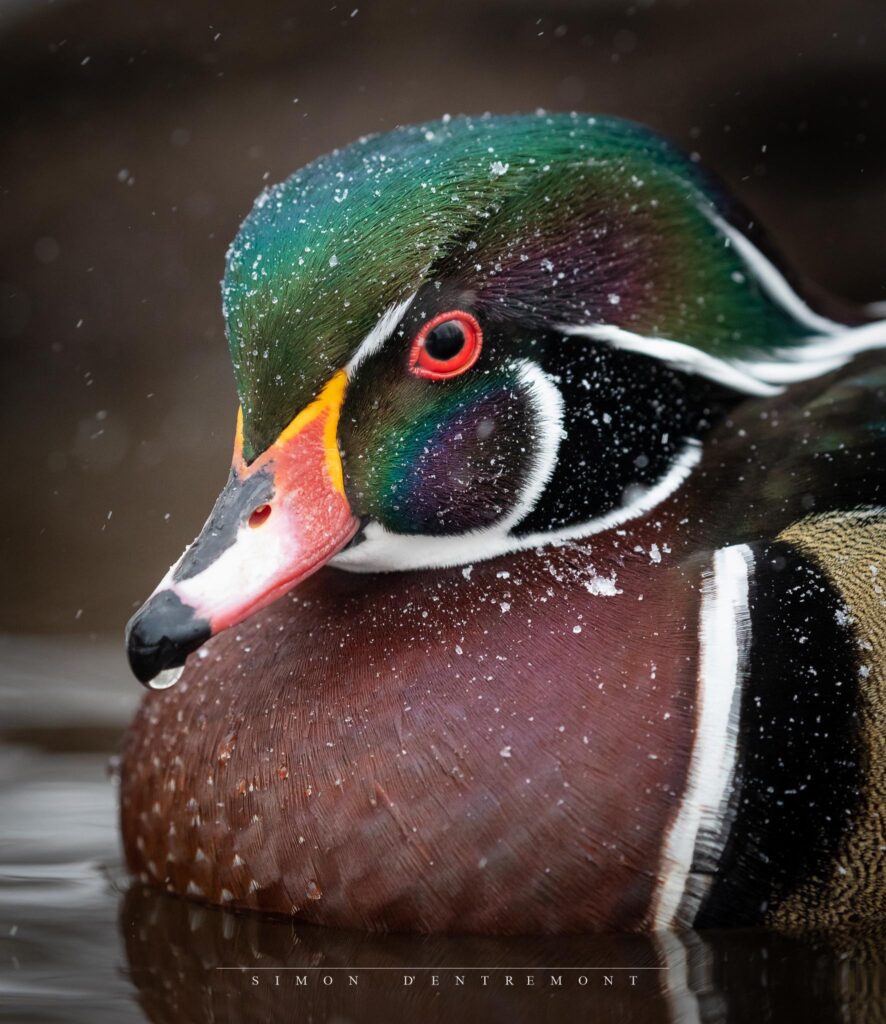
A stunning waterfowl, Wood Duck males sport green and chestnut colors on their head which is tufted and has striking white markings dashing front to back. Other markings and colors all over the bird make it an absolute pleasure to view. The females have subdued coloring but sport a characteristic white eye liner. Wood Ducks are one of the few duck species equipped with strong claws that can perch on branches and grip bark.
Most Wood Ducks leave Michigan for the winter, returning in March already paired and looking for a nest cavity. That’s right! They are a duck species that uses a natural cavity in the tree or one created by a woodpecker. They will readily use nest boxes provided for them and a pair can be observed at Lake St. Clair Metro Park, recently seen inspecting the nest boxes provided. In California, a large, well-coordinated nest box program produced over 1 million wood duck ducklings from 1991 to 2024.
Wood Ducks are dabbling ducks which means that they reach with their beaks for aquatic plant material, sometimes making a shallow dive. They will eat acorns, smartweed, water primrose, panic grass, duckweed, millet, waterlily, blackberries and wild cherries, as well as flies, beetles, caterpillars, isopods, and snails.
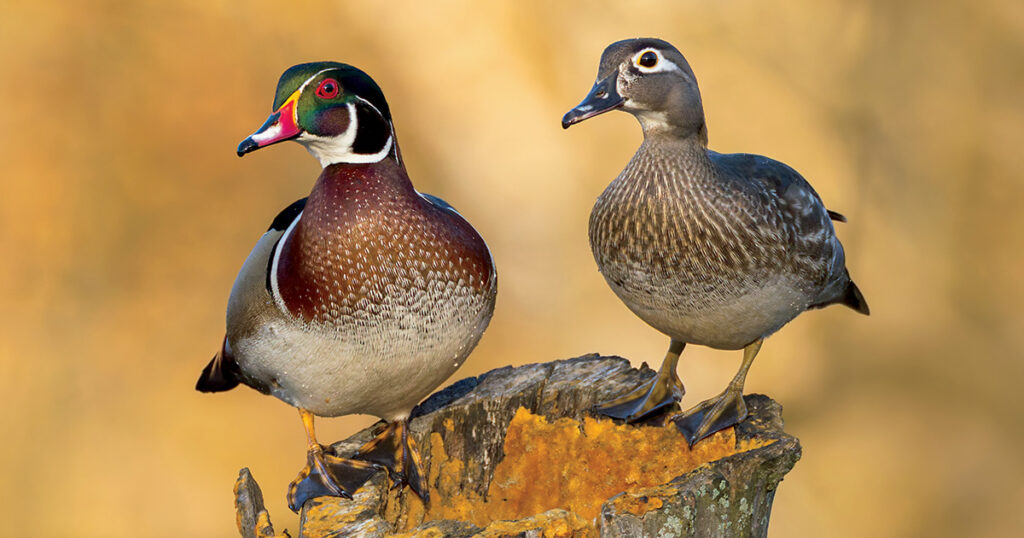
Wood Duck Pair photo by Joe Subolefsky
The female lays anywhere from 6 to 16 eggs and she alone incubates them for 28 – 37 days. Young ones take a literal dive from the nest to the ground below when they are one day old. They will remain with the female for 5 – 6 weeks but are not capable of flight until 8 – 9 weeks of age. Wood Ducks are one of the few ducks that may have a second brood.
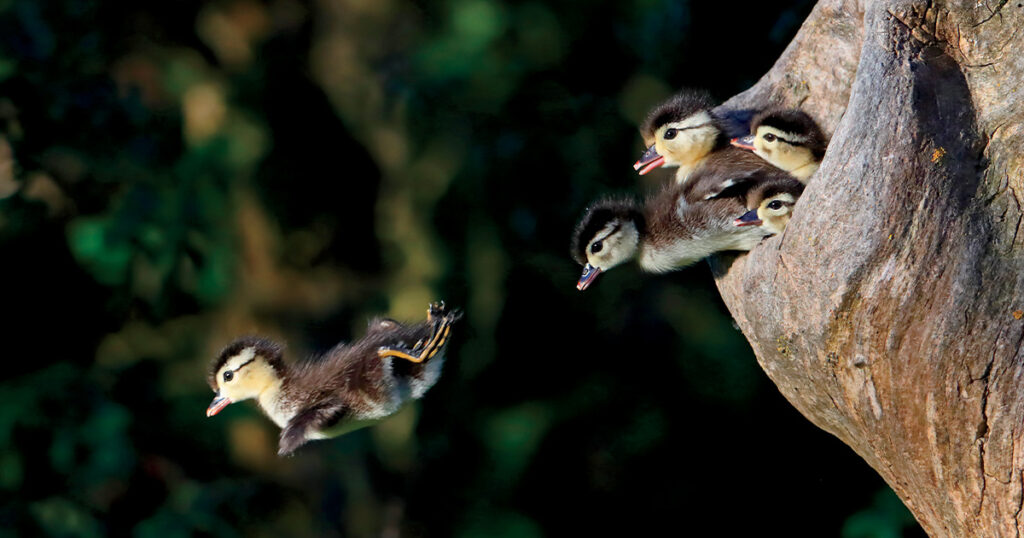
Wood Duck young fledging photo by Gark Ramer
As a result of market hunting and loss of bottomland hardwood forests and other valuable habitat, wood ducks were driven to the brink of extinction at the turn of the 20th Century. Fortunately, protections provided by the Migratory Bird Treaty Act of 1918 and the restoration of crucial habitats has helped wood ducks achieve a dramatic recovery over the following decades. Ducks Unlimited has played a key role in the population of these highly prized birds now being healthy.
Where can we go to see these beauties? As of the end of March, many Wood Ducks are gathered in small groups near Crescent Sail Yacht Club and the Farms park. They can also be seen at The Ford House. Any nature trails that are near water would also be suitable places to allow you looks at our State Duck.