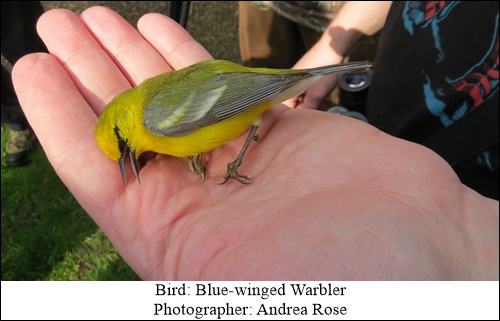
• Home
  • About Us
  • Blog

Category Archives: Bird Feeding Solutions

Attract Birds by Adding a Snag to Your Yard

Posted on September 3, 2016 by Rosann Kovalcik

A snag, in the language of forest ecology, refers to a standing dead or dying tree.

Preserving or creating snags on our property provides habitats for birds, and can be interesting and rewarding.

Important wildlife habitat is provided when dead wood is available. Birds evolved in forests where dead wood was never removed as part of woodland management. Dead trees are virtually absent in many urban neighborhoods as we have a tendency to view dead wood as without value. On the contrary, dead and dying trees are used for shelter, foraging, nesting and other uses for many species of birds.
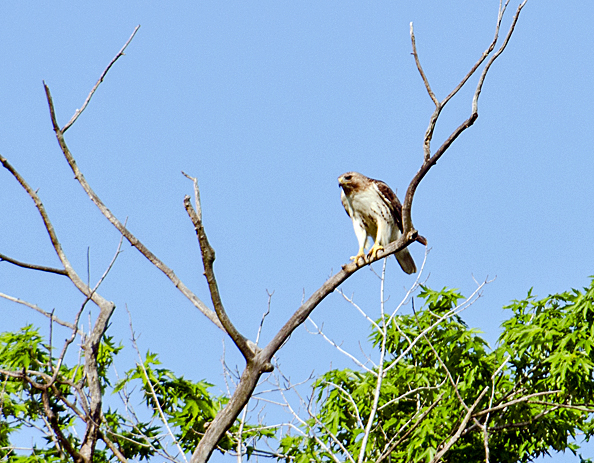
Snag - Red-tailed Hawk on snag

Think of a snag as an airport for birds. Flycatchers, Cedar Waxwings and numerous other birds use snags as launch sites as they sally out again and again after flying insects. If the snag is close to a field, it may be used by Hawks and Owls that sit and wait patiently for mice and voles. Near water, snags are used by Kingfishers, Eagles, Herons, and Osprey. At least 30 species of birds commonly use snags as foraging perches.
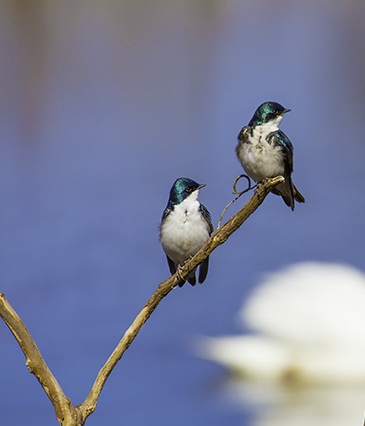
Snag - Tree Swallows on a snag-crop

Snags are also used as singing perches. Perhaps the acoustics are better from a snag? Certainly acoustics are great from a tall dead branch that does not have foliage to absorb the sound. Think about when you see a crow sending out an alarm to his family members, head stretched forward and beak open wide, – that’s always from a prominent perch, isn’t it?
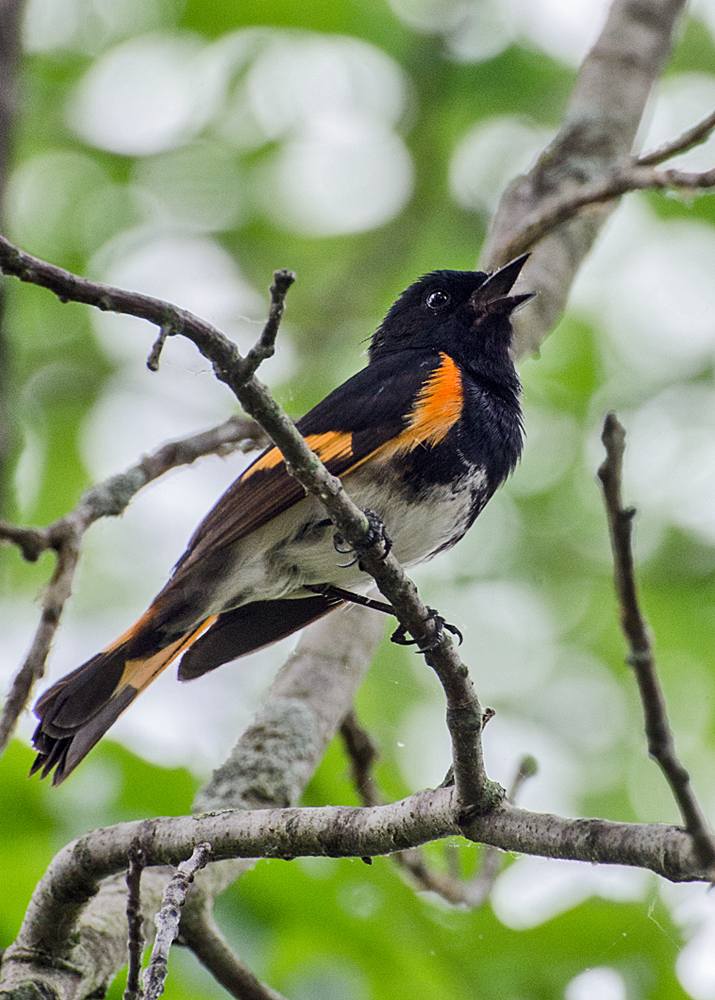
Snag - American Redstart on a snag

Nothing could be better than a snag for purposes of acoustics in the mind of a woodpecker. Think of a hollowed out drum, just right for hammering. That’s what woodpeckers are doing on those dead branches that resonate so well – letting the female know he has a great territory and is ready to help her out with breeding season.

Snags allow smaller birds to use them as a lookout post. It pays to peek out from a perch to get a complete view in either direction, making sure the coast is clear.

Small snags are invaluable to birds that have bathed in your bird bath and need a place to shake dry and preen. This became a real lesson to me when I placed a bird bath near cedar trees that had dying branches at their lower edge. Each time that a migrant warbler approached the bath, it approached from those branches. Needless to say, I began to look at those branches in a different way.

Creating a snag can be as simple as leaving a tree that has started to die. If you have concerns about the location of the tree in relation to your house, have a landscaper trim the height for safety. Girdling a tree involves removing a ring of bark around the circumference of the tree, which will eventually kill it. Choose an invasive tree or one that is crowded by fellow trees.

The snag in my yard was acquired when the neighbor was taking down a black walnut tree. The tree crew was very helpful in getting one of the large trunks of the tree over the back fence. A deep hole (1/3 of the height of the snag) was dug and the snag was “planted”.

If you have concerns about the appearance of your dead tree in the neighborhood, plant Virginia Creeper at the base. It is a beautiful showy green vine all summer and turns to crimson in fall, with berries the birds love to eat.

Remember- even dead branches within your larger shrubs will serve the purpose of a snag for many of our songbirds.
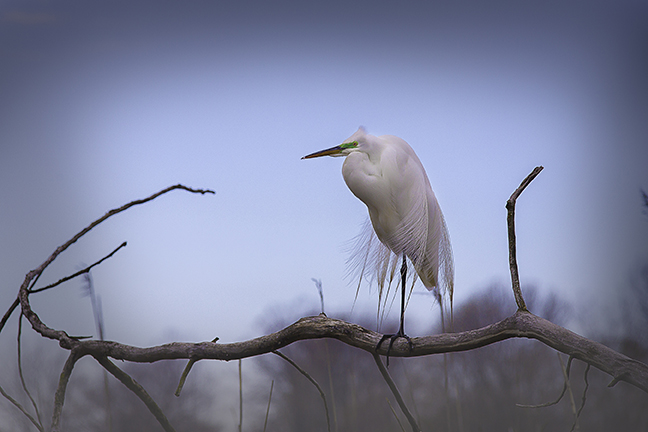
Snag - Egret on a snag 2

Have fun with this new aspect of Birdscaping in your yard.

Enjoy your birds!

Have you joined our email list? Click here to sign up, it’s free and gives you access to sales, coupons, nature news, events, and more!
Posted in Bird Feeding Solutions, Wild Bird Facts | Leave a comment |

Beneficial for Birds, Fun for You – It’s Time to Provide Water

Posted on July 9, 2016 by Rosann Kovalcik

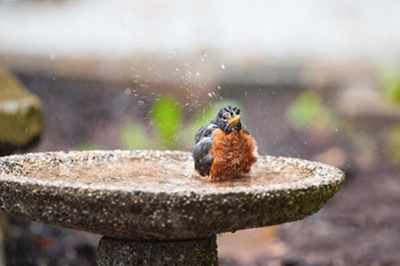
robinbathing

During the hot and sometimes dry conditions in the summer, birds can use a reliable source of water.

We know that water is essential to all living creatures. In the case of birds, it is vitally important when it is extremely hot and a bird’s ability to regulate its body temperature can be stressed. Birds do not sweat and must remove excess body heat through their respiratory system. When the temperature rises, a bird’s respiration rate increases, sometimes to the point where it can be seen panting like a dog. Panting in this way can dehydrate a bird and increase their need for a reliable source of water to replace lost fluids.

Birds that are familiar with your yard will know where the birdbath is and take advantage of your generosity. Those birds that migrate for purposes of nesting, such as orioles and catbirds, will locate water with their sense of hearing. A moving spring will bring in birds like a magnet. By using a mister or dripper, you can entice birds more readily as they will hear the water dripping into the bowl. Misters have been known to attract hummingbirds and small migrant birds, such as warblers and vireos. They will either fly through the mist or roll in the water that has collected on leaves. Small pumps that cause the water I the bath to move will also make the birdbath more attractive to the birds that are passing by!

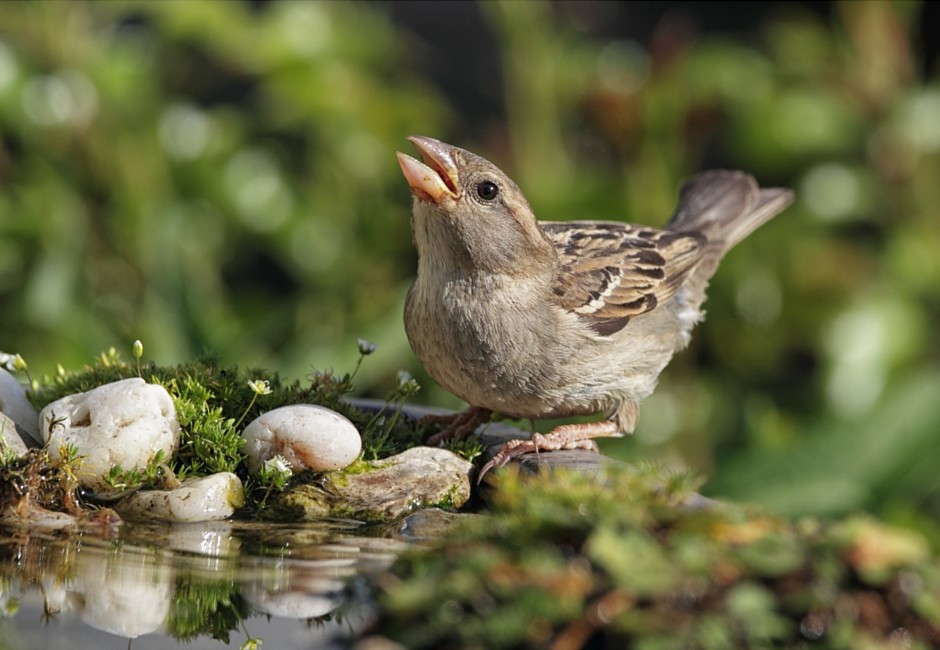
Birds drink water by dipping their bill into the water, holding the water in their mouth, and then tipping their head up at a sharp angle, causing the water to flow down their throat. The exceptions to this rule are doves and pigeons, which have the ability to suck water into their mouths.

Untitled design

Bathing serves a different purpose for birds, keeping them “groomed”. The dust and dirt are removed as you would guess, but the preening that follows afterward is essential for feathers to function at their best. As birds preen, they grasp the feather at the base with their bill and move their beak along the feather, smoothing the feather barbs so that they lock together. Any dirt or oil that remains in the feathers after bathing is removed during preening.

Robins are vigorous bathers. They take up the entire bath, dipping down into the water and throwing it over their backs with their wings. Other birds are not quite so boisterous. Chickadees approach the bath with caution and will enter from the edge. The water needs to be shallow for them to feel safe enough to actually bathe. Adding a few small rocks to the edge of your birdbath can entice smaller birds to feel safe enough to bathe as well as drink.

thumbnail_Birdbath Graffius 1Ideally, the water in the bath should be dumped out daily, and refilled with fresh water for the birds. When emptying the bowl, use a scrubber brush to clean the bowl and rinse thoroughly before refilling. This is necessary to prevent the build-up of algae and mineral deposits. Once a week, I recommend using Microbe-Lift Bath Cleaner, a soybean based liquid that you spray onto the birdbath bowl, scrub thoroughly and then let sit for a minute before rinsing with clear water. In addition, once a month your bird bath should be sterilized. After cleaning, use a solution of one part vinegar (or bleach) to nine parts water and let the solution sit in the bath for 15 minutes. Rinse very well and let sun-dry for a few hours if possible before refilling the bath.

There are liquid solutions that can be added to the birdbath water, designed to help prevent the buildup of stains and mineral deposits on the birdbath surface, such as white scale deposits, iron, copper and hard water stains. Microbe-Lift Bird Bath Clear is soybean based and works well for that purpose. It is not meant as a substitute for the aforementioned cleaning process (click here to order or read more about Microbe-Lift products).

Remember that there will be bird droppings in the water as birds defecate when they bathe, making the water unhealthy for them to drink. This is why it is important to make daily cleaning part of your responsibility to maintain a bird-friendly yard.

Fresh water not only benefits the birds, it prevents mosquito larvae from developing into mosquitoes. The process takes 7 to 10 days from the time a mosquito lays her eggs on the surface. Since the water needs to be stagnant for a mosquito to develop, changing the bird bath water prevents this from happening.

Offering a dependable source of water is probably the simplest thing you can do to increase the variety of birds in your yard. It can also significantly increase your enjoyment of birds as it allows you to watch their antics as they drink, bathe and preen.

Enjoy your birds!

Have you joined our email list? Click here to sign up, it’s free and gives you access to sales, coupons, nature news, events, and more!
Posted in Bird Feeding Solutions, Wild Bird Facts | Leave a comment |

Goldfinches ~ Breeding Beauties

Posted on February 25, 2016 by Rosann Kovalcik

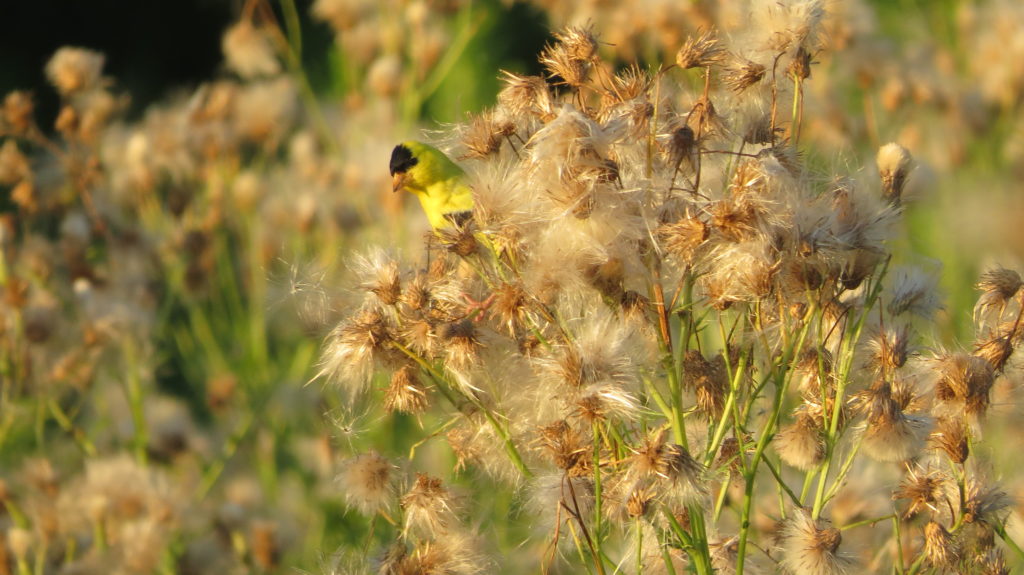
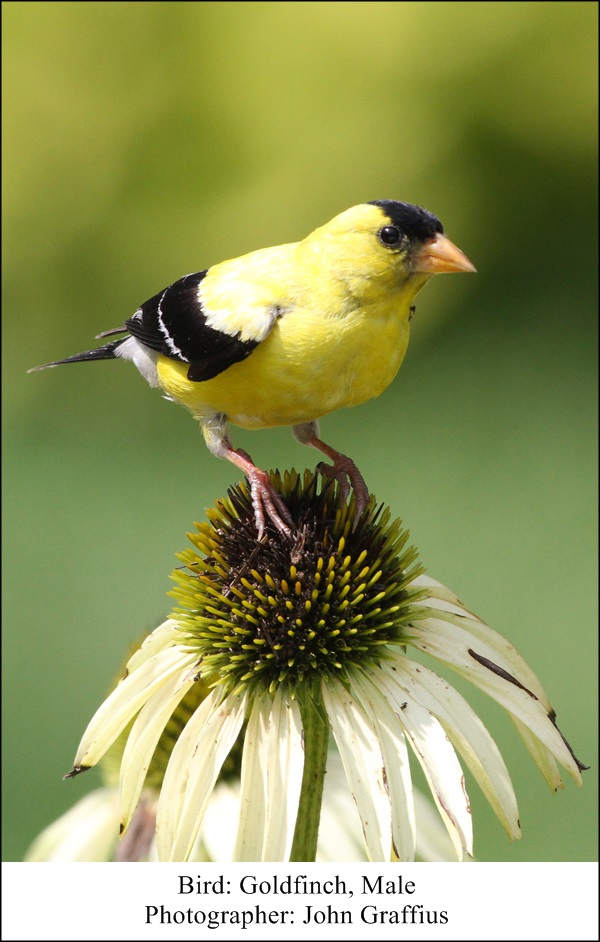
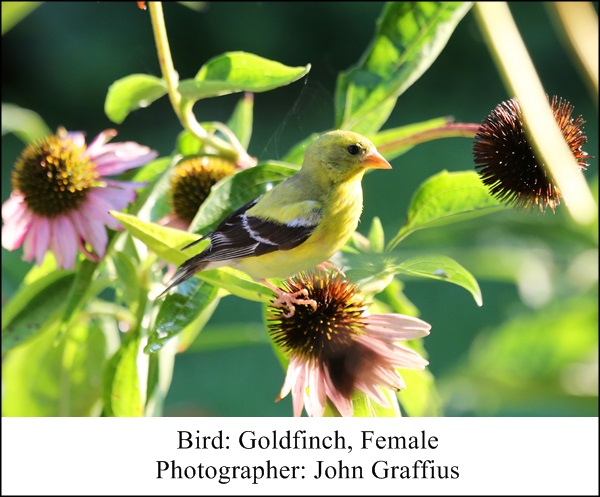
The American Goldfinch remains one of the most beloved birds at our feeders.  With their bright yellow color, their dainty behavior and uplifting song, their popularity is understandable.

Their flight pattern is distinctive as well; bouncy and undulating, often accompanied by their flight call which sounds as if they are saying “perchickaree” or “potato chip”.

Often referred to as Wild Canaries, these birds can be easily attracted to your yard with their favorite plants as well as bird feeders.  The Goldfinches’ natural habitats are weedy fields and floodplains.


goldfinches john graffius


Goldfinches are not an aggressive bird in their feeding areas, both natural and at your feeders.  Giving them a space where their feeder is not as close to others will decrease the chances of them being chased away.  Goldfinches will eat both nyjer (thistle) and sunflower seeds.  A combination of both sunflower and nyjer (thistle) seed is a great way to satisfy their need for fat and protein.

American Goldfinches are the only finch that molts their feathers twice per year.  March is the time to look for the males to appear with sporadic bright yellow feathers replacing their khaki camouflage feathers.  Goldfinches will also grow new tail and wing feathers, unlike many birds that molt feathers with the exception of those two areas.  Creating these additional feathers requires a great deal of food and energy, with the molt taking six weeks to complete.   This explains why they may use feeders so heavily in the Spring as a supplement to natural foods.


goldfinches john graffius 1


Nesting soon after the monumental physical change of molt would be additionally draining, and is the reason that Goldfinches nest in late June and July.  The female selects the nest site, builds the nest, lays the eggs, and incubates without the help of the male.

Constructed of small grasses and soft, downy material, the base of the nest is attached to the twigs with spider webs for strength.  The average clutch size is five eggs which are incubated for twelve days. The fledgling period that the chicks spend in the nest while being fed by their parents is also around twelve days.

Young goldfinches are one of the few birds that are fed a diet of seeds only, with no protein in the form of insects.  Young goldfinches are very vocal in their efforts to be fed.  Listen to the birds in your yard and you will hear the babies chiming out their “chippee, chippee” quite regularly.

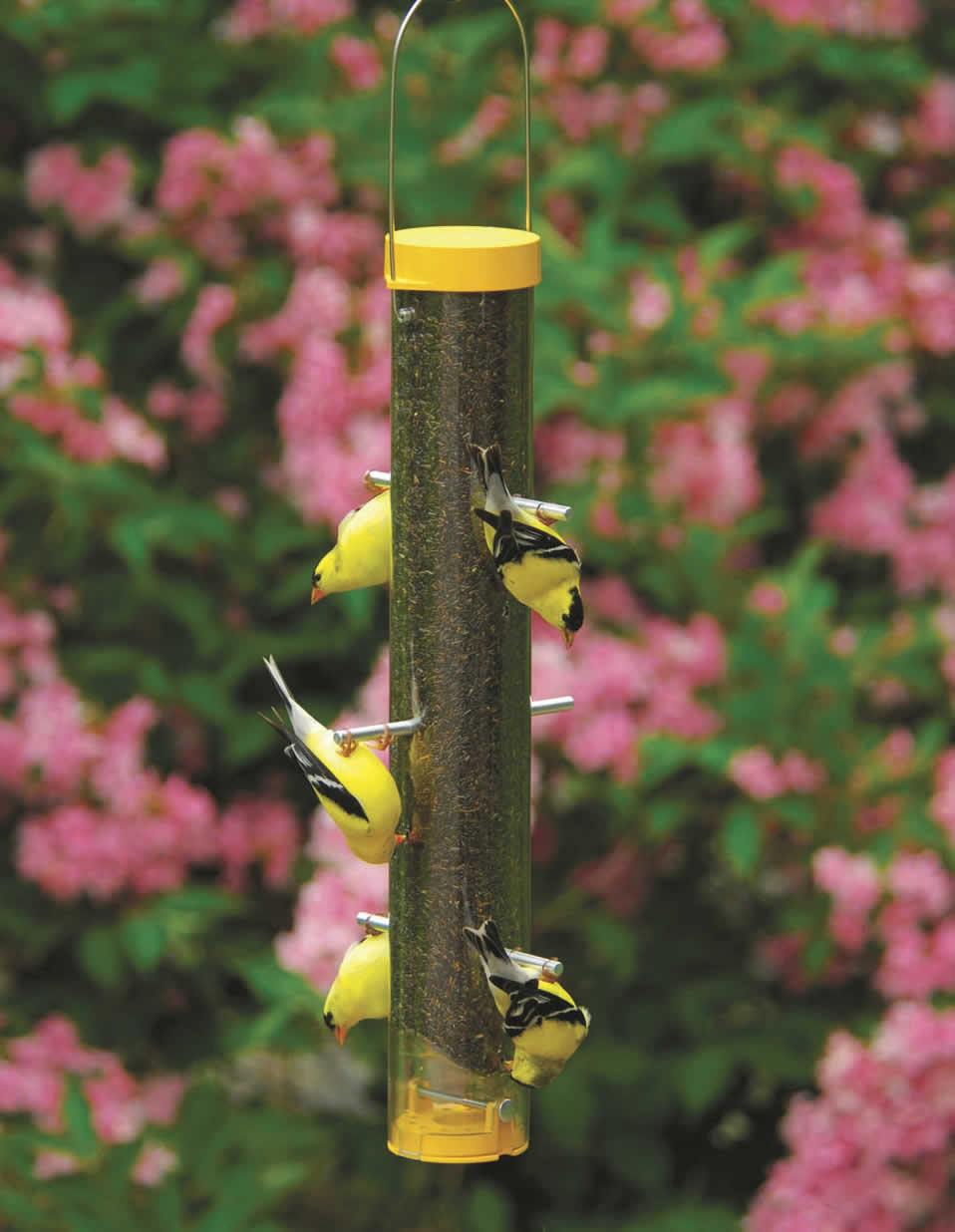
If House Sparrows with their large flock numbers are becoming a challenge to your Goldfinches, try using the feeders designed for the Goldfinches to feed upside down.  A goldfinches’ body is built so that they can readily adapt to feeding upside down, something which is more challenging for House Sparrows.  You can further make your finch feeders more sparrow-resistant by trimming the perches down to one inch.


droll yankee bottoms up


Having a total seed diet creates a real thirst in these birds.  A birdbath with a shallow area gives goldfinches the ability to bathe at a depth that they can handle.  Placing a few rocks inside your birdbath to copy a natural streamside setting is a perfect way to entice Goldfinches. Clean, fresh water is essential to the birds’ health; therefore, a daily brushing, rinse, and refill of the birdbath is your best strategy.

Creating a garden for Goldfinches is easy.  The seeds of plants in the Asteraceae  (Compositae) family  area a sure bet.  Try Black-eyed Susan (Rudbeckia Hirta), Purple Coneflower (Echinacea purpurea), Joe Pye Weed (Eutrochium), Cutleaf Coneflowers (Rudbeckia laciniata), and Cup Plant (Silphium perfoliatum).  A favorite in my yard is Woodland Sunflower (Helianthus divaricatus) – sometimes I can count a dozen of these golden beauties mixed in with the equally bright flowers.

Native thistle is very attractive to Goldfinches not only for a food source – the down of the plant is used as a lining for their nest.  Try Field Thistle (Cirsium discolor), Flogman’s thistle (Cirsium flodmanii) and Wavyleaf Thistle (Cirsium undulatum).

Enjoy the beauty that Goldfinches add to your yard.

Enjoy your birds!

Have you joined our email list? Click here to sign up, it’s free and gives you access to sales, coupons, nature news, events, and more!
Posted in Bird Feeding Solutions, Wild Bird Facts | Leave a comment |

Prevent Window Strikes – Save our Birds!

Posted on October 23, 2015 by Rosann Kovalcik

For a birdwatcher, the spring and fall migration seasons are a time to anticipate the marvel of migration that many species of birds undertake to return to and from our continent.

North America provides them with sufficient insect resources to raise the next generation, a good return on investment of their flight north.  Some of them travel from as far away as Chile, no small feat for a bird that can weigh as little as .46 oz.!

This long trip is no simple undertaking; birds face many challenges during migration.  Finding food sources, enduring weather extremes and evading predators on a daily basis while traveling is hard enough for birds.  If you throw in human factors, namely window strikes, their difficult journey becomes all the more perilous.

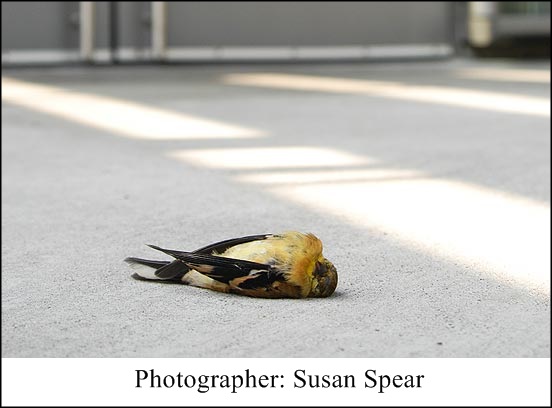
window strike susan spear

As someone who hears about birds that have met their death by flying into a window on a regular basis, I feel compelled to educate as many people as possible about how to prevent this sad situation.  Most of the reports of this type of death happen during the migration months.

If foliage or sky is reflected in the glass, that is what the bird is seeing, and indicates that your window is a potential hazard.

The American Bird Conservancy estimates we lose a billion birds each year as a result of this relatively new challenge the birds face.  I say “relatively new” because birds have been migrating for many years longer than we have had buildings with windows constructed on this continent. The birds see the reflection of the out of doors in windows and fly into them, thinking they are flying into continued habitat.

We often notice that the bird is stunned and will fly off after a while.  This should not necessarily bring us relief.  In actuality, a collision will temporarily stun a bird, and many times these birds die later from internal bleeding or bruising, especially on the brain.  Dr. Daniel Klem of Muhlenberg College has researched this issue since the 1970s. He writes, “Intensive studies at single homes reveal one out of every two strikes results in a fatality.” Klem adds, “Glass is an indiscriminate killer that takes the fit as well as the unfit of a species’ population.”

Window strikes can be prevented.  Start by identifying the windows that pose the greatest threats.  Large picture windows or a pair of windows at right angles to each other are usually the most dangerous.  Stand in your yard and look at what the bird is seeing.  If it is foliage or sky reflected in the glass, that is what the bird is seeing, and indicates that your window is a potential hazard.

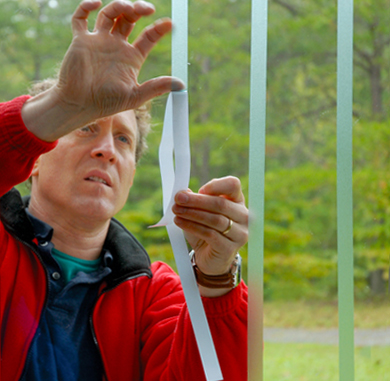
To prevent window strikes, there are products that are placed on the outside of the windows.   Cover the glass on the outside with window screening or netting at least 3 inches from the glass, taut enough to bounce birds off before they can hit the glass. Small-mesh netting is best (5/8″ in diameter), so if birds do fly into it they won’t get their heads or bodies entangled but will bounce off unharmed. You can mount the netting on a frame, such as a storm-window frame, for easy installation and removal.   You can also place decals, stickers, or mylar strips on the outside of the window.  Keep in mind that these are only effective when placed very close together.  Current studies reveal that four inches apart is the best solution.  At Wild Birds Unlimited in Grosse Pointe Woods we carry American Bird Conservancy bird tape and Window Alert decals. Both products are made of a component that brilliantly reflects the ultraviolet sunlight. With vision twelve times better than ours, birds see this as a “stoplight”.  Very importantly, the decals need to be replaced every six to nine months, the tape strips every four years as they lose their effectiveness with the fading of the UV coating as a result of sun exposure.

Applying Bird Tape

We all have windows so we all have the potential to create a lethal situation for migratory birds.  Let’s get the word out to all our friends and families so that we can prevent something that IS so preventable.  A bird in the trees is worth far more than a bird in the hand.

Have you joined our email list? Click here to sign up, it’s free and gives you access to sales, coupons, nature news, events, and more!
Posted in Bird Feeding Solutions, Uncategorized, Wild Bird Facts | Leave a comment |

House Sparrows – Love them or ?

Posted on August 5, 2015 by Rosann Kovalcik

At Wild Birds Unlimited in Grosse Pointe Woods, some of the most prevalent questions we are asked in late summer are, “What kind of seeds can I use that sparrows DO NOT like?” or,  “What do I do about the house sparrows crowding out my other birds?”

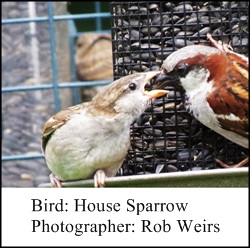
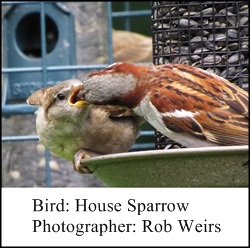
Rob Wiers Sparrow 1

House Sparrows can be found almost everywhere in this area, close to our homes and other buildings. They have a tendency to displace native birds from nest boxes, which causes some people to resent them. We must remember that because they have the ability to live so well among us, they are beneficiaries of our own success.

Identifying a House Sparrow should be easy. Look for the flock of birds that descend upon your feeders or gather in your shrubs and trees, chirping noisily in their sparrow language. I think they are letting others know where the latest feeders have been filled, so that the whole crowd may call others to the feast. Males change plumage this time of year, with their black bib becoming muted. Females and juveniles are perhaps the blandest bird in your yard with very little distinguishing characteristics other than being brown.

How do you attract House Sparrows? They will eat anything that you have to offer, from stale baked goods to the jelly that you put out for purposes of attracting Orioles. Any structure that has the ability for them to get inside will suit their purposes for breeding. In addition to using cavities or nest boxes for raising their young, they also use these spaces for shelter each day, adding materials that they gather for purposes of insulation. The House Sparrow is actually a Weaver Finch, not a true sparrow like our native White-throated Sparrows or Dark-eyed Juncos that visit our feeders.

Rob Wiers Sparrow 2

So how do you limit the number of House Sparrows in your yard, if that is your goal? Make sure that your nest boxes have openings that are not larger than 1 ¼” or they will be able to get inside, precluding the House Wrens and Chickadees from using the nest box. If the opening is larger, place a metal protector over the entrance to deny them access. Look for places they gather and eliminate access to those places. Because they are not native to the United States, it is not illegal to disrupt their nesting. For example, it is perfectly acceptable to clean their nests out of your gutters before you add gutter guards. Observe them and you will be able to find their nesting spots and eliminate them by stopping their access to the area.  

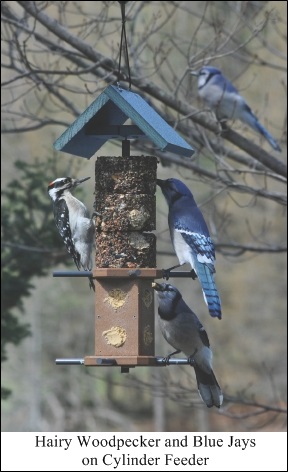
Hairy Woodpecker and Blue Jays

Keeping them out of feeders is another story altogether. For finch feeders, the answer is to trim your perches so that they are short enough for a Goldfinch to use and too large for a House Sparrows’ wider body to fit on the perch. What size would that be? Start with an inch long perch and modify down from there as needed. There is also a finch feeder where seed can only be accessed when the bird is hanging upside down. Goldfinches can do this easily whereas House Sparrows have a much more difficult time accomplishing this feat.

Using formed seed cylinders and cakes is also helpful in attracting Chickadees, Woodpeckers and Cardinals, all of which use their strong beak or ability to peck or pry a seed apart from the cylinder in order to feed. House sparrows are not as well equipped in this regard so it is not as easy for them to use seed cylinders. However, once the cylinder is crumbling apart, House Sparrows will be there to take advantage of the opportunity.

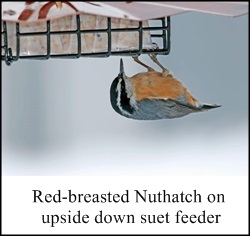
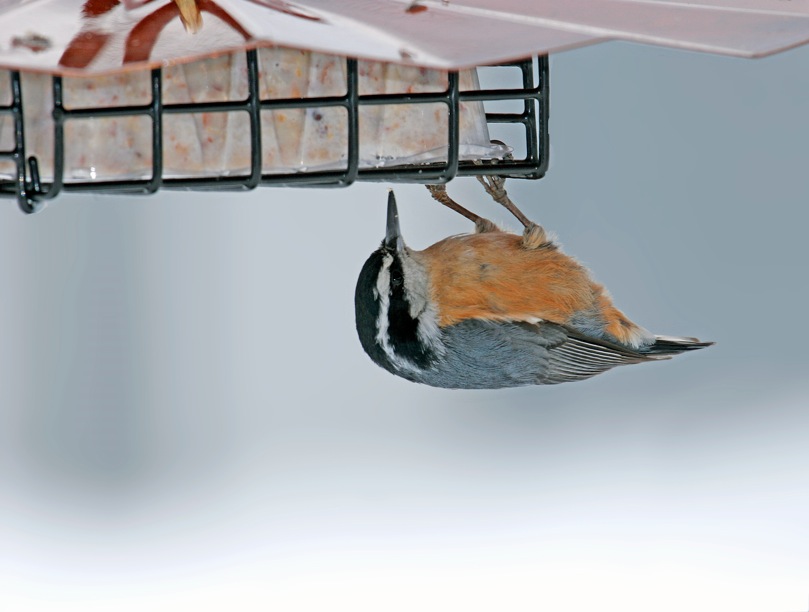
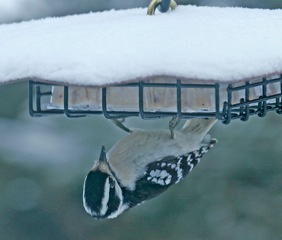
Feeding with plain suet is another way to attract quality, native birds such as Downy Woodpeckers and Black-Erva Suet Upside Downcapped Chickadees without being very attractive to House Sparrows. The suet cakes that have added seeds and peanuts are especially attractive to House Sparrows and should be avoided during this time of year if you are trying not to attract the post-breeding crowd of House Sparrows. There are suet feeders that allow only woodpeckers to reach the suet inside of the sandwich of the feeder,  as well as suet feeders that can only be accessed from underneath, something more difficult for House Sparrows than it is for Woodpeckers and other clingers.  

If your yard is attracting a large flock of sparrows, it may be the scene of what some would consider entertainment. This is the time of year that young Sharp-shinned Hawks and Cooper’s Hawks are honing their hunting skills. House Sparrows will scatter like a bursting firework when one of these predatory birds decides they would make a good meal.

And on a different note, larger groups of birds are a great way to introduce small children to birds at a feeder. The commotion that is caused by a group of feasting House Sparrows is a good way for a toddler to be brought closer to Nature by watching the birds’ behavior. Perhaps birds that are flying over your yard will witness the flock of sparrows as well, and it will act as a welcome flag to those migrants.

Enjoy Your Birds !!

Have you joined our email list? Click here to sign up, it’s free and gives you access to sales, coupons, nature news, events, and more!
Posted in Bird Feeding Solutions, Wild Bird Facts | Leave a comment |

Goldfinches Prefer Fresh Seed

Posted on March 1, 2015 by Rosann Kovalcik

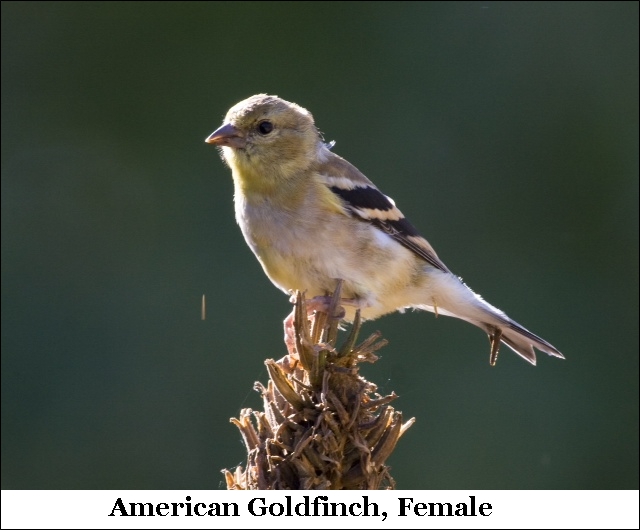
The American Goldfinch is a bird that can be found in Southeastern Michigan throughout the year. Attracting them to feeders in your yard includes offering fresh seed. Goldfinches prefer Nyjer (formerly known as thistle) and sunflower seed. When offering either of these seeds, freshness is key.

Nyjer is grown in Nigeria and Ethipoia and is heat sterilized before being imported into the United States. This kills noxious weed seeds that could germinate once they fell to the ground. Sometimes, over-heating causes the Nyjer to become dried out, similar to what can happen when a coffee bean is roasted. When this happens, Goldfinches will turn up their beaks at the seed.

Old seed will lose its’ oil content and will also be ignored by Goldfinches as well as other finches. Check for freshness by looking for black, shiny seed. If a package contains brown seed, that’s an indicator that the seed is old and dry.

Stacy American Goldfinch Female

When purchasing seed, make sure you buy only enough to last you a month. Keep it stored in an airtight container.

Use a weather guard over your finch feeder to prevent moisture from entering the feeder.  Feeder fresh is a product that can be added to seed to keep moisture from affecting the seed.  This compound is non-toxic, inert and chemically similar to sand.  Once it absorbs its’ own weight in water it will discontinue absorbing and be identical to the sand grit that birds normally ingest.

If seed that you are using has become clumped or moldy, make sure that you thoroughly clean the feeder with a soap and water solution and sterilize the feeder in one part bleach or vinegar to ten parts water.  Rinse and let air dry completely before refilling with fresh seed.

American Golfinch male by Andrea Rose

Enjoy your birds!

Have you joined our email list? Click here to sign up, it’s free and gives you access to sales, coupons, nature news, events, and more!
Posted in Bird Feeding Solutions | Leave a comment |

Red-headed or Red-bellied Woodpecker

Posted on October 6, 2014 by admin

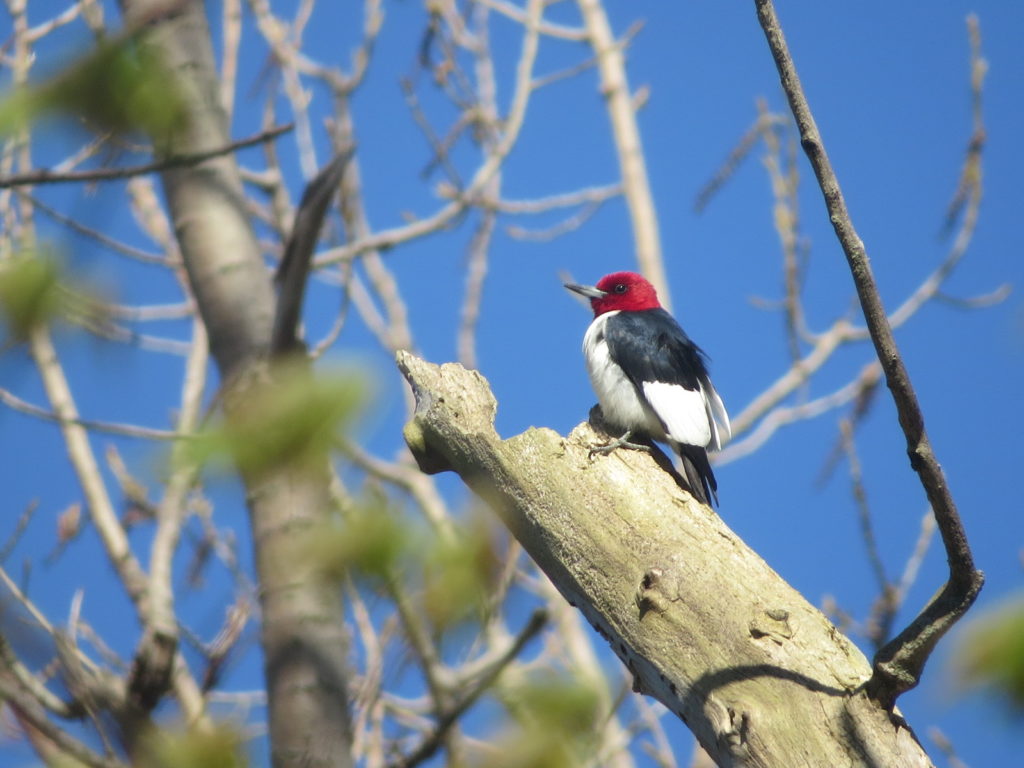
In the last few years, I’ve had an increase in the number of customers at Wild Birds Unlimited here in Grosse Pointe Woods who come in and report that they have a Red-headed Woodpecker at their feeders. Knowing the status of that bird is unusual in Michigan, I show them a picture of both Red-headed and Red-bellied woodpeckers.

Red-headed Woodpecker by Andrea Rose

IMG_2355

Red-bellied Woodpecker

After seeing both, most people realize they in fact saw a Red-bellied and not a Red-headed Woodpecker. It s far less common to have the latter bird in this area (though certainly not impossible!). In the case of the Red-bellied, it does in fact also have a red cap, which makes the nomenclature slightly confusing. Perhaps at the time of the Red-bellied’s discovery, the name “Red-headed Woodpecker” was already taken. This type of discovery would have been made after the bird was shot to be studied. Luckily, these days, binoculars have replaced guns in the study of birds, and through them we can see the red blush of the Red-bellied woodpeckers’ belly.

More facts …

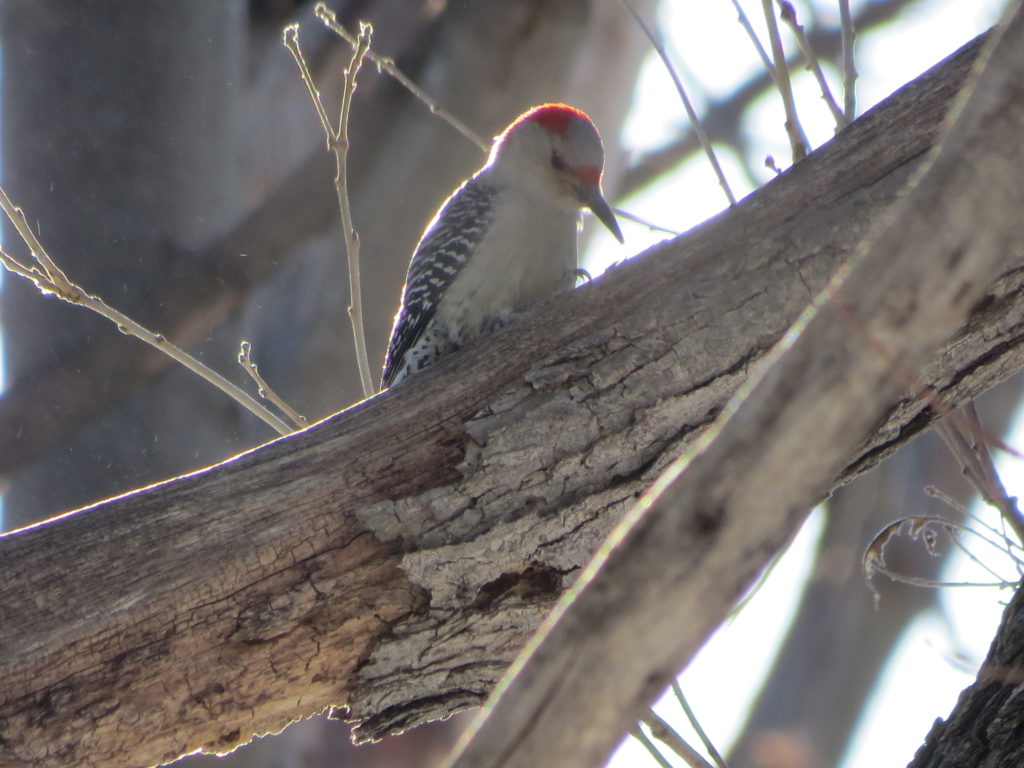
Red-bellied Woodpecker (Melanerpes carolinus) is 9.25 inches in length, has a wing span of 16 inches and weighs 2.2 oz. With a white belly, distinctive black and white stripes on the back and a bright red cap, this bird is a welcome addition to the sightings in your yard. The red on the male covers both the crown and the nape of the bird, whereas in the female it is restricted to the nape. In flight, the wings move in a deep undulating flight. One of the most interesting facts that I have read about this bird is that it has 36,000 to 37,000 feathers to insulate it. (Just how do they come up with those statistics?) The male Red-bellied Woodpecker has a longer bill and a longer, wider tongue tip than the female. These adaptations may allow the male to reach deeper into furrows to extract prey and may allow the sexes to divide up the resources in one area.

One of the best attributes of the Red-bellied Woodpecker is its voice. As Sibley describes it the “contact call is a loud, harsh, but rich quirrr slightly rising; in flight a single, low chug. Also a harsh chig-chig, a series of chig notes delivered slowly, or a rapid, chuckling series chig chigh-chchchchchchch descending.”
The Red-bellied is a nut eater, frequenting deciduous and mixed woodlands forests and usually ranging south of boreal forests. It eats three times more vegetable matter than insect matter and is known for its propensity to store food, using its long tongue to push food deeper than chickadees, titmice and blue jays can reach. It is known to eat arthropods, seeds, fruit, sap, and occasionally lizards, tree frogs, small fish, nestlings, birds, and eggs. The manner in which it feeds is to glean for insects from bark; probe and excavate into dead wood; hawk for flying insects; and hang upside down for berries.

Red-bellied Woodpecker by Andrea Rose

The Red-bellied Woodpecker is a primary cavity nesting bird, laying white eggs as most cavity nesters do. They don’t re-use cavities, which is important because the nest holes are then used by a large number of other birds, including flycatchers, wood ducks, screech owls, and bluebirds, to name a few. Nesting begins in late April and early May with the young fledging the cavity by June or July. European Starlings have an intense impact on the Red-bellied Woodpeckers’ nesting success, as the aggressive, non-native species runs the woodpeckers out of their cavities.

The range of the Red-bellied is widespread throughout the southeast. The Birds of Michigan by McPeek and Adams classifies the range of this bird as becoming considerably more common in Michigan in recent decades. In the early to mid-1900s, the range of the Red-bellied Woodpecker ended around the middle of the state, but now it occurs throughout the Lower Peninsula, though still uncommon in most of the northern counties. The increase of this bird’s range northward is due to a number of factors. As Red-bellied populations grow in the south, there is a greater need for ranges to expand in order for birds to establish sufficiently sized territories. Increases in people who feed the birds, as well as above average winter temperatures for several decades, and forest regeneration in parts of the Lower Peninsula all add to the increase of this species. The Christmas Bird Counts confirm a steady rise in the population. Sightings of this bird in the winter are more regular as birds wander in search of food. Red-bellieds will cache food in a cavity, stocking it with acorns, nuts or sunflower seeds, which adds to their survival rate.

Since Red-bellied Woodpeckers are not as numerous here as in the southern states, I asked my Wild Birds Unlimited fellow store owners for some advice on what to recommend at feeders in order to bring in these newcomers. The responses were diverse –

“They like everything other woodpeckers like and can drill through whole peanuts in a peanut feeder to get at the nut meat.”

“They eat Black Oil Sunflower out of the tray feeder on the ground all the time”. .

“They love pure sunflower chips best of all, with peanuts second, and suet also”.

“They prefer peanuts, suet and striped Sunflower”.

“Red-bellied woodpeckers like peanuts, striped sunflower, and suet”.

Judging by these responses, a well stocked feeding station should increase the odds that you will be host to the sight and sounds of this handsome woodpecker.

Enjoy your birds.

Rosann

Wild Birds Unlimited of Grosse Pointe Woods, MI

Posted in Bird Feeding Solutions, Wild Bird Facts | Tags: bird feeders, birds, fall bird feeding, Grosse Pointe Woods, Michigan, Red-headed Woodpecker, winter bird feeding | Leave a comment |

Tips for a Pest-free, Clean Bird Feeding Station

Posted on October 6, 2014 by admin

When we get our first blast of cooler air and a cloudy sky, I’m reminded by the heavy influx of customers at our Wild Birds Unlimited in Grosse Pointe Woods that they are getting ready for their fall and winter bird feeding. With that fuel for thought, I’ve come up with some ideas to share with you for pest free and clean feeding stations.

Good, quality seeds are the staple of any feeding station in the colder months. Once natural seeds have been depleted, birds will look to supplement their diet with your offerings. The most favored seed is the black oil sunflower, favored by more birds than any other seed. Using sunflower as the main seed in a blend and adding other favored seeds such as safflower and white proso millet will bring in the local birds as well as the migrants. Birds that perch while they eat prefer the sunflower and safflower, whereas the ground feeding birds prefer the millet that falls to the ground from the feeder. Choosing a quality seed is the most important factor in your feeding station. Seeds that birds don’t prefer will be tossed aside by them, ending up on the ground where they are a great food source for rodents. Check the ingredients and make sure they are what the birds want.

Keeping a tidy feeding station is good for the birds and good for you. Utilize a tray that allows you to catch any seeds that are scattered by the doves and sparrows – we are convinced they are trying to give to their brethren below! Make sure that you provide a way to clean up the area underneath the feeders. Seeds and shells that sit for prolonged periods of time will mold and harbor germs that may affect your birds. The birds themselves will cause droppings to go into the shells and seed spillage. A hardware cloth or screen placed under the feeder will allow you to pull it away, roll up and toss the mess, and wash it off before placing it back under the feeder.

Store seeds in galvanized cans inside of the garage or a shed. Keeping seed in the house may cause cereal moths to hatch, the eggs having been laid in the seed shells while the sunflower was growing in the field. Temperature is what causes this to happen, so a cool out-building is a better choice. We recommend galvanized cans as rodents are able to chew through plastic. Whether it’s the little teeth of mice or the larger teeth of squirrels, plastic is ineffective at keeping them out.

Before you fill the feeder, make sure that it has been cleaned and sterilized. A good soak in some warm water will loosen all of the dirt that builds up in most tube feeders. The soft bristles of feeder brushes allow you to scrub without scratching the feeders. To sterilize, add one part of vinegar to ten parts water. Always rinse thoroughly before letting the feeder dry completely and filling. With a wooden feeder, follow the same steps without a prolonged soak. A good alternative to wood is the recycled plastic feeders that are now being made. The plastic does not allow organic material to grow as readily as wood does.

Feeder Fresh is an organic additive that is sprinkled into feeders that offer nyger or sunflower chips. Keeping the feeders free of mold is an obvious benefit to the birds you are feeding. It is added to the feeder when you fill it with seed.

A tidy and clean feeding station is better for the birds that visit your yard. Thanks for being responsible.

Enjoy your birds !
Rosann
Wild Birds Unlimited of Grosse Pointe Woods, MI

Posted in Bird Feeding Solutions | Tags: bird feeders, birds, Clean Bird Feeder, Clean Feeder, Clean Feeding Station, fall bird feeding, Grosse Pointe Woods, Michigan, winter bird feeding | Leave a comment |

How to Feed the Birds but not the Squirrels

Posted on October 6, 2014 by admin

blog10pic

On a daily basis at Wild Birds Unlimited in Grosse Pointe Woods, we hear about the abilities of squirrels to successfully turn bird feeders into squirrel feeders. Even though we advise customers as to the capabilities of squirrels, some insist that the squirrels won’t be able to climb the feeder pole they are purchasing. We smile knowingly when they are back within days to admit that the little rascals easily shimmied up the pole and are monopolizing the seed.

Squirrels are members of the rodent family. The Latin word rodere means “to gnaw”, as we can see in the damage these critters cause to our new feeders. Did you know that squirrels gnaw in order to keep their teeth sharp and short? If they didn’t, their teeth would be an unruly length since they grow six inches per year. While squirrels can cause frustrating damage to feeders, this does not have to be the case. There are many strategies that you can employ to keep squirrels away from feeders.

The acrobatic abilities of squirrels are legendary; at least here in Michigan. Pound for pound, Olympic gymnasts can’t compare. Since squirrels can jump up from the ground almost six feet and sideways a distance of eight feet, the location of a feeder within your yard is crucial to the success of feeding birds, not squirrels. A feeder hung from a branch would need to be placed eight feet from the trunk, forcing the squirrel to approach from above since the sideways approach would not work. The baffle that is placed above a feeder should be substantially wider than the feeder itself which is why it is difficult to keep squirrels out of wooden feeders hung from trees. At Wild Birds Unlimited in GPW, we find that the most successful baffle is one that was designed by an engineer who was fed up with the furry critters eating the seed he was offering the birds in his yard. The shape of the baffle forces the squirrel down and away from the feeder.

Both wooden feeders and tube shaped feeders can be mounted or hung from poles. Many people report that they have greased the pole with a variety of substances including cooking oil, WD40, or Vaseline. While it can be entertaining to watch the squirrels slip down the pole, there are two problems with this approach. The first is that the substance needs to be reapplied as it wears off onto the squirrel. The second problem is that the matted fur of the squirrel causes its belly to be exposed to the elements, which can lead to hypothermia.

On a pole-mounted system, the baffle needs to be placed five feet above the ground on the pole and preferably made of metal. Plastic baffles will end up becoming a way for squirrels to keep their teeth filed down, as previously mentioned. The pole system that the feeder is placed on should have eight feet of distance from any surface that the squirrel can leap from vertically, such as a deck rail, shrub, tree or another feeder system! If the pole system is under a tree or near a structure such as a garage, their jump from above will give them a further advantage. I’ve watched as a squirrel leveraged itself from the handle of a shovel that I had left upright in the ground, giving him the edge in making a successful leap.

One of the strategies is to use a seed that squirrels do not prefer, which is safflower. The seed has a bitter taste and is not preferred by mammals, while songbirds enjoy its flavor. Cardinals, chickadees, house finches, Carolina wrens, and mourning doves all come to safflower. When you have a feeder that can be accessed by squirrels, such as a window feeder, safflower would be the perfect solution. Safflower is grown primarily for human consumption, as we use the oil from the seed for cooking. Therefore, the cost can be prohibitive for some budgets. However, when you aren’t feeding the squirrels, your seed last much longer and can be more economical.

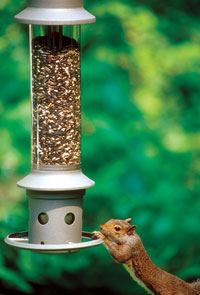
By far the best way to keep squirrels away from the bird seed is to use the feeder that has a counter weight, causing the seed ports to close off when a squirrel lands on the perch. The feeders of this type are made of metal so they are impervious to the gnawing efforts of squirrels. There are many excellently designed feeders that incorporate the counter weight system including the Eliminator, appropriately named.

Whether you decide to baffle against them, buy feeders that exclude them, use Safflower seed or feed them their own feast, you have to admit that squirrels can be entertaining and their persistence is to be admired! Good Luck with making your bird feeders squirrel proof!

Enjoy your birds !
Rosann
Wild Birds Unlimited of Grosse Pointe Woods, MI

Posted in Bird Feeding Solutions | Tags: birds, fall bird feeding, Grosse Pointe Woods, Michigan, squirrel proof, winter bird feeding | Leave a comment |

Feed Birds Suet During Winter

Posted on October 6, 2014 by admin

blog8pic1

With the winter approaching, birds need a higher fat diet in order to endure the colder temperatures. Here in Michigan at Wild Birds Unlimited of GPW, we are ready with a stockpile of suet to help. This is the time of year to beef up your wild bird feeding station – literally!

Beef fat, or suet, has been a favorite winter-feeding strategy for those who love to watch the birds. Pure rendered beef fat is great to use when you can’t keep the squirrels out of the suet feeder. Without added nuts or seeds, the pure suet isn’t high on the list of a squirrel’s priorities for food.

If you can place a suet feeder out of the reach of squirrels, you can offer suet with peanuts or seed added to the formed cake of fat. Squirrel-proof can be obtained if the feeder is placed on a pole system with a baffle top at five feet above ground and the set-up eight feet away from any leaping opportunity. You’ll find that the woodpeckers. Chickadees and nuthatches in your yard will visit both pure and enhanced suet, with an emphasis on eating the high fat nuts when the weather is colder. Some suet will have fruit, which is attractive to red-bellied woodpeckers.

blog8pic2

There is also a hot pepper version of suet, meant as a squirrel deterrent, since mammals have more taste buds than birds and find the hot pepper distasteful. The birds don’t detect the hot flavoring, allowing you to place the suet feeder in any location for viewing.

If European Starlings become a persistent problem, try hanging your feeders so that they are oriented with access only from the bottom. There are a number of feeders that are made specifically for this purpose. The Starling Stumper, when added to your current suet cage feeder, accomplishes this goal as well.

When birds eat suet, they stay at the feeder for a longer period of time, allowing you to appreciate their crisp colors in the bright sun of winter. Gone are the old feathers that were worn from the rigors of rearing a family or two. The fall molt has provided them with a new set of feathers, including an extra amount for warmth.

Feeding suet in the fall and winter is one of the most enjoyable ways to watch birds in your yard.

Enjoy your birds!

Rosann
Wild Birds Unlimited of Grosse Pointe Woods, MI

Posted in Bird Feeding Solutions, Wild Bird Facts, Winter | Tags: bird feeders, birds, fall bird feeding, Grosse Pointe Woods, Michigan, winter bird feeding | Leave a comment |

Recent Posts

  • Welcome the Wood Duck as our State Duck
  • Killdeer – our most common Plover returns
  • Red-tailed Hawks, the Common Buteo
  • Bald Eagles –
  • What other owls can you find ?

Archives

  • March 2026
  • March 2023
  • February 2023
  • January 2023
  • April 2022
  • March 2022
  • December 2021
  • September 2021
  • April 2021
  • March 2021
  • May 2020
  • April 2020
  • February 2020
  • January 2020
  • November 2019
  • August 2019
  • July 2019
  • March 2019
  • February 2019
  • December 2018
  • October 2018
  • August 2018
  • July 2018
  • May 2018
  • April 2018
  • March 2018
  • January 2018
  • December 2017
  • November 2017
  • October 2017
  • September 2017
  • August 2017
  • July 2017
  • May 2017
  • April 2017
  • February 2017
  • January 2017
  • December 2016
  • October 2016
  • September 2016
  • August 2016
  • July 2016
  • May 2016
  • February 2016
  • October 2015
  • August 2015
  • July 2015
  • June 2015
  • March 2015
  • October 2014

Categories

  • Bird Feeding Solutions
  • Bird Songs
  • Events & Outings
  • Fall
  • Native Plants
  • Nesting
  • Spring
  • Squirrels
  • Summer
  • Uncategorized
  • Wild Bird Facts
  • Winter

Enter your email address:

Delivered by FeedBurner

  • Prev
  • 1
  • 2
  • 3
  • Next
© Wild Birds Unlimited of GPW - Website by TBD Web Services